Random

Thursday, 28 April 2011

'a music that embraces everything in life'


Monsieur Linh And His Child
by Philippe Claudel

This novel is the third in a loose thematic trilogy written by Claudel about the impact and aftermath of war. The second part, Broderick's Report, won the Independent Foreign Fiction Prize last year and I have yet to read a review, or encounter a reader who is less than totally gushing about it. However, when this latest arrived I didn't have a copy of Broderick's Report and decided that the looseness of the link between each book would make it OK for me to read them in any order. This is more a novella really, weighing in at 130 pages, and is written in the kind of spare prose that I enjoyed so much in Gerbrand Bakker's The Twin. It seems to me to be particularly well suited to a story of buried trauma. Having finished it I immediately got hold of a copy of the book that preceded it and it that turns out to be as good as everyone says then I may well go back to his debut novel Grey Souls but let's concern ourselves with this latest for the moment.

An old man is standing on the after-deck of a ship. In his arms he clasps a flimsy suitcase and a newborn baby, even lighter than the suitcase. The old man's name is Monsieur Linh. He is the only person who knows this is his name because all those who once knew it are dead.

It's the kind of opening paragraph that tells you enough to feel immediately part of the story and seems to hold back so much that you can't wait to find out more. The old man is Monsieur Linh, a refugee from South-East Asia who has left his own war-torn country after the death of his son and daughter-in-law to make a new life in Europe for himself and that newborn grand-daughter Sang diu. 'Thousands of days away from a life that was once beautiful and delightful' Monsieur Linh is adrift in a busy French city where everything is alien, even the food.

The soup is like the air of the city that he breathed in as he left the ship. It does not really have any smell, not really any taste. There is nothing familiar about it. There is none of the delicious tang of lemongrass, the sweetness of fresh coriander, the smoothness of cooked tripe. The soup enters his mouth and passes into his body, and he is suddenly filled with all the strangeness of his new life.

Then one day he happens to meet a man on a park bench, Monsieur Bark. Though they don't share a language they somehow manage to communicate, sensing what the other means, with plenty of humour along the way for us as we can witness the small misunderstandings which mean that Bark thinks that Monsieur Linh's first greeting is actually his name, and Linh's only grasp of French is the word for 'Good-day.'

From now on, as soon as he wakes up, the old man looks forward to the moment when he will go to meet his friend. He refers to him as 'his friend' in his mind, because that is what he really is. The fat man has become his friend, even though Monsieur Linh does not speak his language, even though he does not understand it, even though the only word that he uses is "Good-day". It is not important. In any case, the fat man himself only knows one word of Monsieur Linh's language, and it is the same word.
The relationship between these two men is beautifully drawn, each of them damaged in their own way, Linh as I have already described and Monsieur Bark a widower. They have no common language and yet look forward to their daily meetings where some form of communion is achieved. Trauma is one major theme of the book and memory is another, the two men have only memories it seems to console them and perhaps the faintest glimmer of hope in the future. In his own review Stuart Allen compared their relationship to that of the assassin and the ice-cream vendor in Wim Wenders' film Ghost Dog, which is spot on in many ways. I was also reminded of Brian Friel's genuine masterpiece of a play, Translations, which also deals with language and communication (altogether more brilliantly if I'm honest, but this is Brain Friel we're talking about). There are small stumbles like the confusion around 'Good-day' and even a misunderstanding around the name of Linh's grand-daughter ('Sans dieu...,' the man continues, 'that's a funny sort of name.') but more often than not the two men really do share some connection through their shared trauma, recognising something in the other that unites them.

He listens to the fat man's voice, this voice that is so familiar to him even if it says things he never understands. His friend's voice is deep and hoarse, it seems to be negotiating stones and enormous rocks, like the streams that gush down the mountains before reaching the valley, making itself heard, laughing, weeping at times, and talking loudly. It is a music that embraces everything in life, its caresses as well as its struggles.

I don't want to say any more about the 'plot' of this novel or its construction. I don't even want to say...no, I'm not going to say it. Read it uninformed beyond anything I've mentioned so far and you will experience the full power of Monsieur Linh's story. Leave a sufficiently enthusiastic comment below and you may even get to experience it courtesy of the publishers who have a few promo copies to give away.

Read more...

Tuesday, 26 April 2011

'time had gone by too soon'


The Stories of Breece D'J Pancake


I open the truck's door, step onto the brick side street. I look at Company Hill again, all sort of worn down and round. A long time ago it was real craggy and stood like an island in the Teays River. It took over a million years to make that smooth little hill, and I've looked all over it for trilobites. I think how it has always been there and always will be, at least for as long as it matters. The air is smoky with summertime. A bunch of starlings swim over me. I was born in this country and I have never very much wanted to leave. I remember Pop's dead eyes looking at me. They were real dry, and that took something out of me. I shut the door, head for the cafe.


That is the opening paragraph from Trilobites, the story that opens this collection and the first of Pancake's to be published by the venerable magazine, The Atlantic, at the end of 1977. It is also the reason for his rather odd name, the result of a typing error on the first galley proofs that Pancake received, an accident he apparently embraced with humour - 'Fine, let it stay that way'  - finding amusement in the release of his sense of strain - the strain of trying to get things perfect. That strain never eased sufficiently; despite having other stories published in the same magazine Pancake died from a self-inflicted shotgun wound less than two years later, an apparent suicide at the age of 26, perhaps never realising just how good a writer he was.


Literature is a filled with stories of unfulfilled potential and it must be very easy to overstate the case with so little to go on; how many actors have been hailed as potential masters of the craft on the back of a few okay films, good looks and a pharmacological mistake? This isn't a perfect collection, some of the stories are definitely better than others, but the best of them really are utterly brilliant and the collection as a whole has a sense of something so genuine, something rooted in the West Virginian landscape that shapes them, that they deserve to be protected with some kind of official stamp, something like the PDO (Protected Designation of Origin) that lets you know that your Prosciutto is the real deal.

West Virginia is known as the Mountain State, a region of forests, gorges and hollows rather than the flat plains of the American midwest. That kind of topography influences these stories that might be said to share the theme of stasis vs the need to escape. They are peopled by ordinary men and women with ordinary hopes and fears; coal miners, boatmen, labourers, fighters. The huge success of these stories and  one factor that makes them so influential to other writers is highlighted by Andre Dubus III in his excellent new afterword.
'with some of the other writers I'd been reading at the time, I could feel a slightly judgemental quality in the prose, as if the characters in the story were not so much real people as they were props being used to make wise, sardonic points about the human condition. With Pancake, there is none of this. On the contrary, there is the opposite feeling; his stories' characters are not mere inventions but flesh-and-blood human beings whom he suffers along with, believes in, and ultimately loves, no matter how far they might fall.'
This is also part of the reason why writing a satisfactory post will surely prove impossible because whilst reading, when I should be marking passages and keeping an outside eye on my critical response, I came instead under the same spell as Dubus 'moved by all these people and their tough lives'. A first reading isn't enough but I'm not convinced that I'd ever be able to write the perfect post without actually going back to school and studying it all. So the short version: Buy this book immediately and read it when you feel the need for a literary shot in the arm. You won't regret it (and that's the closest you'll get to a money back gurantee from me)

(this line break represents several weeks)

In fact in an unusual admission I am going to hold my hands up and say that after several failed attempts I am going to admit defeat on this post. Now normally I would just delete it and put it down to experience but I really want you to read this book so I'm taking a hefty dose of humility in the hope that you might do just that. In the original Foreword by James Alan McPherson he speculates about what might have contributed to Pancake's death. He was a great giver of gifts apparently and McPherson wonders whether the man who had cultivated the persona of Provider also expected things of others, needed perhaps just a simple gesture but was so frustrated by his attempts that it looks to be 'hopeless except through the written word? In such a situation, a man might look at his typewriter, and then at the rest of the world, and just give up the struggle.'

I'm going to give up my own struggle and trust that these links to the stories Trilobites and In The Dry will be enough to help you understand what a special writer Pancake both was and is.

Read more...

Friday, 22 April 2011

TV On The Radio - Nine Types Of Light


The problem with TV On The Radio is that they just have too many ideas. Their earlier albums were bursting with innovation and Dave Sitek's heavy production so that the listener was left battered and slightly bruised by the experience, which was admirable no doubt but never quite fulfilling. The marvellous Dear Science, came closest to realising the band's potential becoming album of the year for me and many others. It has been a couple of years since that however and after a creative hiatus that could have been permanent it is very exciting to have a new album to talk about, eagerly awaited by plenty I'm sure and I'm glad to say it doesn't disappoint. It might not quite match its predecessor, the band seem to be enjoying themselves far too much to worry about that, but it certainly consolidates their position as 'art-rock' band it's almost impossible not to enjoy.

The first album to be recorded in California rather than Brooklyn, following Sitek's westward migration it's impossible not to comment on the positivity of an album bathed in light and dealing with themes of celestial convergence and that good old universal - love. It opens with Second Song which slowly builds its brassy call for 'Every lover on a mission shift your known position into the light,' before breaking down musically to ask for something far more radical: 'Oh body-mind leave me behind/And I'll do you one better/While you define/Your heartless time/I'll defend my love forever.' This is followed by the album's only slight bum note for me, Keep Your Heart beginning well but never quite developing into anything other than a rather horrible falsetto screech near the end. Things get back on track with You which is one of those songs that sounds retro and futuristic at the same time with its Vangelis-like keyboard sweeps, something exploited not so long ago by the Fever Ray album. In fact there's something reminiscent of that album at the beginning of No Future Shock but that is quickly jettisoned in favour of jangling guitars and an insistent call to dance. Killer Crane strikes a very different chord slowly building its piano, choral tones, strummed guitars and even what sounds like a banjo for those who are impatiently awaiting the new Fleet Foxes album. It is a gorgeously orchestrated piece and by that I don't mean that it is neat, far from it, it has the kind of honest instrumentation that makes something like A Day In The Life such a joy.

Will Do opens with some lyrics that I think Prince would have been proud of in the past for the way they mix humour with polite propositioning for sex - 'It might be impractical/To seek out a new romance/We won't know the actual/If we never take the chance/I'd love to collapse with you/And ease you against this song/I think we're compatible/I see that you think I'm wrong.' But it is actually a touching song about memory - 'Anytime will do/What choice of words will take me back to you.' TVOTR know how to change the atmosphere and New Cannonball Blues comes in heavy with a funky, bassy keyboard swagger for an instant change-up. Then we have Repetition's plucked bass undercurrent, which runs along like something from a 70's TV series. It seems at first to be a song fraught with danger, 'But I can't stop thinking/That it's all gone wrong/And the truth will be out there/Before it's too long,' before that celestial convergence arrives and the hollered repetition of the chorus drives it into a jumping rock-out finale. Forgotten eases you down nicely after that racket, or does for a while at least, building its menace first through lyrics that speak of 'Beverly Hills/Nuclear winter/What shall we wear/And who's for dinner?' and then musically too when it builds into a whistled military chorus, a song that equates fame with becoming one of the undead. I don't think I'll be the only one to hear the influence of INXS of all bands on album closer Caffeinated Consciousness with its alternating stanzas of shouted agitprop and softly sung chorus. The album seems to end there rather abruptly and there's a bit of me that thought 'Oh, is that all of it?', as I said this isn't quite the total album that Dear Science, was but this is a small disappointment that can easily be remedied by getting back to track 1 and starting all over again.

With the sad announcement on Wednesday that bassist Gerard Smith lost his battle with cancer it is worth mentioning that this album is not just an album, there is also a 60 minute film featuring all the music available here and which includes some poignant footage and even a hilarious California get together scene which I won't explain any further. For those who just fancy a listen to a straightforward stream of the album you can follow this link. For a quick shot just click play below to hear the gorgeous Will Do (it may take you via YouTube).

Read more...

Wednesday, 20 April 2011

'one last stab at romance'


Mister Wonderful 
by Daniel Clowes

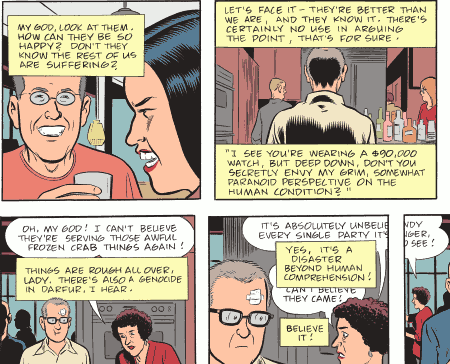
After the misadventures of the glorious Wilson comes another Clowesian anti-hero, Marshall. Previously serialised in the New York Times, this collection of strips is brought together in his latest book through Jonathan Cape and presents an opportunity for us in the UK to follow another middle-aged man with a unique take on the world around him. With one failed marriage behind him ('I won't go into detail but let's just say my wife had some issues with fidelity, and several of my friends were involved, and when it ended I had neither wife nor friends.') and without having been on a date for six years it could well have been a future of 'increasing irrelevance' for Marshall had he not been recently bolstered by the evening he was '"befriended" by a strange woman' ('It was sort of like "Breakfast at Tiffany's," except in this version, Holly Golightly is an unstable, crack-snorting sociopath.'). So we join Marshall as he waits alone at a table for the blind date that has been organised by his friends.


His date is late however so we are thrown straight into Marshall's interior monologue which will dominate the story, sometimes riding over the speech bubbles themselves so that we get a sense of his losing track of the conversation as he comments on how the evening is going. After having virtually given up on his date and downed a couple of beers she suddenly appears. Natalie is a good-looking woman and so Marshall is simultaneously smitten and convinced he doesn't stand a chance ('Jesus, why am I self-deprecating even in my own interior monologue?'). This book is subtitled 'A Love Story' and described as a 'romance' by Clowes but anyone who has read any of his work before will know that things are never that simple. Damaged in their own ways, Marshall and Natalie stumble their way through an evening that always threatens to derail completely, events finally coming to a head at a party that Natalie had arranged to go to previously and to which she brings Marshall.


Marshall's fantasies about where this meeting may lead are dotted throughout, as is his tendency to let his temper get the better of him. There is certainly a more positive outlook to this book compared to Wilson but there is enough of that sharp humour to stop things getting too sappy. What is lovely is that Clowes wants to show that no matter what relationship disasters may lie in the past there is always the hope that there will be someone out there to help us make a better fist of things - even on a potentially disastrous evening where fists themselves will come into play on more than one occasion. Ah well, 'The course of true love never did run smooth.'

Read more...

Monday, 18 April 2011

The Last Werewolf Giveaway Winner


Ahwoooooo!

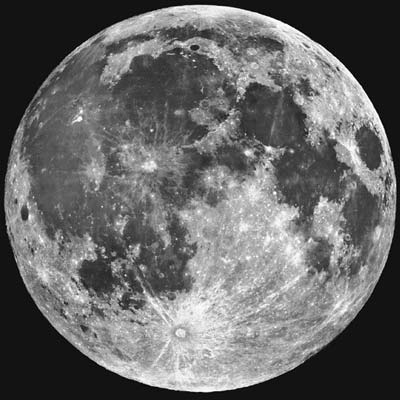
It is (or was) a full moon and I know you're all excited to know who won the copy of Glen Duncan's The Last Werewolf. I hope these pictures capture something of the thrill of the draw...

The Names In The Hat


 The Random Generator


The Draw


The Winner!


So the winner of a copy of Glen Duncan's The Last Werewolf is "RJR"

Congratulations! Please email me your address by clicking on the 'email me' button on the left and I'll get it into the post to you faster than you can fashion a wooden stake.

Thanks to everyone who took part. There will be more giveaways in the future. Watch this space...

Read more...

  © Blogger templates The Professional Template by Ourblogtemplates.com 2008

Back to TOP