Random

Thursday, 18 August 2011

Tom McCarthy Interview

Tom McCarthy has gone from being a writer who endured rejection from the major publishers (but then found a cult readership through the publication of his debut novel, Remainder, by a Parisian art outfit) to one given something like mainstream acceptance after being included on last year's Booker Prize short list. As someone with a particular interest in one of his major themes I was very pleased to have the opportunity to ask him about his work and the idea of authenticity.

My reading of Remainder couldn't help but be hugely influenced by the fact I'm an actor. I was fascinated by the ideas of authenticity and repetition, especially as repetition can be the very enemy of authenticity when performing a long run onstage. What attracted you to those themes and what were you hoping to say in writing about them? 

Repetition is the enemy of authenticity indeed. Authenticity is a pernicious meme that needs to be dismantled brick by brick, and repetition has always been a battering ram well-suited to the task. Repetition is beautiful, lyrical and seductive. It's the basis of all poetry.

I have to ask, have you seen 'Synechdoche, New York' and what did you make of it (and its similarities to Remainder)? 

I haven't seen it I'm afraid.

(Another film I wonder whether you have seen or not is Certified Copy which deals with notions of originality, copying, authenticity and fakery. I think you might like it)

I haven't seen that either... But Dennis Hopper's 'The Last Movie' is great in this respect. And so is Tarkovsky's 'Solaris'.

The theme of authenticity runs through your work; the art forgery of Men in Space, the parodic work of the International Necronautical Society and even the sale of 'genuine copies' of their documents. Is it likely to remain a recurring motif in your work?

I'm interested in doubles, forgeries, mediations and displacements of all kinds. I imagine they'll continue to feature, although hopefully mutating as the books progress.

You have said in previous interviews that you are influenced by writers such as Blanchot, Derrida, Beckett.... With such strong influences I might ask another writer if they have ever worried about escaping those influences to assert the authenticity of their own voice but I don't think you're that kind of writer. How would you describe the authenticity of your work?

I'd never use that term. Literature is about modes of inauthenticity, and always has been - look at Hamlet or Don Quixote if you doubt this. I'm influenced by lots of other writers, as were all those other writers themselves. My voice was never mine in the first place, and I'd never want to make that claim.. I'd like to think I'd built some good echo-chambers though.

You haven't much time for the 'sentimental humanism' prevalent in a lot of fiction. Could you explain what you mean by that?

I mean a cultural ideology that posits the self as the origin and source of all experience, and language as a tool for self-expression. It's a reactionary dead-end. It's the default ideology of almost the entire cultural industry (visual art being a notable enclave of exception), but all good work subverts this in some way or other.

There tends to be a fair bit of it on fiction prize shortlists. C was nominated for the Booker last year. What was your experience of being part of that bandwagon?

The ice-cream desert at the dinner was very good.

Do you have any thoughts on this year's recently announced longlist?

You're asking the wrong person: I've never read a novel on the Booker list in my life.

What are you working on at the moment and how does it fit in with the rest of your work?

I'm working on a book about pollution and mutation. It will end in a zombie parade. I'm interested in the insistent return of the material, and the dead.

Is there an underappreciated book that you would like to recommend to readers of this blog?

'The Adventures of Mao on the Long March' by Frederic Tuten.

I always ask my interviewees to 'do a Hemingway' and write a story in just 6 words. Would you have a go?

'For sale: shotgun, one previous owner.'


'C' is now available in paperback.

Read more...

Tuesday, 16 August 2011

'nothing happens that cannot happen'


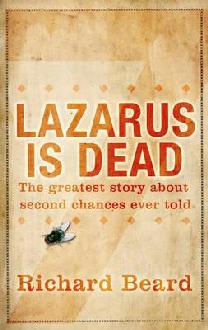
Lazarus Is Dead
by Richard Beard

We all know the story: Lazarus dies, Jesus weeps, Lazarus walks from his tomb. This most spectacular of Jesus' miracles is only reported in the gospel of John, who uses it as the confirmation of Jesus' divinity, the most powerful of the seven miracles that frame his narrative, the moment where Jesus shows his power over the one thing none of us can avoid. And no, I don't mean taxes. In his new novel Beard also uses the number seven to frame his narrative. Seven chapters count down to the death of Lazarus, then seven more continue after his resurrection. This structure gives the book a pleasing mathematical neatness but also manages in itself to contribute to the narrative tensions. We all know where that arc is heading but to have it actually countdown somehow removes inevitability and replaces it with a tension I shall describe for the moment as the literary equivalent to the ticking clock on the TV series 24. The real kick is entirely literary though. This book has an intriguing viewpoint and posits some bold ideas so that as the chapters begin to count up again there's almost nowhere Beard is afraid to go.

Let's begin with the one certainty in the story of Lazarus. He is dead. 'He died, he came back to life, but then he died again. If he were alive today, we would know. I think' This is the only certainty (we think), everything else is up for grabs more or less and the unique viewpoint of Beard's novel is to allow the narrative voice to present its factual research alongside the narrative. The novel is an investigation into the sketchy details of the Bible narrative that uses artworks, later fictional representations like those from José Saramago and Karel Čapek, and theory to arrive at a new telling of the story. You might call it the most complete version of events but even Beard knows that 'Even outside the story, beyond time, with the benefit of hindsight and foresight, it can be very difficult to fit every factor together.'

I might have made that sound a little dry but it is anything but. It is an engaging style and always easy to understand. It just feels like common sense. We know for example that Lazarus is described as a friend of Jesus, the only man in the whole bible to have that accolade bestowed on him. But how are they friends? The bible cannot help us but the prevalence of Lazarus in artistic depictions, out of all proportion to 'his brief appearance in a single gospel', means that perhaps they were long time friends, since childhood. Go back to the moment when Joseph heard that the children of Bethlehem were to be slaughtered. Morally he'd want to save more than just his own son but he can't save them all. But he could save a friend's. And so we join Joseph as he hustles his own best friend and their family along with his own away from the impending massacre, unable to explain.

'The children. They are very special.'
'I know that.' Eliakim understands instantly that they can't go back. 'Every child is special.'
'The boys needed saving. Our boys.'

Yes, that would make them the firmest of friends. And so we follow their childhood together where it is Lazarus who excels both at synagogue and at play, 'Jesus looks before he leaps. Lazarus likes to leap.' In one extraordinary scene the two boys along with Lazarus' younger brother Amos climb the scaffolding that surrounds the construction of a new amphitheatre. It is raining. Lazarus makes his precarious progress to the top and then offers to help his more cautious friend up.

Jesus reaches up but not far enough, and he falls. His hands and his arms and his body detach from the scaffold and out he goes, into the air, clear space all around him. Lazarus swipes at his clothes and clings on, hauls him up and over and onto the safe flat roof. It is an impossible achievement, an unbelievable rescue.

How nearly Jesus might have perished as a child. How miraculous was the intervention of Lazarus? But we can come back to that later. Whilst we follow the logical assembly of Lazarus' back story we also read about the more immediate construction of his death. What did Lazarus die of? Again, the Bible never makes it clear and having investigated the most common illnesses of the period Beard reaches the only rational conclusion:

The story demands that Lazarus suffer. The more hideous his death the more impressive his revival ... his sickness should be horrific, definitive, undeniable. It should be both recognisable and worse than anything anyone has ever seen.
Yes, this is how it was done. Lazarus did not die from one of the seven prevalent illnesses of ancient Israel. Not enough. He has to contract them all.
Lazarus is cast firmly as an agent in the narrative of Jesus the Messiah. It is not only the miracle of his resurrection that confirms this status but it seems possible that their whole lives together have provided the foundations for the grand construct that is to come, 'If Jesus is the son of god, then all stories both before and after exist in the service of this one incredible story.' One of the boldest aspects of this novel is to allow the life of Lazarus to underpin the miracles he didn't even play a part in. Perhaps the second most spectacular miracle was Jesus' walking on water. The act in itself is miraculous but it is important not to forget that it comes during a storm that threatens the lives of his disciples and we have to understand the very real danger of that water. So Beard creates a scenario that does just that as well as providing the conflict that means it is the sisters of Lazarus who eventually send for his help rather than his once close friend. If Jesus never learned to swim but watched as his friend swam out with his younger brother, deeper and deeper, until the dangerous currents put them both in jeopardy, what would, or could, he do? And for Lazarus there will first be the immediacy of guilt but then much later, with the talk of Jesus' divinity and miraculous intervention, there must also be blame, or disbelief.

He wanted to help Amos, with his whole heart he wanted to save him, but only to the point where he had to save himself. That was as far as his saving would go. Ahead of him Amos went under. Lazarus thrashed with his arms. Amos drifted away from him. Lazarus felt the nearness of death and he knew, with absolute certainty, that above all else he wanted to live.
Jesus stood on the shore. He didn't help because he couldn't swim. He patiently watched Amos drown. He watched Lazarus save himself. He did not intervene.

...Jesus walks on water. Jesus stands on the shore with their clothes in his arms, watching Amos drown. The gap between these two events is the emptiness into which Lazarus falls.
No wonder he didn't send for his friend when everyone else believed that Jesus could provide the miraculous healing required, even when he was suffering so terribly; the prospect of Jesus holding that power was too painful to contemplate. If he had it then why hadn't he used it?

The approach is unusual, the narrative bold and exhilarating and this is before we have even reached the moment of Lazarus' death, let alone what comes after. The political and social pressures of the time will have their moment and we will learn just how parallel the lives of Jesus and Lazarus might be perceived. In fact, and here perhaps is the novel's boldest conceit, how can you be sure that you've picked the right man for the job? When Lazarus finds himself being interrogated after his return from the dead he states the bare facts of his existence in order to refute the notion that he might be the Messiah predicted in the scripture. But so closely has his life mirrored that of his best friend that his interrogator can only reply, 'Exactly. You're everything the scriptures said you would be.'

Reading this novel is exhilarating for many reasons. As Beard himself says, 'A point of stagnation has been reached in scholarly and theological studies. A new approach is needed' and this book with its melding of fiction and non-fiction, critical analysis and detective work, consolidation and controversy, is a potent combination that breathes life not only into the 'imaginative representations' of historical events but also into the possibilities of what we think a novel might be able to achieve. And at the just the time when some people out there would love to be able to announce the death of the book. Oh, the irony.

Read more...

Thursday, 11 August 2011

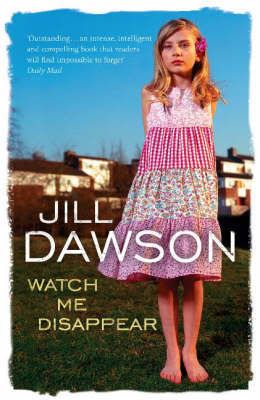
Jill Dawson Interview


As I mentioned in my review of her new novel, Lucky Bunny, Jill Dawson is something of a specialist when it comes to creating narrative voice. I wanted to ask her a little more about that and her work in general and I'm very grateful to her for taking the time to answer my questions.


Lucky Bunny is the story of Queenie Dove, an East End girl whose life is overshadowed by crime. Where did she come from and why did you decide to write about her?

Years back, in the early nineties I think, when I was living in Hackney and hadn’t yet published my first novel I tore something out of the Guardian about a funeral that went through South London, of a woman thief. She’d had condolences sent from the Kray Twins, and Buster Edwards the Great Train Robber attended in person; the funeral cortege had fifteen black Daimlers. It fascinated me and stuck with me….

As part of my background reading I read The Profession of Violence – the cult biography of the Kray Twins by John Pearson - and lots of other books with titles like ‘London’s underworld: three centuries of vice and crime’ but they rarely mentioned the women, except to say things like (describing a terribly bloody murder in Stoke Newington) ‘a blonde cleaned up the place’. So I started to think about women that associated with criminals, who belonged to this criminal underworld and what their role was. And in which ways it would be profoundly different, being female. I wanted to write in the spirit of Moll Flanders, that is her own account of her doings, un-ashamed and unrepentant, really.

In Moll Flanders there’s an exaggeration, a sort of comedy that stems from the fact that no one person could have experienced all that Moll does and I wanted to faintly echo that in giving Queenie a part in all the major criminal events of her era. Defoe draws on the established conventions of the rogue biography - a genre that presented the lives and escapades of real criminals in semi-fictionalized and entertaining ways. I read loads of memoirs by criminals or criminal associates and also wanted to playfully mimic in the style of Lucky Bunny their exaggeration and glamorisation of their own crimes.

I have read three of your novels now, all of them first-person narrations, what is it about that perspective that you like so much?

I suppose I like to show how much of how the world we shape according to our own feelings, bend to our own vocabulary. In Lucky Bunny I know from the outset that I was keen to write a novel where the central female character flavoured everything: you know those portagonists like Becky Sharp, Emma Bovary, Tess of the d’Urbervilles…. who aren’t someone’s girlfriend, or the love interest, but a driving force of the novel. I was hoping to create a character the reader felt they hadn’t heard from before. I don’t write about North London dinner parties – there are others doing that.

Each of those three novels is very different, but they all share some basis in fact. How do you light upon the periods, subjects and characters of your writing?

My novels often start with a place. And there’s usually a novel or poem that I’m interested in re-reading and thinking again about – Lolita in Watch Me Disappear; Brooke’s poem in The Great Lover, The Wasteland in Fred and Edie. Moll Flanders, as I’ve said above. Lucky Bunny is set in Hackney and the addresses that Queenie lives at are places I lived – Well Street, Lockhurst Street, the Frampton Park Estate.

There will usually be something too that I’m working out for myself. I don’t necessarily always know what it is until the novel is finished. In Lucky Bunny I realise now that Queenie’s attraction to danger and risk-taking was always at the back of my mind. I was re-visiting themes of a violent relationship, which is the subject of my first novel Trick of the Light.

I think I do have some other recurring themes. How far people deceive themselves, and how far they collude in their own downfall; how far they are victims, what aspects of their destiny they can control, what it means to face the truth and an individual’s longing to live authentically (in the way that Sartre meant it – that is be themselves, live a fully realised life and not conform to society’s dictates). That’s a theme of The Great Lover, Magpie and Fred and Edie. And sexuality and how far that is constructed or ‘natural’ and how far that shapes our lives is a recurrant theme – Fred and Edie, Watch Me Disappear, The Great Lover

I was very worried about getting things 'right' when I voiced the Rupert Brook sections of The Great Lover for the audio book. Given the factual basis of some of your characters how much do you worry about getting it 'right'?

Yes, I worry horribly about getting it right too. Especially because someone will always point out the ways in which we don’t. For The Great Lover I spent a lot of time in Grantchester and reading Rupert Brooke’s letters; for Lucky Bunny I went back to my old haunts in Hackney and tried to imagine what they were like fifty years earlier. I talked to a survivor of the Bethnal Green tube disaster and to my husband’s aunt who was a land girl and my father in law who was evacuated from London during the war. I think of fiction as an investigative tool. I can apply ‘fiction’ – the tricks and skills a novelist has up her sleeve - to the ‘facts’ of a story and see what happens. Of course something true, something that feels true to the reader, is what I want to create. I’m interested in how we construct stories for ourselves and how highly subjective lived experience is. I don’t deliberately change inconsequential, factual things to improve the plot. Quite the contrary. I believe they are the plot....

Authors are often criticised for failing to write convincingly from the perspective of the opposite sex. Having written from both the male and female viewpoint did you find it any harder to get inside the head of a man and how did you go about it?


I live in a household of men – I’m married and have two sons, and their friends are always around – so I feel I’ve spent my life surrounded by boys and men (my eldest is twenty two now, the youngest is eleven). So it’s easy to imagine inhabiting a male body. In fact, I’d say another theme of my work is masculinity and how it’s constructed by society, what it is to be a ‘good man’……Wild Boy especially looks at that, and a third of that novel is written from a male point of view, a third from the point of view of an autistic child and a third by a woman.

You are, if you don't mind my saying, a master of creating narrative voice. Have you ever been tempted to write something that is genuinely made up of only dialogue like a play, film or TV drama?

Thank you! I have had a go at film scripts. I’ve adapted a couple of my own novels and written one original script. What I found frustrating there is how much money, time and effort is needed to get them off the ground. A novel is something I can do on my own. I’m highly independent, not really good at working for or with others I’m afraid, been self-employed since I graduated at twenty-one ….

Would you like to recommend a neglected book to the readers of this blog?

I recently re-read Beryl Bainbridge’s Winter Garden. I know she can hardly be described as neglected, having just been awarded her own Booker…..but I do love that novel. In places it’s hilarious (especially a funny little sex scene, a knee-trembler in the kitchen), it’s full of mystery and endlessly entertaining, with that Bainbridge voice that is utterly original.

I always ask my interviewees if they will 'do a Hemingway' and create a story in just six words. Would you have a go?


Surely no writer has said yes?

Read more...

Tuesday, 9 August 2011

'a pinch of salt'


Lucky Bunny 
by Jill Dawson

Jill Dawson does narrative voice like no one else. This is the third novel of hers I have read that employs a first-person narration and there is something immediately engaging about having a new and often distinctive voice speak to you. A retrospective life obviously takes you back to another time period as well and after the pre-World War I setting of The Great Lover and the 1970's childhood of Watch Me Disappear, Lucky Bunny is the story of Queenie Dove, an East End girl who grows up during the Blitz and makes a life for herself amongst the criminals of Krays-era London. It's worth noting the expression on the face that graces the cover because it contains just the right mixture of wry amusement, strength and a hint of something darker to convey the experience of reading Queenie's tale. On the surface this is an entertaining read of wartime privation, petty crime and good time girls but the darker undercurrents are what make it a far deeper and more interesting read and should lead us to question how much we can take what we read at face value. Queenie herself urges us to do just this at the very outset.

I don't think I'm a confessional person. Bit of a storyteller, that's all. Take what I say with a pinch of salt, if you like. Luck always beggars belief...I hope I've left that other-named girl behind: I've worked bloody hard at it.

That 'other-named girl' is born to Irish mother Moll and jailbird father 'Lucky Boy' Tommy Dove in the Poplar of 1933. Tommy is a charming rogue who knows how to talk himself into a woman's affection but whose most regular relationship comes from his frequent brushes with the law and those periodic stays at Her Majesty's pleasure. The totemic animal of the title is a gift that he brings to his daughter, perhaps as early as the first time he sees her and that she carries with her through life, a white bunny rabbit with a pink bow around it's neck, its bright felted wool 'turning grey eventually, like all of us'

Why do I think he must have given it then and there, the first time we met? Because the shape of my life had begun and I feel certain it was Dad who began it. Things. That was what he gave me from the start in the place of anything else, and it was what I ended up craving. Gifts and glamour and novelty, and if it came with a whiff of naughtiness so much the better.
So we can see the beginnings of the personality that will embrace the notion of crime. A bit of thieving here and there is what allows a family to survive in wartime, to maintain a bit of glamour and who does it really hurt? Do we blame the regularly absent father or the increasingly alcoholic mother, or is Queenie perhaps born to and perfectly suited for a life of crime? Even at only six years of age Queenie shows her willingness when she steals a bottle of milk for her and brother Bobby ('a few currants short of a teacake'). The closeness of her bond with Bobby will become important as family tragedy and wartime evacuation shatter the already fragile bonds of their family unit. I don't want to give away too much of the plot, of which there is plenty, but point out those moments that give us an insight into the formation of that enigmatic smile on the cover.

It is when she and Bobby are evacuated to a landscape familiar to Dawson readers, the flat fenland near Ely, that Queenie assumes the name she will carry from that point on. We also get the first glimpses of her tendency towards fantasy and development of the persona that accompanies the new name, all part of her natural ability to adapt and survive. So sometimes she is Queenie, who has a white horse called Betsy in her father's stables, or it might be Queenie, whose father owns the best pie and mash shop in London. Unsuited to country life it isn't long before she returns to London and on her departure there is another moment of significance. The daughter of the family they have been staying with, who has spent much of her time tormenting them both, runs to see them off at the station and Queenie recognises something in her eyes.

Although it's new to me, I suddenly know exactly what it is, and a feeling like a spanner turning over in my stomach locks it away. I think it's going to be useful to me. I'm going to store it up...My way of reading people. Ah, I think. I want to smile. Elsie feels guilty. That's what guilty looks like.

Bobby will return to the country but Queenie remains in London, under the care once again of Tommy, for whom the bureaucracy of war offers plenty of opportunities to avoid the draft and fiddle money from the state, and occasionally her Nan who has been like a surrogate mother to her at times. Then comes the turning point in Queenie's life, the event that removes the last restraint that might have kept her on the straight and narrow, an event that actually happened in 1943 in Bethnal Green Tube station. It was naturally being used as an air raid shelter but when a crowd surged into it on the night of March 3rd, 173 people were killed and over 90 injured in the worst civilian disaster of the second World War. One of those people was Queenie's Nan. Without Nan's influence Queenie falls in with her mother's former crowd, The Green Bottles, a group of glamorous good time girls well practised in the arts of 'hoisting,' or shoplifting to you and I, and it isn't long before Queenie has learnt the ropes herself and employs those skills of perception and acting to quickly excel amongst the group.

What follows is entertaining as I said, who doesn't like a heist? But, as ever, it is Queenie's personal relationships that prove most interesting and in particular that with the man closest to her, Tony. Acting first as driver and protector when Queenie and friends are involved in the practise of 'rolling' (taking money from potential punters on the street before doing a runner) it is when they become intimates that Queenie's independence and strength are questioned. It is when protection becomes control and anger becomes violence that we get into the novel's darker terrain. When Queenie becomes a victim of domestic abuse herself she is forced to reconsider her anger at her own mother for 'allowing it' to happen to her. The whole notion of guilt has been there from the very beginning, Queenie saying 'It's my fault, I think. I'm the cleverest' so that even her achievements in helping the family survive are tainted.

And then we have the question of veracity. How much should we believe? Even before we get to the more sensational elements of the plot we have learnt that all criminals are in the habit of exaggerating their own significance in events and Queenie herself has warned that 'perhaps I'm making it up, you know, putting myself at the centre, everywhere that mattered.' Most telling perhaps in this story of survival is Queenie's discussion with her friend Stella about luck and Queenie's belief that even in a hopeless situation you can make things better or worse.

'Carry on struggling. Or close your eyes, give up. Or . . .think about it. Use words, try to make sense of it, even while it's happening - tell yourself a story about it . . '

Come back here on Thursday and you'll be able to read my interview with Jill, where she answers questions about the creation of narrative voice and other aspects of her work.

Read more...

Tuesday, 2 August 2011

'a real jim dandy'


Rules of Civility
by Amor Towles

Some writers have a gift to make characters memorable. This is sometimes because they are extraordinary, sometimes because they are reminiscent of someone we ourselves know, hardly ever due to an author providing exhaustive descriptions of them, and often because of something almost magical and hard to quantify that makes that character live for the reader. Very, very occasionally an author manages to create someone so alive, so charming, so witty, attractive and human that you might experience that sensation that people call 'falling in love' with a character. I don't think it's ever happened to me before but I should confess straight away (and please don't tell my wife) that thanks to Amor Towles debut novel I am ever so slightly in love with Katherine Kontent. Now, please don't think that I've had my head turned so much that I'm going to rhapsodise about a book that doesn't deserve the praise, Towles' book is funny, evocative, immediately involving and had me employing my patented reading-whilst-walking-down-the-street technique, but I'm prepared to admit that a large part of its appeal was because I genuinely cared about what happened to Miss Kontent, enjoyed every minute of her description of events, and desperately, desperately wanted to know what happened to her next. In fact having finished the book I can't help but wonder what happened to her after the final page. Oh dear, I have got it bad.

A preface finds Katey Kontent (stress on the second syllable 'like the state of being') in 'late middle age' in 1966 attending the opening of Walker Evans' famous exhibition Many Are Called (the novel's epigram is the Bible passage from which that title was taken - Matthew 22: 8-14). Evans' photographs of riders on the New York Subway were taken with a hidden camera in the 1930's, candid portraits of Depression era Americans that capture something indisputably authentic. A few of these pictures are used in the novel to separate the four main sections Wintertime, Springtime, Summertime and Fall, so I shall treat you to a few of them here too. Walking through the exhibition Katey spots a familiar face in one of the pictures - Tinker Grey. In this picture he is underweight and dirty but still with a bright eyes. Near the end of the exhibition he appears in another photograph; clean shaven, cashmere coat, windsor knot. Katey's husband, Val, assumes the two photographs show a man getting back on his feet but the dates show what she already knows: The later photo shows the broken man. 'Riches to rags' suggests Val. 'No...Not exactly' corrects Katey, and we are immediately hooked. What happened in between those two photographs to Katey's 'acquaintance'? We know from her reaction to seeing Tinker's face, the jolt it causes in her equilibrium, that we are in for quite a tale. It is a brilliant, enticing opening.


On the last night of 1937 Katey is holed up in a low-rent bar with Midwestern gal Eve Ross.

Her shoulder-length hair, which was sandy in summer, turned golden in the fall as if in sympathy with the wheat fields back home. She had fine features and blue eyes and pinpoint dimples so perfectly defined that it seemed like there must be a small steel cable fastened to the center of each inner cheek which grew taught when she smiled. True, she was only five foot six, but she knew how to dance in two-inch heels - and she knew how to kick them of as soon as she sat in your lap.

These two friends from the secretarial pool have three dollars to their name, enough for one martini an hour then coffee, eggs and toast after midnight in a Ukranian diner. 'But a little after nine-thirty, we drank eleven o'clock's gin. And at ten we drank the eggs and toast' That is the point at which Tinker walks into the bar in his beautiful cashmere coat. Eve calls 'Dibs' in a good natured way but this becomes important because as the evening progresses, and indeed as the three of them continue their friendship into 1938, the exact balance of this menage is never entirely certain. When the proprietor of that Ukranian diner asks Katey whether the young man is hers or her friend's and she answers 'A little bit of both, I guess' he is quick to let her know, 'That doesn't work for long my slender one.' Fate intervenes rather dramatically when the three of them are involved in a car accident on an icy street. It is Eve who flies through the windscreen, Eve who suffers disfiguring lacerations to her face, Eve towards whom Tinker feels agonising guilt, Eve to whom he will attend.


That is quite a beginning to a year of chance encounters - 'encounters which in the moment seemed so haphazard and effervescent but which with time took on some semblance of fate.' Tinker is just one of a whole new circle of friends that Katey makes, friends and acquaintances from a different strata entirely from this Brooklyn girl from a Russian family (Ah, that K begins to make sense now...), friends who will  allow her to come much closer to achieving what such a well-read and intelligent woman is capable of. Among these is well-to-do Anne Grandin who introduces herself as Tinker's godmother and has some strong advice for a woman in whom she recognises the right qualities. In an age where most women are looking to make the right match, the match that will allow them to preside over 'scullery maids and table settings', Anne advises that she shouldn't be aiming to get into those women's shoes, but the men's. There is plenty of advice out there for a girl like Katey. Even the motto of the Beresford, where Tinker lives, is worth noting: Fronta Nulla Fides. Place No Trust In Appearances.

The pursuit of those work ambitions as well as the personal ambitions any of us might have towards love and companionship are just some of the driving forces in the year ahead. There will be friendships and courtships, jazz music, journalism and plenty of martinis. Shooting parties, paper airplanes, hair dye and diamonds; this novel is filled with incident but it is the sparkle of the characters, their witty dialogue and whip-cracking humour that makes the pages whizz by. You can probably still picture those dimples of Eve Ross and weeks after finishing this novel I can still recall the halting speech of Wallace Wolcott, the wide-eyes of Dicky Vanderwhile as he extols the virtues of his bathtub, the bra-less threat of Anne Grandin. Towels has a talent for crystallising character, often through concise description of a single trait that suddenly brings them to life. His dialogue is funny, charming, sometimes so good it feels like you're watching one of those old black-and-white movies, and there is always a healthy bite to the exchanges whether it be from a desire to be witty, to outwit or to attack.


On top of all this Katey is a bookworm. Oh joy! Early on in the novel during Eve's convalescence she picks up a Hemingway and reads to her from somewhere in the middle.

Starting on page 104 made Hemingway's prose even more energetic than usual. Without the early chapters, all the incidents became sketches and all the dialogue innuendo. Bit characters stood on an equal footing with the central subjects an positively bludgeoned them with disinterested common sense. The protagonists didn't fight back. They seemed to be relieved to be freed from the tyranny of their tale. It made me want to read all of Hemingway's books this way.

This is a girl with the nous to select Thoreau's Walden as her desert island book given that it contains 'eternity on every page' and to take some guidance from its philosophies as she attempts to guide a course somewhere between the aspiration to follow your 'pole star' and the need to find truth in the 'now and here.' And she also knows the unalloyed joy of reading, not just its importance in living a rewarding life, the way in which it allows us to measure our own happiness, articulated beautifully by an apparent non-sequitur fro her father as he lay dying.

Whatever setbacks he had faced in his life, he said, however daunting or dispiriting the unfolding of events, he always knew that he would make it through, as long as when he woke in the morning he was looking forward to his first cup of coffee...in retrospect, my cup of coffee has been the works of Charles Dickens. Admittedly, there's something a little annoying about all those plucky underprivileged kids and the aptly named agents of villainy. But I've come to realize that however blue my circumstances, if after finishing a chapter of a Dickens novel I feel a miss-my-stop-on-the-train sort of compulsion to read on, then everything is probably going to be just fine.

Reading this novel produces just that kind of compulsion (it also happens to have a tactile, and subtly foiled, jacket to die for) and if Towles can continue to write books of the same calibre then everything is indeed going to be just fine.

Read more...

  © Blogger templates The Professional Template by Ourblogtemplates.com 2008

Back to TOP