Random

Tuesday, 2 October 2012

Swimming Home - Deborah Levy

'all my etc'


To have been so intimate with Kitty Flinch had been a pressure, a pain, a shock, an experiment, but most of all it had been a mistake. He asked her again to please, please, please drive him safely home to his wife and daughter.
'Yes,' she said. 'Life is only worth living because we hope it will get better and we'll all get home safely.'

I really meant to read this some time ago. When I saw details of a novel with an intro from Tom McCarthy my ears pricked up. Then came a glowing review from Mr Self in the Guardian. I'm ashamed to say that it wasn't until its Booker long-listing that I finally took the plunge and how frustrating not to have read and enjoyed it sooner. What would have been even cooler than reading it nice and early, before the other plaudits arrived, would have been to be amongst the names printed within the cover as supporters who brought the novel to publication. Publisher And Other Stories uses a subscription model you see, helping to show that there is a market and support for a title before it goes into print, and each of those subscribers will see their name printed at the back of the titles they have helped bring into being. That must pretty good, even more so now that the book has been short-listed too.

Anyway, before I begin to sound like a pitch for subscribers (click here for details!) let's look at the book itself. I'm thrilled to see it on the Booker list, not just as a triumph for small independent publishers but also to show that dark and challenging fiction has a place in the running for a prize that lost some of its lustre last year with the sniping about readability. In fact with a shortlist like this year's one wonders if there will still be so much clamour for the new Literature Prize. Swimming Home is the perfect rebuttal because its set up could so easily herald the kind of middle-class fare that encourages so much sniping at literature prizes and 'literary' fiction in general. Two families holiday at a villa in the hills above Nice. Joe and Isabel Jacobs are there with their 14 year-old daughter Nina. Joe is a poet, Isabel a war reporter. Their friends Mitchell and Laura run a failing shop in Euston that sells primitive weapons and African jewellery. It all sounds cosy enough but we are unseated immediately as the Jacobs come out to the pool ('more like a pond') and think they see something floating in the deep end, Joe wondering if it's a bear. This is Kitty Finch who is actually swimming naked underwater, an interloper in their midst who claims to be there due to a mix up with dates and who insinuates herself into the family's holiday. I was reminded of Ali Smith's The Accidental in which Amber was the uninvited guest on another middle-class holiday. The two books don't have much in common beyond that, but that sense of unease and the way in which a stranger can have a devastating impact on a family unit was all too familiar.

Kitty is an extraordinary creation and I found it fascinating the way a female novelist approached this provocateur in comparison to how I fear a male novelist would handle things. Yes, standing next to her 'was like being near a cork that had just popped out of a bottle. The first pop when gases seem to escape and everything is sprinkled for one second with something intoxicating' and yes, she spends large parts of the book it would seem with very little clothes on (this same technique is often on display in British theatre where productions of new plays force some poor kid out of drama school to parade around with it all out on show because that's the only way to demonstrate youthful sexual allure, or temptation, or something or other) but whilst we might expect her allure to come from being some perfect, pert ingenue she is only ever 'almost pretty, with her narrow waist and long hair glowing in the dark, but ragged too, not far off someone begging outside a train station holding up a homeless and hungry sign.'

She had a north London accent. Her front teeth were crooked. When she wasn't stammering and blushing she looked like she'd been sculpted from wax in a dark workshop in Venice. If she was a botanist she obviously did not spend much time outside. Whoever had made her was clever. She could swim and cry and blush and say things like 'hogged it.'

These and other descriptions of her are so effective in their detail and the way in which they demonstrate how difficult the Jacobs and the other residents find dealing with her. She always seems dangerous in some way and yet we can never quite work out why. This is perhaps due to the opening page (part of which I quoted at the top of this post), a scene on a mountain road with Kitty and Joe in a car together, a scene that returns later in the book, sightly altered, taking on the feel of a dream. The reader always senses that proceedings could well career off the road and down the side of the mountain.

Joe and Isabel's marriage is in trouble and Kitty could well be the catalyst to blow things apart. Is this why Isabel insists that she stay rather than leave at the beginning of the novel? She couldn't possibly know that Kitty is in fact there because she is a huge fan of Joe's poetry and that she has brought a poem of her own, whose title is what lends this novel its own, for him to read. This writing link is so strong that Joe is convinced he can hear lines of his own poetry in what Kitty says to him. Kitty and Joe are also linked by their respective depressions, Joe having written famously about his treatment and Kitty having just come off her own medication, Seroxat. Joe puts off reading her poem for as long as he can but finally relents (we will read only snatches of it, with its repeated use of 'etc') and his reaction comes close to describing the effect of reading the novel.

To accept her language was to accept that she held him, her reader, in great esteem. He was being asked to make something of it and what he made of it was that every etc concealed some thing that could not be said.

There is so much hidden under the surface of the writing, just as Kitty herself was disguised under the surface of the pool when they arrived, things are alluded to, imagery and symbols are potent and interesting and each of the characters is expertly suggested by pitch-perfect detail. For the young daughter Nina this is a revolutionary moment. Fully aware of the fragile nature of her parent's marriage she is also undergoing her own transformation from child to adult and it is Kitty who assumes the role of mentor whilst the parents are distracted when Nina has her first period. In a wonderfully written scene Kitty grabs her hand and runs with her outside to the pool.

Nina could see her own shadow in the pool and in the sky at the same time. She was tall and long, there was no end to her and no beginning, her body stretched out and vast. She wanted to swim and when Kitty insisted it didn't matter about the blood, she dared herself to take off the bikini and be naked, watching her twin shadow untie the straps more bravely than the real-sized Nina actually felt. She finally jumped into the pool and hid herself in the blanket of leaves that floated in the water, not sure what to do with her new body because it was morphing into something alien and perplexing to her.

The pool is one of the most obvious symbols in the novel but what of its title and that wish as stated by Kitty to get home safely? This is where the novel feels really subversive, taking the middle-class holiday and jeopardising the ability to even escape from it unscathed. Joe, as we have learned early on, has an anglicised name, having fled occupied Poland at the age of five thus committing himself not only to 'leave no trace or trail of his existence' but also of course never to return home.

That was what his father had told him. You cannot come home. This was not something possible to know but he had to know it all the same.

A man who can never really return home, a wife hardened by reporting from fields of conflict, a daughter on the cusp of womanhood and a stranger with mixed motives. This is about as far from the comforting holiday read we might have expected before opening the cover and that is what makes the book so thrilling to read. Dark, dangerous and unknowable, this novel, like the pool at its centre with its covering of fallen leaves has hidden depths and dangers that might just make it the dark horse on this year's Booker list. I certainly hope so because it is easily my favourite of the shortlisted titles I've read.

Read more...

Tuesday, 25 September 2012

A shifting perspective

No review this week but I thought I could point you towards a little project I have initiated. Two years ago I reviewed an out of print book called The New Perspective by K Arnold Price. The book had been chosen by Colm Toibin for a Guardian article called How did we miss these? in which 50 writers chose 'brilliant but underrated novels that deserve a second chance to shine.'


Price's debut novel was published when she was 84 and she only published one more after that. I thought the New Perspective was fantastic, but with copies so scarce and expensive I decided to lend it to anyone interested in giving it a go. What has begun is what I hope will be a kind of international library/book club with some of the network of bloggers and readers that I have connected with over the last 5 years sharing their thoughts on this short novel. First up was Trevor Berrett of The Mookse and the Gripes over in the US. You can find his review here (positive I am glad to say) and I'll let you know as soon as the next one goes up. All I can reveal is that the book has travelled north a little to Canada.

Max at Pechorin's Journal got a copy of the book himself and reviewed it here. He has also passed his copy on so there may be even more reviews to come...

Read more...

Tuesday, 18 September 2012

Sea of Ink - Richard Weihe

'water rendered visible'


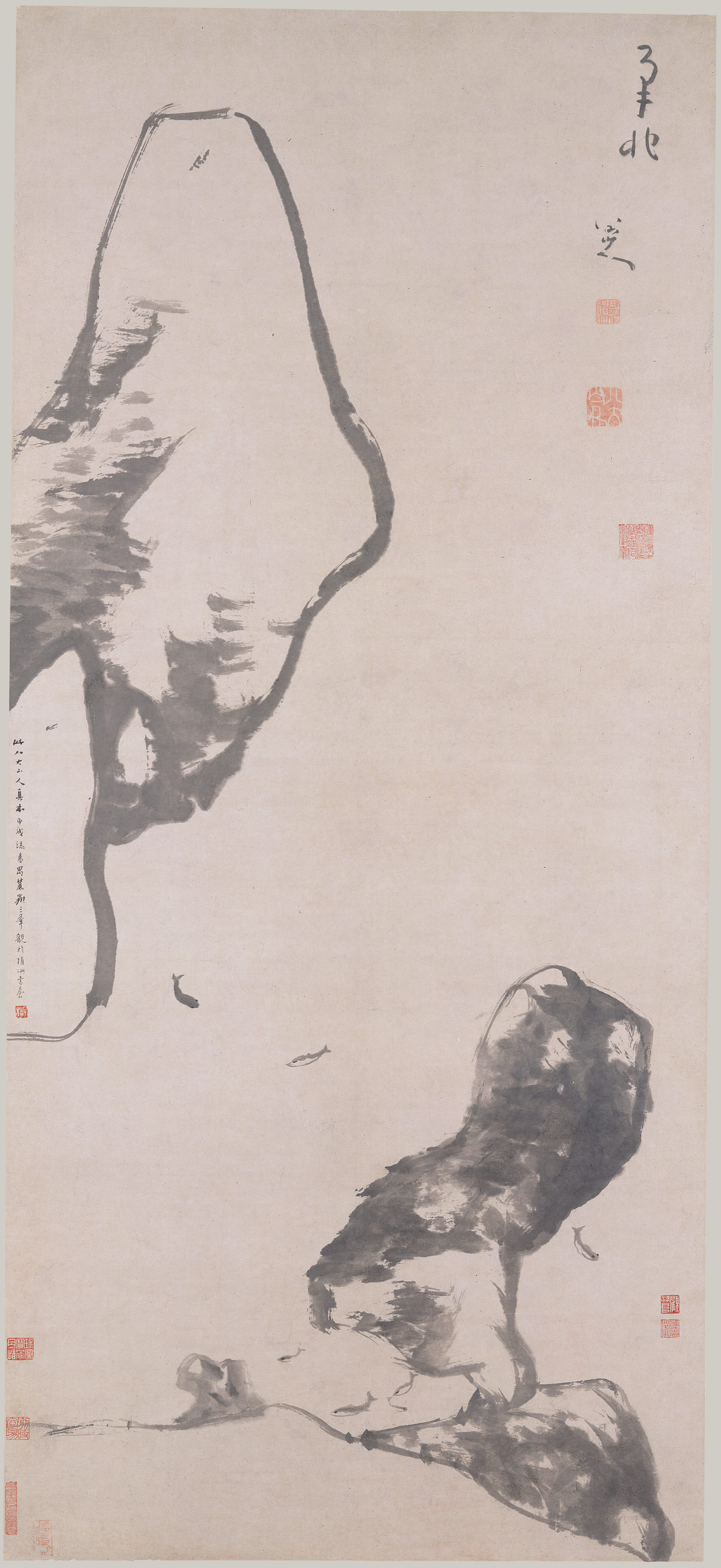
This is the third and final novella in Peirene's Small Epic series and they don't come much smaller or epic than this one. 107 pages including 11 illustrations make up 51 short chapters. Contained within those small numbers is the life of a man, the end of the Ming dynasty in China and a meditation on artistic inspiration that applies not just to the visual arts, maybe not just to the arts at all, but applies to everyone when examining what comes before action of any kind. That aspect of the book, and the fact that it is based on the real life of Chinese painter, poet and calligrapher Bada Shanren, mean that you might question how well it succeeds as a piece of fiction in the traditional sense (Weihe's Afterword and Notes on Sources show actually how well he has incorporated his research) but there is no doubt that it provides a calm and meditative read that will reward you with an enormous sense of relaxation if you can absorb it in a single sitting.

The year 1644 saw the end of the Ming dynasty which had ruled China for 276 years. The ruling family had spread far and wide but were slowly and systematically wiped out by the rising Manchu's. Those that had once wielded power were faced with the choice under the new Manchurian dynasty to collaborate or die. We follow the life of the man who was born Zhu Da in 1626, in the eleventh generation of the Yiyang branch of the Ning line of the royal family (Ning being the 17th son of Ming dynasty's founder). A sheltered childhood in the palace allowed him to develop his early prodigious gifts in poetry and art under the tutelage of his father. But with the end of the Ming dynasty and his father's death, Zhu Da is rendered mute, communicating only with his brush, before finally fleeing to the mountains, and the sanctuary of a monastery, leaving behind a wife and child, perhaps guided by wise saying, 'If you are guided by human feelings you will easily lose your way... but if you are guided by nature you will rarely go wrong.'

The opening of this novella is a little like the paragraph above, a potted history and a lot of 'plot' and I might seem to be spoiling things by giving so much away but the plot isn't really the thing. Zhu Da leaves his life as a prince behind, any returning images 'not memories, rather the dream of a life never lived.' Within the monastery he undergoes the first of his transformations, changing his name to Chuanqui, and beginning his next period of tutelage under the instruction of the Abbott Hongmin. The meat of the book is really in what it has to say about creativity, inspiration, art, expression and the position of the person who holds the brush. The Abbott has plenty of wise advice to pass on to his charge and his training is repetitive, physical and demanding. We might not think of a single, fluid swipe of the brush as a physical exertion but we get a real sense of the pain that comes from repeatedly practising movements and getting to the point where he can remove the conscious movement and allow the hand and brush to paint what is there. As his master explains at one point: "Ink is water rendered visible, nothing more. The brush divides what is fluid from everything superfluous."


The plot will catch up Chuanqui (who in turn changes his name to Xuege, then Geshan, Renwu, Lu, Poyun and finally Bada Shanren) who will have to feign madness in order to escape being assimilated into the new order when his identity is uncovered. The adoption of the face of madness, the near-constant name changing and the desire to disappear into the act of painting all throw up interesting thoughts about the position of the artist, particularly in a modern age when the cult of the artist as celebrity or brand is so strong. Bada Shanren has an interest in remaining undetected of course and actively avoids being identified (although he applies his stamp to each of his pictures) but he is constantly striving to locate who he is as an artist for himself. Again, his master will have something to say on the path of the individual artist looking at how to express themselves directly.

'...besides the old role models you also have your own: yourself. You cannot hang on to the beards of the ancients. You must try to be your own life and not the death of another. For this reason the best painting method is the method of no method. Even if the brush, the ink, the drawing are all wrong, what constitutes your "I" still survives. You must not let the brush control you; you must control the brush yourself.'
As I said at the top there are 11 illustrations of Bada Shanren's work throughout the book and one of Weihe's strengths is the way in which he technically describes the act of painting some of them. This might sound counter-intuitive but in the same way that Jean Echenoz used plain description to realise the works of Ravel into the reader's mind, Weihe describes the technique behind the paintings of Bada Shanren, something particularly important in a painting style which is all about technique and what can be achieved by single strokes, changes in pressure and the use of the right ink.

In the centre of the paper he painted a fish from the side, with a shimmering violet back and a silver belly, the tail fins almost semicircular like the bristles of a dry paintbrush. The fish's moth was half open, as if it were about to say something. It's left eye peered up to the edge of the paper with an expression combining fear, suspicion, detachment and scorn.
The eye was a small black dot stuck tot he upper arc of the oval surrounding it.
The fish swam from right to left across the paper.
Bada painted this one fish and no other, then out his name to the paper.
He had perished long ago, but he was still alive. All he feared now was the drought, when the ink no longer flowed and life had been worn down to nothing.
That is how he saw himself.

This novella is perfect reading for any visual artist (I have already passed my copy on to just such a person) but I would argue that its lessons and the thoughts it provoke would apply to anyone working in just about any field of the arts, where inspiration and creativity are as capricious and slippery as a live fish in the hand. In a modern world where everything seems to run at a hectic pace and demand is such that we might simply churn things out rather than take our time there is a lot to be said for giving this book the time it requires to read from cover to cover. That in turn might help us to appreciate the time we should take before making the first stroke, for...


....Is the whole drawing not contained in the first stroke? It must be considered long in advance, perhaps a whole life long, in order to bring it to the paper in one fluid movement at the right moment, without the need or ability to correct it.

Read more...

Tuesday, 11 September 2012

Train Dreams - Denis Johnson

'gone forever'


The book that failed to bag the Pulitzer Prize in the year that the board decided that none of its shortlist deserved the accolade (or couldn't agree on which one did) actually began life as a story in the Paris Review back in 2002. As an avid devourer of Johnson's writing I had been frustrated for many years by seeing the title appear on a certain web-based book supplier but only in German, I believe. How long would it be before this novella finally got published in English again for those of us who'd missed out originally? A whole decade later it is finally in print thanks to Granta who are having a barnstorming year quite frankly. I was a little cautious too however. Johnson's last published work was Nobody Move, a novel which had previously been serialised in Playboy magazine, and whilst I found much to enjoy it felt like a bit of filler after his opus Tree of Smoke. So I was a little worried when Train Dreams finally saw the light of day. Was this going to be another bit of (previously published) filler before the next major work? Let me answer my own question with an emphatic no! Train Dreams is far from being filler. It may only be just over 100 pages, a novella, but it contains a man's life, a lost era and a richness and satisfaction that shouldn't be possible in such a short book. It might even be his best, but his readers are sure to disagree about that. It is certainly worthy of proper publication and in my limited experience of the Pulitzer shortlist (I gave up on The Pale King after reading more pages than in the whole of Train Dreams and Swamplandia! didn't appeal) should probably have picked up that prize.

Train Dreams begins in 1917 with its hero, Robert Granier, part of a group of railway workers that attempt to murder a Chinese labourer. The men have all been working together for Spokane International in Idaho on the construction of a bridge and it is from this half-completed structure that they attempt to throw the accused thief. He manages to escape after spitting curses at his tormentors and Granier in fact believes the man may literally have cursed his life, something we will watch unfold over the following 116 pages. This is an America still being tamed and settled and Granier's work on the railways and in the woods felling trees puts him at the very edge, where the wildness of nature combines with the civilising effect of human settlement. This meeting point is the crux of the novel. Not only do humans behave savagely but nature strikes back with her own forms of destruction, Granier's dog isn't nearly domesticated enough, running with wolves. Even his young child appears unsafe in the low light of his cabin.

In the dark he felt his daughter's eyes turn on him like a cornered brute's. It was only his thoughts tricking him but it poured something cold down his spine. He shuddered and pulled the quilt up to his neck.
All of his life Robert Granier was able to recall this very moment on this very night.

Granier works as a choker, looping cable around the wood that has already been felled by sawyers, cleaned up by limbers and cut by buckers, ready to be hauled out from the woods by horses.


Granier relished the work, the straining, the heady exhaustion, the deep rest at the end of the day. He liked the grand size of things in the woods, the feeling of being lost and far away, and the sense he had that with so many trees as wardens, no danger could find him.

That sense is illusory though for, as one of his aged colleagues is keen to warn, 'the trees themselves were killers'. The meeting of man and nature is important again because 'It was only when you left it alone that a tree might treat you as a friend. After the blade bit in, you had yourself a war.' We might expect this to presage an accident whilst he works but the forest attacks Granier in another way entirely when a fire sweeps through the valley where his wife and daughter live and he returns home to find no trace of them at all. So begins the solitary phase of his life (apart from that dog for company), one that he will share with the reader, one in which he will continue to live at the boundaries of the tamed world for "God needs the hermit in the woods as much as He needs the man in the pulpit."

Johnson has often written about those on the margins of society but in Granier he has a man even more isolated than most. Grieving for his losses for the rest of his life he is afraid of his dreams, of his wandering mind and the fleeting contact he has with others is just enough to keep him within the realms of what we might consider a normal life. A little like his dog we feel that left alone for long enough he might cross over to that wild side becoming even more connected to the landscape around him rather than the railway he helped to build right through it. Johnson's prose is perfectly pitched so that the dream-like or visionary image can break through the surface of civility, and in its exploration of themes as varied as racial integration, violence and isolation he also manages to make us question how sure a hold we have on what makes us human.

This is the kind of book that makes the reader marvel at how much the author has managed to cram in but which never feels crowded or overworked. I have barely mentioned any of the incident and not even hinted at the quite extraordinary way in which the story develops and concludes. It is a gem of a novella, not neat at all but rugged and dangerous, written with the kind of skill that manages to hide all the machinery away so that the reader doesn't even realise how it is all done; and whilst it is obviously a treat for those like me who already know what an amazing writer Johnson is it will be an even bigger treat for those who have yet to discover him. You lucky bastards.

Read more...

Tuesday, 4 September 2012

The Yellow Birds - Kevin Powers

'the curve of the bell'


A yellow bird
With a yellow bill
Was perched upon
My windowsill

I lured him in
With a piece of bread
And then I smashed
His fucking head...

Traditional U.S Army Marching Cadence


Some people are swayed by the blurbs that come attached to the dust-jacket of new novels and some aren't, but whichever camp you fall in you can't help but be impressed by the sheer calibre of the names adorning Kevin Powers debut novel, not to mention their fervour. You'll see Chris Cleave, Ann Patchett and Colm Toibin in the cover shot above but you can also add Alice Sebold, Anthony Swofford and Tom Wolfe to that roll call with Wolfe calling it "the All Quiet on the Western Front for America's Arab wars." That's some pretty impressive blurbage but as is always the case, it doesn't really mean anything when you sit down to read a book yourself. The very first thing I will say in its favour is that despite the text in my advance proof being virtually microscopic I persevered way beyond my usual threshold for tiny type (with the final dramatic irony being that a finished copy arrived the very day after I finished it). Powers is a poet and an Iraq war veteran and his debut novel about that conflict and its impact showcases both of those traits, containing both the veracity you'd hope for from a real soldier and some amazing and quite beautiful writing from the poet.

The novel is narrated by Pvt John Bartle who makes a close link with another private, Daniel Murphy, when the two of them are training at Fort Dix. Bartle is 21 ("as full of time as my body would allow. But looking back from where I am, almost thirty, old enough, I can see myself for what I was. Barely a man. Not a man. Life was in me, but it splashed as if at the bottom of a nearly empty bowl."), Murph is just 18 and considerably greener, leading Bartle to make a promise he can never keep to Murph's mother, 'I promise I'll bring him home to you.' This is the pact that frames the novel.

The two men are deployed to Al Tafar in the Ninevah Province of Iraq. Daily life alternates between periods of torpor and dangerous patrols, with the threat of mortars, RPG's and IED's never far away. With US fatalities running at about 970 both Bartle and Murph obsess about not becoming the Army's thousandth casualty, their photo sure to be used in making them exactly the wrong kind of poster boy for America's conflicts abroad. In a telling fillip on the received wisdom about military unity Bartle expresses one of the psychological tools necessary for survival.

...I'd been trained to think war was the great unifier, that it brought people closer together than any other activity on earth. Bullshit. War is the great maker of solipsists: how are you going to save my life today? Dying would be one way. If you die, it becomes more likely that I will not. You're nothing, that's the secret: a uniform in a sea of numbers, a number in a sea of dust. And we somehow thought those numbers were a sign of our own insignificance.

Powers is strong as you might expect on the psychological impact of war, death and danger. We suspect early on that it will be Bartle's duty to remain strong when Murph falters but the truth is that both of them, and most of the men around them, cannot help but be traumatised by the bloody, terrifying and unpredictable nature of the conflict, with only the indomitable Sgt Sterling maintaining an aura of invincibility and strength. Bartle cannot help but ruminate on the difference between his grandfather's war with its 'destinations and purpose' and the 'slow, bloody parade' of his own campaign with its repeated battles for the same territory and the general lack of any measurable progress. This is where I would begin to question what the novel really achieves beneath the veneer of good writing. We have the dependable superior, the green recruits, the sensitive and poetic narrator, we have the banality of murder, the trauma of death, the parade of destruction. All of these are present in most narratives of war so what if anything does Powers add to the cannon?

We probably all want to know (and Powers isn't afraid to have a reporter ask the clichéd question) what combat actually feels like. By allowing young Murph to provide the answer he achieves a simplicity that avoids cliché, out of the mouths of babes....

"It's like a car accident. You know? That instant between knowing that it's gonna happen and actually slamming into the other car. Feels pretty helpless actually, like you've been riding along same as always, then it's there staring you in the face and you don't have the power to do shit about it. And know it. Death, or whatever, it's either coming or it's not. It's kind of like that," he continued, "like that split second in the car wreck, except for here it can last for goddamn days."
The reader is trying to measure the effect of trauma too because we know from the outset that Murph doesn't make it and also that war did something to him. Bartle too has spent a lot of time since, trying to pinpoint the moment he noticed a change in his charge, 'somehow thinking that if I could figure out where he had begun to slide down the curve of the bell that I could do something about it. But these are subtle shifts, like trying to measure the degrees of grey when evening comes.' Trauma is the novel's major theme, in fact those expecting to read a traditional war novel filled with incident may well be disappointed by only a couple of moments of military engagement. This is a novel about the  legacy of war, of the trauma suffered by those fighting it not only at the point at which they are fighting but most importantly when they return home.

This is where the novel could really have excelled for me because this is the real untold story of war, the story of the survivors and how difficult they can find it to settle back into their civilian lives when they return home. In Remarque's classic All Quiet... he used his hero's visit home on leave to point up the awkwardness of engaging with his own family who didn't understand what horrors he had witnessed and his desperate desire to get back to the front amongst those who did. Bartle too returns home to his family and feels as though he's 'being eaten from the inside out' because he is constantly being thanked by those who are grateful for what they're doing over there and yet he can't tell them how awful it is making him feel. We also experience how the slightest noise can trigger a memory of mortars falling and an instinctive reaction to brace for impact, and we sense the mental prison that Bartle is being backed into.

You want to fall, that's all. You think it can't go on like that. It's as if your life is a perch on the edge of a cliff and going forward seems impossible, not for a lack of will, but a lack of space. The possibility of another day stands in defiance of the laws of physics. And you can't go back. So you want to fall, let go, give up, but you can't. And every breath you take reminds you of the fact. So it goes.

As I say, this element of the book could have been fantastic, and in many ways the style with which Powers writes Bartle's decay is impressive but I wanted to engage with that darkness a little more. There are two reasons I think for some of those quotes on the front and back. The first is to do with feeling. Powers does write in a way that makes you feel things: fear, disgust and confusion for example, and that's why I think he resonates with writer's like Cleave and Sebold. The other is to do with timing. How many novels are there about the Iraq war? Surprisingly few (and none that are going to receive the marketing push that this one will) and so Powers has the virtue of having got there first. How Wolfe can possibly acclaim this book to be in the same canon as All Quiet... is  beyond me. We won't know for years and years what the classic novel of the Iraq war might be, and this one isn't doing anything sufficiently new to warrant the excitement attached to it.

But I don't want to be too down on a book that has considerable strengths. Powers writes well, really well at times and it was only occasionally that his beautiful writing began to feel like a concious attempt to do 'beautiful writing' rather than what the novel seemed to demand. He began writing the novel to try and put into words what it's really like 'over there' and his approach is to focus less on the fighting and more on the time that surrounds it. That seems like the right place to look and if the resulting novel doesn't quite hit the heights that I had hoped for at the beginning then that may be as much me wanting it to be a novel it isn't as Power's failure to make it the novel it could have been. Near the novel's end Bartle is given a map of Iraq, a map which would, like every other be very soon out of date - 'less a picture of fact and more a poor translation of memory in two dimensions, drawn to scale. It reminded me of talking, how what is said is never quite what was thought, and what is heard is never quite what was said. It wasn't much in the way of comfort but everything has a little failure in it, and we still make do somehow."


For another view on The Yellow Birds and other Iraq-related fiction check out this post from former embedded reporter Nathan S. Webster

Read more...

  © Blogger templates The Professional Template by Ourblogtemplates.com 2008

Back to TOP