Random

Wednesday, 20 March 2013

The Silence of Animals - Montague Terrace
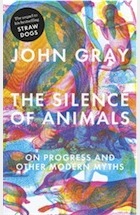
The Silence of Animals - John Gray

It was over a decade ago that I read John Gray's provocative book Straw Dogs: Thoughts on Humans and Other Animals. It really was like a shock to the brain filled with incendiary thoughts that infused and infuriated me in equal measure. Its hard after the intervening years to remember much of the detail of the book (it's hard after those years and the arrival of two children to remember much at all) but one thing remained very clear in my mind and that was Gray's huge mistrust in the Enlightenment idea of progress. This he felt was the biggest lie that we humans tell ourselves; not only that we are by nature different from the other animals on the planet but that our achievements in science and technology are making our lives anything more than superficially better. As he expresses in this new book - 'Lacking a self-image of the sort humans cherish, other animals are content to be what they are. For human beings the struggle for survival is a struggle against themselves'. The Silence of Animals is billed very much as a sequel to that book, developing on those same themes to further illustrate how we delude ourselves with notions of progress and content ourselves with fantasy and myth in order to support those thoughts.

Whereas Straw Dogs read like the thoughts of the author, backed up by occasional literary sources, this follow up is far more like a companion piece with much deeper references from other works of literature. Borges, Orwell, Ballard and Conrad are all cited and having read some of the writers he quotes in the intervening years I was able to confront the thoughts head on and find them stimulating in a different way to those I had had to take for granted when reading the first book. But my overall impression on finishing the book was that this was less a development of his ideas than a reinforcement of them. It was as though Gray had spent the last decade finding support for his personal philosophy in the literature he read and now wanted to share it as if to say, 'See, I'm not the only one.' This is fine, naturally, and there are lots of interesting thoughts along the way, particularly when examining our propensity to fiction and how it shapes our lives and Gray's thoughts on how the whole concept of talents might be a terrible straitjacket on our personal potential rather than the best way to realise it. It just means that this volume lacks some of the fire of its predecessor and will probably further annoy anyone who took exception to his thoughts from then too.

There is an interesting battle as well with biblical references and images. Gray frequently aims to show that there is very little difference between the comforts of organised religion and religious faith alongside the faith that accompanies the Enlightenment ideal of progress. If religion is the opiate of the people then 'like cheap music, the myth of progress lifts the spirits as it numbs the brain'. We must all have at least occasionally wondered about the very meaning of life, the reason for us being here, and Gray is determined that we should let that thought go

Why do humans need a reason to live? Is it because they could not endure life if they did not believe it contained hidden meaning? Or does the demand for meaning come from attaching too much sense to language - from thinking that our lives are books we have not yet learnt to read?

We fictionalise our own lives and if we could only accept that, Gray asserts, and also that our world is without meaning we might discover not a loss of value but that 'this nothingness may be our most precious possession, since it opens to us the world that exists beyond.' How you may react to that and other thoughts will be entirely personal of course. Gray I'm sure will content himself that T.S Eliot said it best in Burnt Norton - human kind cannot bear much reality.

Published now by Allen Lane
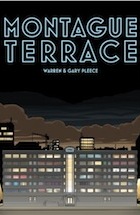
Monatague Terrace by Warren and Gary Pleece

Animals also feature in this graphic novel from the Pleece brothers in the form of an unforgettable rabbit, Marvo the magic bunny, companion and co star to a rather shambolic magician called Marty. They are just two inhabitants of the fading Art deco housing block that gives the novel its name and which contains more nuttiness than a Reece's peanut butter cup.

The book is made up of 12 main stories and a few interludes and through them we meet the varied inhabitants of this bonkers building. Each of the stories is as tenuously linked as we all might be to the comings and goings of those around us but also by something slightly deeper relating to the building itself. There is a faded singer who sits around listening to his biggest hit, a bright young thing novelist with writer's block, a genius scientist with a price on his head, someone calling himself The Puppeteer, and an old special forces operative who may look like a granny but who hasn't quite given up the fight yet.

Given all the craziness this is a pretty disparate novel and how well it all holds together will depend on how many of the stories you really connect with. The device that holds them all together might come across as a bit silly and even nostalgic, and that's the prevailing feeling I was left with; something like the curious quality that comes with watching Tales of the Unexpected. This book is easy to read and to enjoy but there's not enough beneath that Art deco facade to send me back in again.

Published now by Jonathan Cape

Read more...

Tuesday, 12 March 2013

My Elvis Blackout - Simon Crump

'The long dream is over'


I got a Kindle for Christmas. Hurrah, I am now part of the 21st Century. Apparently. My main excitement on receiving one was that I would be able to take up Galley Beggar's Press on their kind offer of an e-book copy of Simon Crump's novel My Elvis Blackout. This novel has had an extraordinary life already as Crump mentions in a new afterword that comes with this edition. Iy has been 'a chapbook, a hardback, a trade paperback, a tee-shirt, a short film, a CD and even a band'. It has also at one point been reproduced in its entirety on an Elvis fansite attributed to a man named Jurgen. Now it is available again with a new introduction from Jon McGregor, a fantastic review from the ever-reliable Mr Self and a few quick words from me to support this short, fucked-up and truly unforgettable little gem.

How on earth to begin to describe this bizarre book? My Elvis Blackout comes as a series of short fictions or vignettes. Each features or is about Elvis in some way, shape or form but not the Elvis that we know. This Elvis comes in many guises and each story might be said to illuminate some facet of his character or some aspect of fame, celebrity, culture, indulgence, violence and death. To pinch the best line from John Self's review, 'it is a mirrorball made of highly polished razor blades, reflecting different aspects of the King'.

There is violence and absurdity on every other page and often at the same time (this after all is a novel in which Barbara Cartland's mutilated body is buried on only the second page and Chris de Burgh is murdered not just once but twice after coming back as a headless zombie). But then there are moments that are strangely affecting, perhaps all the more so coming as they do buried amongst so much mayhem. The chapter headed Elvis: Fat Fucked-Up Fool has an opening paragraph that shows perfectly the combination of madness and pathos.
His greatest fear was of being poor and he dwelled upon it constantly. He took handfuls of jewels and cash into the backyard at Graceland and buried them - little treasures to call upon should he find himself penniless. The guys would watch watch Elvis digging in the dark. He cut a pathetic figure as he grunted and sweated over a growing heap of earth, and they would laugh to see his white jump-suit soiled with mud, and they would laugh at this very sad, but nevertheless highly entertaining creature trying to ward off his worst nightmare, and they would laugh and laugh until the tears ran down their bloated piggy faces and down their fat pink necks and into their fancy silk shirts which Elvis had bought them all from Lansky brothers, because he loved them so.
That is a killer paragraph; seemingly throwaway and yet marked by an unforgettable image, biting comment and even an appeal for sympathy. Brilliant. Another example of the way this collection can unseat the reader comes near the end in a chapter titled, Yorkshire Elvis: Part Two. After all the violence that has preceded it, this story seems to augur something horrific when our hero waits for his wife to leave the house before getting out something secret from beneath the floorboards, especially when a missing girl is mentioned. But then Crump gives this particular incarnation of the King a secret you couldn't possibly expect and makes the story into something else entirely. It is hard to know what you might find as you go through the pages of this novel, and very hard to adequately describe the thrill and joy of reading a book that manages to be both silly and deadly serious at the same time, flippant and deadly; as volatile and entertaining a book as you're likely to read all year.


Read more...

Tuesday, 19 February 2013

Give Me Everything You Have - Eustace - Benediction

Give Me Everything You Have: On Being Stalked
by James Lasdun


Well here's a powder keg of a book. Let us start with a quick summary of what it is. In 2003 the poet and writer James Lasdun was teaching a fiction workshop at 'a place I'll call Morgan College.' Among the students there was a woman 'I'll call Nasreen.' Lasdun praised a piece of her writing in one class and after the course ended an email correspondence began in which Lasdun hoped to help her in some small way with the novel which she was writing and also he hoped to maybe make a friend of someone he found interesting and different. So far, so innocent. Or is it? Lasdun is at pains in the opening chapters to examine his behaviour at the outset because what developed was a prolonged campaign of obsessive emails, abuse and cyber-bullying in which she tried to besmirch his name and character in a variety of ways leaving Lasdun himself not just shaken and confused but ill as well.

The book is peppered with excerpts from these emails (Lasdun aware of the irony that in quoting so freely from this private correspondence he is behaving in exactly the way that he so deplored in her when she copied other people in on her own emails to him and used the public sphere of Amazon reviews and Wikipedia entries to further muddy his name) which start off friendly and funny, gradually becoming amorous and slightly inappropriate, before becoming suddenly vitriolic, violent and filled with hatred, anti-semitism and delusion. These emails are as baffling for us to read as for Lasdun, if not as personally upsetting. They also caused me a certain amount of unease. Firstly that they were obviously selected from a larger body of correspondance; then that they were often quotes or excerpts and one wondered about any possible context within the rest of the email. Jenny Turner in her Guardain review said that this is a book plagued by too much information and also at times not enough. It was the not enough part that concerned me most.

Taken at face value this book makes clear that this was a campaign of 'verbal terrorism' that Lasdun suffered. The reasons for Nasreen's behaviour are never satisfactorily explained and Lasdun even prefers not to think of her as being mentally ill but someone motivated by a motiveless malice. But how can we not regard her as someone clearly suffering from some kind of mental distress? We just don't know enough about her from this one-sided account of course, and I don't say one-sided in a purely pejorative sense - what else could Lasdun write, however balanced a writer he may aim to be, when attempting to tell such a fraught tale and one in which he is implicated? Reading this as an account of something with a quasi-legal standing (we feel as though this is in many ways a book about a crime being comitted, a book with a victim, protagonist and law enforcement officers) makes for a lot of frustration, Nasreen cannot defend herself and even if we accept Lasdun's inference that she couldn't add anything of any value we can only do that if we accept it all.

If it doesn't quite work as a book of true crime then there are two other ways in which it potentially succeeds. The first of these is probably closer to the way the book is being sold: as a memoir. Lasdun uses this event to write about several other works of literature (you may never need to read another book about Gawain and the Green Knight for example) that illuminate the experience and these sections are fascinating, lucid and wonderfully written. There is another riskier suggestion, a million miles away from the way in which the book is being marketed and that is as a piece of extraordinary experimental fiction. I drop that here merely as a catalyst for discussion, it was something that came up during a little conversation of Twitter the other day, and whilst it may not be true it certainly adds a completely different way of approaching what is an interesting, complex and very troubling reading experience.

Pubished now by Jonathan Cape

Eustace by S J Harris

This debut graphic novel from cartoonist Steven Harris may have some colour on the cover but every page inside is black and white, or rather the many shades of grey in between thanks to his deft and detailed pencil drawings. Eustace is a sickly young boy, exiled to a lonely room in a large house where he is really only visited by the maid, Mrs Perichief, each day as she brings him his stable fare of soup ('not even any kind of soup, just "soup". It's thin and yellowy like old skin.'). Through the novel however he is gradually visited by an ever-growing array of grotesques, beginning with his dreaded great Aunts with their sloppy kisses and secret gifted sixpences. What exactly is going on in Eustace's family is never fully clear although we gather there is some trauma related to his brother Frank, who served in the Great War. Eustace's mother makes a ghostly appearance, ravaged by life, and his father even stumbles into the room, barely able to recognise the son he never sees.


It is the sudden appearance of Eustace's uncle Lucien however that really gets the party started and Eustace's bed becomes the focal point of a congregation of crazies whilst all the while in the background is the hint of something dark and dangerous in Lucien's past that is slowly closing in on him. To my mind Harris's drawings combine the long lines and monochrome of Aubrey Beardsley with the sunken-eyed macabre of Tim Burton. There is something feverish or nightmarish about the procession that passes through the room and one wants to constantly put an arm around poor Eustace and sneak him away somewhere. There is nothing we can do however to protect him from the novel's surreal and comically absurd ending.

Published by Jonathan Cape in March

Benediction by Kent Haruf


It's been a while since Kent Haruf featured on this blog but then it's been a while since he wrote anything, almost ten years in fact since he last wrote about the residents of his fictional town of Holt in Colorado. You can read my thoughts on Plainsong and Eventide and imagine my excitement when I heard that he had written a new novel that would take me back amongst those familiar faces. I was worried I might need to familiarise myself with the previous books but his new novel stands alone  and in fact has little to do with any characters from the previous books. The main focus is on 'Dad' Lewis, owner of the hardware store, who receives the news that he is sick with cancer and has just a few weeks left to live. We will also follow the descent of the new preacher and the way in which the women of the town envelop a young girl without her mother but it is Dad Lewis who forms the novel's heart and around whom the people of the town will congregate.

The surprise is that about a hundred pages into the book I wasn't sure that I wanted to carry on. I'm so glad that I did. Haruf's style is deceptively powerful you see. The prose is simple for the most part, the speech direct, the situations fairly everyday, we observe along with the new preacher 'these everyday lives', but what builds inside that structure is a wave of emotion that overwhelms the reader as the book progresses. There are moments that edge toward the melodramatic and the whole novel flies dangerously close to sentiment but in the central story of Dad Lewis in particular you have a sensitive, truthful and painfully affecting story of life, work, relationships, family, alienation, ageing and mortality; the stuff of life in other words. The way in which it manages to combine both the dignity of the way we behave with the indignity of the way our bodies betray us is masterful and there was at least one occasion when I was powerless to stop the tears welling in my eyes.

Published by Picador in April

Read more...

Wednesday, 6 February 2013

The Engagement - Orkney - Mr Bridge

Three books to take a quick look at, all involving couples, two of which are very unsettling and make amazing use of open spaces to create a sense of claustrophobia, the other a masterpiece from the underrated and, sadly, recently-departed Evan S Connell (August 17, 1924 – January 10, 2013).

The Engagement by Chloe Hooper


Liese Campbell is an English architect who has fled to the other side of the world in the wake of the financial crisis and begun work in her uncle's real estate business in Melbourne. It is through that work that she meets Alexander Colquhoun, a wealthy farmer looking to buy some property in the area. On one of many apartment viewings they find themselves beginning a game, sex in someone else's property and payment for Liese at the end of it. The game develops and becomes a regular thing, sex in new apartments, more money, and soon invented stories about Liese's other clients. When the novel begins it is at the outset of what she expects will be their final meeting, having announced her intention to leave the country and return to England, as Alexander takes her to his house in the bush for a final weekend with an envelope of cash at the end of it. But this is a novel of lies and confusion, where the reader appears to be in possession of the facts and an eloquent and honest narrator but as the pages slip your fingers you find yourself less and less certain about what is real, what fantasy, and who even to be worried about in a long weekend where a dangerous denouement seems only a page-turn away.

I struggled with this book to be honest and even after persevering and finishing it I remain not wholly convinced. The unreliable narrator is a common literary technique but actually surprisingly tricky to pull off. Notable successes include the deliciously villainous Tarquin Winot in John Lanchester's The Debt to Pleasure and the slowly revealed complexities behind the care and concern of the eponymous doctor in Patrick McGrath's Dr Haggard's Disease. I really struggled with the psychology of both Liese and Alexander when reading this novel perhaps because it is all coming through the filter of a character we will learn not to trust. I found too much of what they said hard to believe and the dialogue itself pretty clunky in places and even if this can be explained away by the unreliability of the narrator it strikes me that if the device interferes with the effectiveness of the prose then something isn't quite working. Too often I wanted to shake either one of them and get them to actually respond to what had actually been said to them rather than further continuing the ambiguities and confusion.

All of that said, it is an unnerving and thrilling read that creates tension, atmosphere and genuine fear. It could almost read as a metaphorical study of many relationships, the way in which couples do or don't deal with each other's pasts, the stories they tell one another of their lives in order to portray themselves in a certain light, and the way in which these images can be slowly eroded by the stories others tell about us or the gradual emergence of what I will term, with eyebrow raised and tongue firmly in cheek, the truth.

Published now by Jonathan Cape


Orkney by Amy Sackville

Amy Sackville garnered plenty of plaudits and prize nominations with her debut novel, The Still Point and managed to bag the John Llewellyn Rhys Prize. I haven't read that and after 50 or so pages of her new novel I was beginning to think that might be a huge mistake but here is another novel of claustrophobic congress which followed a sort of reverse trajectory to the one above but left me with a similar feeling of admiration rather than love, a book I started off loving but which left me by the end feeling rather over-worked and exhausted.

A man and a woman arrive on Orkney for their honeymoon. He is an eminent professor, she a former student. They have come a long way from the scene of their infamous relationship but even on this remote island they are regarded by everyone as a strange couple. Through the professor's narration we soon realise how little he really knows about the woman who has so enchanted him but there is no doubting the spell she has cast on him. Sackville's writing is extraordinary in places and the opening pages create an evocative atmosphere that swept me along with the fervour of his feeling. This kind of writing is hard to sustain however, or rather it is hard to sustain a reading of, by which I mean that some people may find it a bit too much like consciously 'beautiful writing' and even those like me who found the style to be entirely fitting for a literature professor who has had his heart beguiled by a pale and otherworldly creature may find after a while that the novel gets a bit repetitive.

Described rather optimistically as a single sitting read, it is exactly the kind of book that may well benefit from being read in that way (if you happen to have enough time to read 250 pages in one go), the kind of novel that if it has you the reader in its spell, like our poor professor, will probably fly by as a richly engrossing account of love, fantasy and the enchantment and danger of the natural world. There will be just as many readers however who fail to fully fall for its charms and therefore find it a relatively short read that feels overwritten, overwrought and in danger of being suffocated by its own atmosphere.

Published today by Granta Books

Mr Bridge by Evan S Connell


Ah, the Bridges. How wonderful to be able to engage again with Evan S Connell's remarkable couple in Kansas City. You may remember I read and loved Connell's 1959 novel Mrs Bridge last year and at least I didn't have to wait as long as those at the time for its companion piece originally published in 1969. The man who remained a fairly enigmatic presence in the novel bearing his wife's name is now thrust to the forefront and we get to learn what Walter Bridge was thinking during all those hours spent working away from his family and indeed in the small amount of time he spent with them.

Mr Bridge uses the same technique as the earlier novel; short chapters with their own titles, small moments of life that slowly assemble into a rounded portrait of suburban America in the 1930's and 40's. Walter Bridge is a lawyer, the kind of man who works long hours and even brings his work home occasionally. Described by another character as a 'consummate puritan' Walter is a man almost of another time, his morals apparently very fixed, but one of the joys of this book are the ways in which we will come to see that perception altered as we learn more and more about what makes this man tick. Walter likes things that are tangible and dependable. In one early scene we see the genuine joy he gets from opening his safety deposit box and simply leafing through and holding the stocks and shares that are his investments for the future. His love of these is made all the more hilarious later in the novel when we see him making a proud gift of them to his family at Christmas and encouraging them to buy more when they all receive a bequest.

Walter is often baffled by his family, particularly his wife, whose infrequent emotional outbursts leave him completely at a loss and resorting to the only course of action he can imagine which is to gloss over them and pretend they have never happened at all. Walter is also a contradictory man, it is very hard to pin down exactly where he stands with regards to certain prejudices, seeming at times to be anti-semitic or racist and then confounding those thoughts with a secretive action that we will only learn about much later. And this is where the real joy of Connell's writing lies. His prose is measured and unadorned but most importantly as a novelist his is completely non-judgemental. First India and now Walter Bridge are shown to us as they are, without any authorial comment or guidance as to how we are supposed to react to their thoughts, feelings and actions. It is left entirely up to the reader to decide whether to admire, despise or love them (or indeed all of the above) and that kind of writing makes for an involving, moving and complicated read that will make the characters live with you long after finishing the last page.

Published now by Penguin Modern Classics


Read more...

Thursday, 3 January 2013

The Explorer - Doppler - First Novel - The Making Of - Still - Kandak - Ghostwritten

Short of time but keen as ever to talk about the books I read you will have to indulge me a little as I compromise with a quick round up of several books that are worth mentioning. I apologise for not being able to go into as much detail as I normally would but I hope that something will be better than nothing (but please let me know if you disagree!)


The Explorer by James Smythe

Towards the end of last year I entered a proper reading funk. I couldn't engage with books I was reading at all, gave up on one after another, often knowing that they were probably really good. I was just too tired and stressed to read, a big worry for someone so keen on reading. I had a little break and then picked up this new novel which a couple of other bloggers had mentioned favourably and which I thought might be just what I needed. It really was. Smythe's novel is narrated by Cormac Easton, a journalist chosen to document a groundbreaking journey into space that will take humans further than they have ever travelled before. However, the crew of the Ishiguro gradually perish one by one until Cormac is the last survivor. What follows is a brilliant examination of fear and grief, remembrance and memory, loneliness, exploration and time. I love space movies but the problem most of them seem to suffer from is that whatever interesting themes they set up in the beginning they nearly always dissolve into humans being chased about by something or other and once you've seen Alien that can't really be topped (yes, Sunshine, I'm looking at you). Smythe's novel does almost the opposite. In a breakneck opening we witness the demise of the crew and the reader is left wondering how on earth he might fill the rest of the novel. I won't give away the brilliant device that is this novel's twist but only say that it is a coup that allows Smythe to make the novel far more philosophical, interesting and moving than I suspect most 'science fiction' to be (I know, I'm probably wrong on that). This novel, very similar in feeling to Duncan Jones' film Moon, comes highly recommended and a huge thank you to the author for breaking my funk and getting me reading again.

Published by Harper Voyager now

Doppler by Erlend Loe

The cover to your left makes this look like a perfect Christmas book and in many ways it is but not at all in a traditional sense. The eponymous Doppler is a  man who seemed to be leading a successful life in Oslo until an accident whilst on his mountain bike leads him to reappraise things altogether and determine on leading a solitary existence in the woods where he will live off the land. His resulting hunger leads him to kill an elk in the novel's opening pages and whilst he is successful in that endeavour providing himself with food to eat and meat with which he can barter for other supplies he also finds himself encumbered with that mother's baby elk as a surrogate child. Soon christened Bongo, Doppler uses his new companion as a sounding board for his various foibles with modern society and the two of them struggle to maintain their Eden in the wilderness as various other characters encroach on it. The quirk factor might put off some readers but I found it to be both funny and sharp-witted, a perfect antidote to the commercialisation of Christmas and a great (if belated) stocking filler for anyone in your family who tends to say bah humbug around tis time of year.

Published by Head of Zeus now


First Novel by Nicholas Royle

Already an early contender for cover design of the year, Nicholas Royle's latest novel has far more going for it than that. That title and those very recognisable 'clean white spine with plain black lettering' paperbacks on the cover might lead you to think this is his debut published by Picador but it is actually Royle's seventh novel, albeit his first under the Jonathan Cape imprint. There's lots of other bookish fun along the way as we follow writer, Paul Kinder, author of a novel which didn't do terribly well, now a teacher of creative writing and avid collector of first novels. This meta-fictional novel has many strands to it and part of the fun is trying to work out where you are half the time. Along the way we will encounter, housebreaking, dogging, fighter pilots and loss of various types, in a novel which shows how we all use narrative to shape the story of our lives. A strange, unsettling brew that simply entertains at first before revealing darker and more dangerous depths as it progresses; a dark and delicious treat for lovers of literary fiction who like to have their grey cells tickled.

Published by Jonathan Cape now


The Making Of by Brecht Evens

Brecht Evens makes the most gorgeous graphic novels. His first, The Wrong Place, had me smiling and admiring at the end of 2011. His latest built on that promise at the end of last year and showcases yet again his glorious watercolour work and fresh approach to graphic storytelling. Watercolour is an odd medium for graphic work, especially in the free-flowing style that Evens employs. Character is often simply delineated by colour or distinguishing features and it is an incredibly effective technique. One character has large hands for example, always dominating his exchanges. 'You should see my Dad's' he says and sure enough when he visits him in his hospital room on the next page what we see are those huge hands waving back. The novel follows an artist, Peterson, as he travels to a small village to work as part of a biennial festival. It's a much smaller operation than he anticipated but what follows is a hilarious exploration of artistic inspiration, expression and shortcomings. Fabulously diverse characters, artwork that leaps off the page and somehow manages to escape it at times, Evens is one to keep watching.

Published by Jonathan Cape now

Still edited by Roelof Bakker

Roelof Bakker is a photographer who focused on the disused Hornsey Town Hall for one project which ended in an exhibition of photographs entitled Still. Bakker then approached several writers to select an image and then write a story based on it, relocating the image so that it wouldn't be about its original location but more about what that image suggested to the author. The anthology is incredibly diverse, featuring some writers I had heard of and read before like Richard Beard, Nicholas Royle and Evie Wyld. Others were completely new to me and that of course is the joy of an anthology. The pictures are wonderful and each reader is sure to find new voices they will want to keep an eye on.

Published by Negative Press now


Upcoming Audio Books
Kandak by Patrick Hennessey
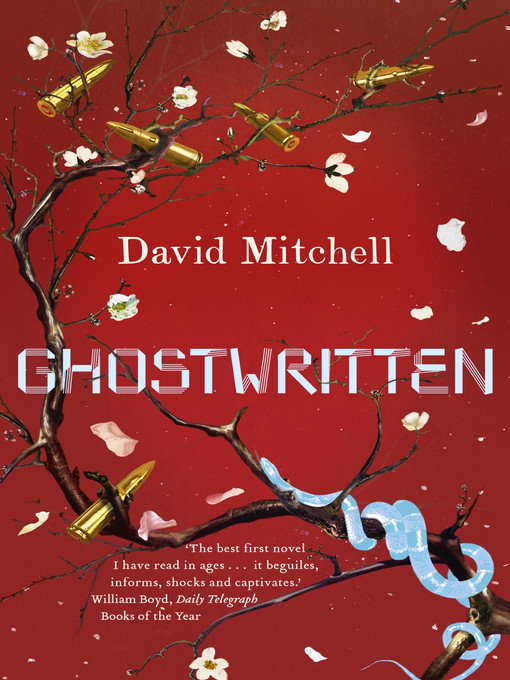
Ghostwritten by David Mitchell

As some of you will know I sometimes get the opportunity in my work as an actor to record audio books and I am in the process of recording a couple right now. Patrick Hennessey had great success with his first book The Junior Officer's Reading Club and Kandak follows his exploits training and fighting alongside the fledgling Afghan National Army. What comes across clearly is the confusion of the project, the clash of cultures and the suspicion that develops when things go wrong and soldiers even find themselves under attack from their own side. Hennessey is keen to write however about the bravery, integrity and comradeship that he experienced, something that brought him back to Afghanistan after he had finished in the army to search out those that had clearly become friends during his time there.

Ghostwritten was Mitchell's debut novel and after I recorded the bonkers number9dream last year I now have the task of doing justice to this multi-layered novel. Having read it before but a long time ago it was interesting to see how I felt on a second read. I was pleased to discover that I had roughly the same opinion of it as a novel, slightly daunted by the prospect of narrating effectively its very different sections but always pleased to have something challenging like that to keep me honest.

Both of these will be available unabridged later in the year from Whole Story Audio and W F Howse.

Read more...

  © Blogger templates The Professional Template by Ourblogtemplates.com 2008

Back to TOP