


Showing posts with label DUNCAN Glen. Show all posts
Showing posts with label DUNCAN Glen. Show all posts
Monday, 17 February 2014


Tuesday, 26 June 2012
Talulla Rising - Glen Duncan
'the dirty truth'

Glen Duncan's conscious decision to write a commercial novel after years of writing literary fiction that 'not enough people bought...and...didn't win anything' resulted in last year's guilty pleasure, The Last Werewolf. In fact there's nothing to feel guilty about, it was simply a very nicely written treatment of the werewolf myths involving vampires, government killers, plenty of sex and a narrator whose centuries of lifetime leant him an entertaining voice as likely to turn to works of great literature for sage advice as his years of hard-won experience. One commercial decision follows another with the publication of this sequel (which in discussing I am bound to include *SPOILERS* to anyone yet to read the first) and if the first book was about the discovery that you are not alone (in other words about falling in love) then this follow up, in which the baton has been passed from Jake Marlow to the now pregnant lycanthropic object of his desire Talulla Demetriou, is a very odd take on losing love, finding it again, and motherhood.
Quick recap then: despite its title Jake discovered in the first book that he wasn't the last of his kind and even more, that his life as a werewolf could reach whole new heights with a partner with which to share the pleasures of fuckkilleat (yes, Duncan may be writing a commercial novel but that doesn't mean he has to put his trademark dark and dirty perspective on hold - on the contrary: monstrous behaviour deserves to be examined in all its filthy glory). But despite having the ability to live for about 400 years, time was not on the side of these new lovers and the chase from vampires looking to harness something in werewolf genetics that might allow them to walk in daylight, as well as the hunters of 'occult phenomena' left Marlowe dead and a pregnant Talulla finally assuming the position of the book's title. Except of course for those unborn babies...
The sequel picks up Talulla's story in the remote seclusion she has sought as her due date approaches. That quiet is shattered in the most spectacular fashion, a perfect storm of lunar activity, early labour and vampires. At the end of this her son has been abducted and what follows is driven by her need to get him back. But Duncan, keen pursuer of the perverse, doesn't give Talulla the natural animal instinct and connection that we might expect with her offspring. In fact he chooses to show how difficult she finds it to make that connection, how unnatural that bond is or how difficult it can be for any mother who doesn't find themselves feeling the magical connection they have read so much about. The last thing you might expect from a werewolf novel is an examination of modern mothering anxiety but it is most definitely in there.
Expect the absurd, Jake had warned me. Expect the risible twist, the ludicrous denouement. Expect the perverse. It's the werewolf's lot.
Jake's aphorisms are dotted about the book, Talulla is a relatively new werewolf of course and she is still learning the ropes. We might expect her to pine away for her lost love as well as her abducted son but Duncan knows that desire is a far stronger force than we might like to admit and when coupled with the extra charge of lycanthropic desire it isn't long before Talulla feels the need once again.
We looked at each other. The attraction was a stubborn softness between us. It was also the first sexual honesty I'd felt in months. It didn't mean he wouldn't kill me or I wouldn't kill him. I thought: all men and women should start from that understanding.
Duncan has always been brilliant on relationships, on their darker sides, and he has a lot of fun with a new cast of characters. He also probes some very dark territory, places which he has visited before with his novel A Day and a Night and a Day which looked at torture. Talulla is imprisoned at one point in a facility where doctors and scientists want to test the lycan's abilities to heal and regenerate. It's pretty gruesome stuff beginning with simple procedures and building up to full-blown amputations and the sense of horror is grimly realised. Another character is subjected to brutal beatings and sexual abuse and Duncan isn't afraid to show the legacy of this kind of treatment, the damage it does long after wounds have healed. Beyond that he allows Talulla, even whilst she is being defiled, to say the unsayable about her own behaviour, the crucial difference between those that desecrate her own body and her own monstrous desires.
It's only the best for us if it's the worst for them. Unlike the men in white we, monsters, wanted the person we were killing to know - through the blood-blur and the din of their own screams - not only that we knew what we were doing but that we loved doing it. We wanted our victims to see that our pleasure increased with their horror, that the horror was required, that their situation was hopeless. That was the dirty truth, the obscene heart of fuckkilleat: their hopelessness serviced our joy. In the court of human appeal the scientists were better off. At least they weren't doing it for fun. At least it didn't turn them on.
This is a book I read at quite a lick and didn't find myself making many notes on as I went through. It is an enjoyably dark thrill with enough extras to keep the more literary side of my brain relatively happy. There's no doubt that Jake with his experience, tone and literary brain was a more satisfying narrator, I may well have missed him more than Talulla herself, but with the story entering into a series of books I guess I have to accept that plot will end up dominating proceedings I will look forward to the third and final part when it eventually appears and can only hope that those who have been subsisting on a diet of tired genre staples might be tempted towards trying something a little meatier.
Read more...
Monday, 18 April 2011
The Last Werewolf Giveaway Winner
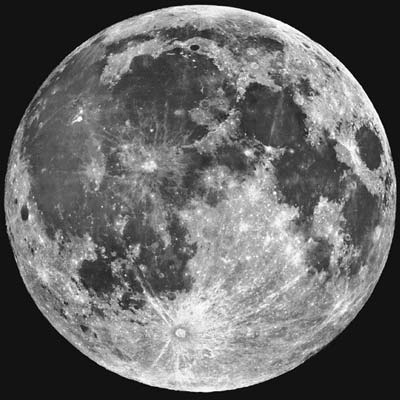
Ahwoooooo!
It is (or was) a full moon and I know you're all excited to know who won the copy of Glen Duncan's The Last Werewolf. I hope these pictures capture something of the thrill of the draw...
The Names In The Hat

The Random Generator

The Draw

The Winner!

So the winner of a copy of Glen Duncan's The Last Werewolf is "RJR"
Congratulations! Please email me your address by clicking on the 'email me' button on the left and I'll get it into the post to you faster than you can fashion a wooden stake.
Thanks to everyone who took part. There will be more giveaways in the future. Watch this space... Read more...
Friday, 8 April 2011
The Last Werewolf Giveaway

After reviewing the book and interviewing the author there is really only one way to complete this week and that is by giving a copy of the book away. If you have been intrigued enough by either of the previous posts and want to have a read then please leave a comment or contact me by pressing the 'email me' button up on the left and I will place your name into the draw. A winner will be announced at the next full-moon - Monday 18th April, using my highly complex random selector (a blindfolded 3 year old), and will receive a copy of the rather beautiful, gold-edged hardback.
Good Luck! Read more...
Wednesday, 6 April 2011
Glen Duncan Interview
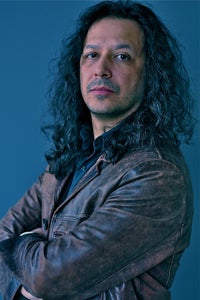
As someone who has read all of your previous novels I must admit that part of me was a little surprised by the appearance of a werewolf book. Can you explain a little about what lead you to write this particular novel?
Here is the honest answer. After A Day and a Night and a Day had been published and had performed exactly as its six predecessors - which is to say not enough people bought it and it didn't win anything - I had a very frank and curiously refreshing conversation with my agent, which went like this:
Me: If I write another literary novel, do you think you'll be able to sell it?
Agent: No.
So I decided to write a straight, commercial genre novel, and began work on a Victorian serial killer story. The pitch was Oliver Twist meets The Silence of the Lambs. I didn't enjoy it much. I hated all the research, for a start. Plus it turned out I wasn't very good at plot. By New Year's Eve 2009 I knew it was going nowhere.
Traditionally my partner and I celebrate New Year at the house of the musician, The Real Tuesday Weld (aka The Clerkenwell Kid, aka Stephen Coates) my oldest and dearest friend. 2009 was no different. After the freezing roof terrace, abused fireworks, forced down champagne and collective psychic wobble at The Actual Stroke of Midnight, we all come back inside and try not to slash our wrists. Invariably talk turns to what we've done over the last year and, more worryingly, what we plan to do in the new one. When it was my turn, having drunk my annual cocktail of self-pity and boredom and fraud and rage to the dregs, I found myself saying that I was going to write a novel about the last werewolf on earth, titled - and here's where creative genius really sidestepped the obvious - The Last Werewolf. The idea met with unanimous feeble approval. And so a work of art was born. In line with the original plan, it was supposed to be a straight commercial genre novel. It didn't turn out quite that way.
My first encounter with your writing came after I picked up a hardback of Love Remains on Charing Cross Road, intrigued by the blurb and sold by the cover. I was genuinely shocked by the darkness and bravery of what you were willing to confront in your writing, something repeated in your subsequent work. Is it fair to say that you write about dark topics and if so why do you think you are attracted to writing about them?
It's not that I set out to write about dark things, it's that other writers set out to ignore them. The novelist's business is with the whole human animal, a business still best expressed in the Auden's poem:
'For, to achieve his lightest wish, he must
Become the whole of boredom, subject to
Vulgar complaints like love, among the Just
Be just, among the Filthy filthy too,
And in his own weak person, if he can,
Must suffer dully all the wrongs of Man.'
Anything less is shirking. So yes, there are dark ('filthy') things in my books, but there's a good deal of the vulgar complaint, too. Plus compassion, friendship, comedy, tenderness.
You've collaborated with your friend Stephen Coates (aka The Real Tuesday Weld, aka The Clerkenwell Kid) in creating soundtracks for your novels I, Lucifer and The Last Werewolf. Is music important to you whilst writing and in what way?
I never listen to music while writing, and am amazed that anyone who wanted to write well would try. There might be an argument for instrumental music, I suppose, but it's not for me. If I've had a particularly productive day or nailed something tricky there's a good chance I'll put on some Led Zeppelin and swagger around the kitchen with testosterone renewed, but that's about it.
Stephen's soundtracks are a whole different phenomenon. We did the I, Lucifer double-act just for our own amusement, but people liked it, so we're doing it again for The Last Werewolf. It's not really even a collaboration: I have zero musical input (commensurate with zero musical talent) and there's no imaginable universe in which I'd invite literary input from Stephen. That said, once both the book and the music are done there is a peculiar, satisfying symbiosis. It only works for some novels (rule of thumb is the fiction needs to have an element of self-consciousness or play) but we share a pretty solid intuition for which those will be. He has an occult and depressing knack for getting what I've just spent ninety-thousand words on into three verses and a chorus.
I described you as something of a mercurial writer in my review, there's no telling quite where you might head next, but in thinking about your work as a whole I wondered if a unifying theme might be how your characters come to terms with monstrosity (often their own). Would you say that that is something you have been writing about?
Coming to terms with ourselves and each other is what art and imagination are for. The novelist is always trying to outgrow himself, to accommodate, to become something bigger than his vices - but bigger than his virtues too.
It's nauseous to say that writing the books I've written has made me a less frantic and tormented being (the aforementioned annual cocktail notwithstanding) but unfortunately it happens to be true. The real trick of course is to make your readers less frantic and tormented beings. If art's doing its job that's what should be happening to the species. And by and large, however strange this might sound, I think that is what's happening.
Is there an under-appreciated book that you'd like to recommend to readers of this blog?
Birds of the Innocent Wood, by Deirdre Madden. Understated, unsentimental, lapidary, heartbreaking. One of the saddest novels I've ever read.
I like to invite authors to do a Hemingway and write a story in 6 words. Would you have a go?
Hail horrors! Hail—fuck that's hot.Read more...
Monday, 4 April 2011
'Reader, I ate him'

The Last Werewolf
by Glen Duncan
Some writers are hard to pin down. I mentioned Jed Mercurio's mercurial qualities when reviewing his last novel, American Adulterer, a somewhat dry account of JFK's philandering which followed his debut, Ascent, a high octane space-race thrill written from Russia's point of view. Glen Duncan has shown similar abilities to confound expectations. His debut novel Hope was a frank view of pornography, male sexuality and angst . This was followed by Love Remains, the first book by Duncan I read (completely by chance), which continued his examination of sex, love and violence. With such attention on human relationships it was a bit of a surprise to find Lucifer himself as the narrator of his next novel, even if it did allow him to show afresh the curious world we live in and the temptations that lie in our way. Duncan's fascination with the darker side of life found the perfect arena in Weathercock with its look at sadism. Another metaphysical leap occurred in Death of an Ordinary Man which saw one man search for the reasons for his death beyond the grave. In his last two novels Duncan has kept himself firmly rooted to the ground, exploring his own Anglo-Indian ancestry in The Bloodstone Papers and the impact of torture and terrorism in A Day and a Night and a Day, so it was with no little amount of surprise that I discovered the title and premise of his latest. Could Duncan have possibly decided to cash in on the Twilight era and the current obsession with all things occult? The snappy sale of film-rights to this novel might suggest he has but my lingering thought was that if anyone could pull off a literary werewolf novel, Duncan was the man.
Written in the form of journals by Jacob Marlowe, these are the musings of a man bitten by a werewolf in 1842, expected to live for around 400 years, but ready to bring an end to it all after years of loneliness and the recent discovery that he is the last of his kind. His extended lifespan and independent means may have given him opportunities to indulge in decadence and debauchery but it has also lead to an extreme form of boredom. What must it feel like to have been born in the 19th century and to have watched humans progress into the 21st, isolated and separate from them? That kind of perspective doesn't seem to reflect too kindly on the modern world.
In fact the news already feels post-apocalyptically redundant to me, as if (silent dunes outside, insects the size of cars) I'm sitting in one of the billions of empty homes watching video footage of all the stuff that used to matter, wondering how anyone ever thought it did.
Duncan knows that a lycanthropic novel is going to have a fair amount of silliness attached and embraces it wholeheartedly, finding an ally in another author who mixed thrills with loftier considerations.
Graham Greene had a semi-parodic relationship with the genres his novels exploited, a wry tolerance of their exigencies and tropes. Unavoidably I have the same relationship to my life. False ID's, code words, assignations, surveillance, night flights. Espionage flimflam. And that's before we even begin on the Horror Story trappings. If it were a novel I'd reject it along with all other genre output that by definition short-changes reality. Unfortunately for me it is reality.
So we soon learn that as well as werewolves there are also vampires, the two of them mortal, or should that be immortal, enemies. This antagonism comes in two forms: the first primal or animal with each species quite simply finding the smell of the other almost intolerable; the other the product of years of competition, with vampires seeing werewolves as dumb animals devoid of speech and therefore culture. Overseeing this world is WOCOP (World Organisation for the Control of Occult Phenomena), charged with keeping vampire numbers steady, after a deal hashed out by 50 powerful vampire families, and hunting werewolves to extinction. Dubbed 'The Hunt' they are headed by Grainer, a man driven by that common spur to revenge.
Filial honour. Forty years ago I killed and ate Grainer's father. Grainer was ten at the time. There's always someone's father, someone's mother, someone's wife, someone's son. This the problem with killing and eating people. One of the problems.
You'll have noted the welcome humorous tone already, and from this post's title as well, but Marlowe is also a man of passion and emotion, something in which werewolves beat their vampiric colleagues hands down. True to form Duncan includes plenty of sex and violence but there is also the deep weight of guilt pulling at Marlowe as he slowly reveals the truth about the wife he no longer has and the closeness of his bond to Harley, his contact within WOCOP. All of these emotions are heightened even further when Duncan really gets the plot moving and provides Marlowe with the most compelling reason yet to keep himself alive at all costs.
In the same way that your own jaw dropped the first time you saw David Naughton change in American Werewolf in London, Duncan writes brilliantly about the animal within and the phases of the month as were and wulf struggle for control of Marlowe's body.
In my dreams a small wolf slept inside me and it wasn't comfortable. It moved its heels and elbows and paws, struggled to make space between my lungs, stomach, bladder. Occasionally a scrabbling claw punctured something and I woke. What were you dreaming? Arabella wanted to know. I knew what it was dreaming. It was dreaming of being born. The form and scale of its occupancy shifted. Sometimes its legs were in my legs, its head in my head, its paws in my hands. Other times it was barely the size of a kitten, heartburn hot and fidgety under my sternum. I'd wake and for a moment feel my face changed, reach up to touch the muzzle that wasn't there.
So how does a werewolf novel really fit into the work of Glen Duncan? Well, it's not in fact such a great leap from what he has often been writing about in the past. I'm going to suggest (and you'll find out what he thinks about my hypothesis in an interview on Wednesday) that a grand theme in Duncan's novels is coming to terms with monstrosity. He has done this by always examining the darker impulses in human behaviour and it is only the slightly more sensational subject matter of this novel that might distract us from that same theme's appearance. Marlowe has had to reconcile his morality alongside his need to kill and eat fellow humans, and then beyond that to come to terms with how easy a task that proved to be. It is his friend Harley's response to American Psycho that helps us to understand simply - 'Savage satirist or twisted fuck? he asked me, when he'd finished it. Both, I'd said. It's a false dichotomy. The romantic days of either/or are over. Who'd know that if not me?' Duncan has always been interested in the many shades of grey that lie between the two extremes and Marlowe is no different. His struggles with who he is are made all the more difficult by the nice little twist that the soul of each of his victims takes up a kind of residence within him 'the over-crowded spirit prison, the packed ghost hotel.'
For once here I've managed to review a book without giving away any of the plot but let me assure you that it rockets along when needed with the pace of a silver bullet and that Duncan clearly had a lot of fun writing it. It's a smart, sexy read; the kind of book you might press into the hands of a Twilight reader to give them a shock of real desire. This isn't a po-faced literary treatment but a novel written with a literary writer's skill and the driving force here, as for most fictional monsters, is love. With a universal like that coupled with the cult appeal of the occult this book has the potential to become a bit of a monster itself. Read more...
Monday, 23 March 2009
'what I carry between myself and death'

A Day And A Night And A Day
by Glen Duncan
Glen Duncan was another chance find for me when I picked up a remaindered copy of his second novel, Love Remains , in a second hand shop for no good reason other than it sounded dark and interesting and found myself diving into one of the most disturbing reads I've had yet. Duncan is a writer unafraid of dealing with the big themes: love, hate, sex, death, violence and, perverse as it may sound, his lightest offering so far has been the novel he wrote from the point of view of Lucifer himself
 . His bravery comes in saying what most of us would rather keep hidden, the darker side of our motivations and desires. In his latest novel one of the characters offers what could be a maxim for him as a writer, 'If we're going to have art...let's not have art that's done like a hobby.'
The title refers to the period of time that Augustus Rose spends being tortured after becoming a victim of extraordinary rendition. The novel is fractured, jumping back and forth through time as Rose remembers important moments from his life, his mind fighting for a foothold as his body is subjected to increasingly violent attacks from which of course his mind is not exempt. In fact the first thing to mention is the skill with which Duncan deals with this whole area. I actually became aware that he had a new book out after reading a review in the TLS in which it was grouped together with other novels in the thriller genre including the latest from John Grisham . Now as someone who's never read any I'm not going to pass judgement on the bestseller and apparently guilty pleasure that is The Grisham (he puts 'The' in every title so why can't I?) but I was a little surprised to see the two of them together. Rose's interrogator at one point asks, 'You read the testimonies of people who've survived torture...they're affectless . They tell you what was done to them but never what it did to them. Why is that?' Duncan excels at psychological veracity and in the scenes of torture he steers aware from pornographic descriptions of violence, showing that the real battle is a mental one, making torture a surprisingly clever template for narrative structure. Looking back to his past we see how this mixed race boy dreamed of being white ('there was his astonished and delighted face in the mirror, same mouth and nose and eyes but with the fair skin and the relief of having come at last into his inheritance.'), overachieved educationally and, at a time when a mixed race couple would raise not only eyebrows but confrontation, became involved in a passionate and full blooded affair with a New York aristocrat.
Duncan's relationships are often all-or-nothing. It is this lover, Selina who speaks the line about art I mentioned above and who, when the couple meet again, many years after the termination of their relationship describes it in mythical terms, 'You and I could have sat down with Tristan and Isolde and held up our heads'. This brief encounter, which also lasts a day and a night and a day becomes the catalyst that drives Augustus to join a terrorist network called Sentinel, a kind of vigilante terrorist cell, and the reason for his apprehension and torture.
His interrogator is Harper, an intelligent and controlled man of violence who cuts a contradictory figure in his 'Gap casuals'. Through him Duncan is able to articulate some of those difficult ideas and thoughts, as when Abu Grahib is raised.
But he doesn't restrict himself to his own professional arena, branching out into popular culture,
At one point he even proffers his ideas on what the neurological repercussions of the iPhone might be (I'll leave that treat for you to discover). It is typical of Duncan to have so much fun with this character, helping to make it even more chilling as the torture approaches its inevitable conclusion. Inevitable because casting forwards if you like we see Rose as an older man on the remote island of Calansay, his body naturally weakened by time but with an eye-patch standing out as starkly as the colour of his skin in this part of the world. Duncan anticipates anyone who might criticise the corny nature of he set up by having Rose imagine the movie-trailer voice over or novel blurb. 'the story of a man's spirit destroyed...and the love in which it's reborn. Now on an island at the edge of the world he must learn to live again..' Through his enforced proximity to a young runaway he finds that fighting spirit rising again at a time when he had thought he was preparing himself for death. Despite his attempt to head off our criticism this section of the novel is the weakest mainly because it struggles to keep pace with the vitality of the 'earlier' sections and because it resorts to the kind of climax one might well expect from the work of The Grisham et al. But Duncan remains an urgent and never less than interesting writer. His books are filled with ideas, many of them unpleasant or uncomfortable (as the truth often is), and I still regard it as fortuitous to have stumbled on him and his dark vision amongst those dusty stacks on Charing Cross Road.
Read more...
Glen Duncan was another chance find for me when I picked up a remaindered copy of his second novel, Love Remains
, in a second hand shop for no good reason other than it sounded dark and interesting and found myself diving into one of the most disturbing reads I've had yet. Duncan is a writer unafraid of dealing with the big themes: love, hate, sex, death, violence and, perverse as it may sound, his lightest offering so far has been the novel he wrote from the point of view of Lucifer himself. His bravery comes in saying what most of us would rather keep hidden, the darker side of our motivations and desires. In his latest novel one of the characters offers what could be a maxim for him as a writer, 'If we're going to have art...let's not have art that's done like a hobby.'The title refers to the period of time that Augustus Rose spends being tortured after becoming a victim of extraordinary rendition. The novel is fractured, jumping back and forth through time as Rose remembers important moments from his life, his mind fighting for a foothold as his body is subjected to increasingly violent attacks from which of course his mind is not exempt. In fact the first thing to mention is the skill with which Duncan deals with this whole area. I actually became aware that he had a new book out after reading a review in the TLS in which it was grouped together with other novels in the thriller genre including the latest from John Grisham . Now as someone who's never read any I'm not going to pass judgement on the bestseller and apparently guilty pleasure that is The Grisham (he puts 'The' in every title so why can't I?) but I was a little surprised to see the two of them together. Rose's interrogator at one point asks, 'You read the testimonies of people who've survived torture...they're affectless . They tell you what was done to them but never what it did to them. Why is that?' Duncan excels at psychological veracity and in the scenes of torture he steers aware from pornographic descriptions of violence, showing that the real battle is a mental one, making torture a surprisingly clever template for narrative structure. Looking back to his past we see how this mixed race boy dreamed of being white ('there was his astonished and delighted face in the mirror, same mouth and nose and eyes but with the fair skin and the relief of having come at last into his inheritance.'), overachieved educationally and, at a time when a mixed race couple would raise not only eyebrows but confrontation, became involved in a passionate and full blooded affair with a New York aristocrat.
Duncan's relationships are often all-or-nothing. It is this lover, Selina who speaks the line about art I mentioned above and who, when the couple meet again, many years after the termination of their relationship describes it in mythical terms, 'You and I could have sat down with Tristan and Isolde and held up our heads'. This brief encounter, which also lasts a day and a night and a day becomes the catalyst that drives Augustus to join a terrorist network called Sentinel, a kind of vigilante terrorist cell, and the reason for his apprehension and torture.
His interrogator is Harper, an intelligent and controlled man of violence who cuts a contradictory figure in his 'Gap casuals'. Through him Duncan is able to articulate some of those difficult ideas and thoughts, as when Abu Grahib is raised.
'We needed to know we could do that, still do that. Otherwise why'd we photograph it?'
'We?'
'Collective conciousness. America - in fact the entire non-Islamic western world - is only just waking up to what its enemy wants. It's taken such a long time because what it wants is so bizarre, so unreasonable. Its enemy wants to wipe it off the face of the earth, and has evolved a psychotic death cult to get the job done. You've got to love the jihadis' candor: 'We're not fighting so that you'll offer us something. We're fighting to eliminate you.' ...You don't fight that with reason, you fight it with contempt and brutality. We needed to know we could count on ourselves to get down and dirty...the Abu Grahib pictures were a relief...Why did the MP's take the photos? Because everyone back home, in a collective surge of self-doubt, had asked them to.'
But he doesn't restrict himself to his own professional arena, branching out into popular culture,
'We're suffering representational saturation. We've written too many books, made too many movies. By the time you're eighteen you've already encountered representations of everything important, you already know the scripts.'
We have knowledge we don't want so we send it to the movies. Hollywood's the transformation chamber where unpleasant truths get turned into consumable fictions. -Nothing's going to protect extraordinary rendition like Rendition.'
At one point he even proffers his ideas on what the neurological repercussions of the iPhone might be (I'll leave that treat for you to discover). It is typical of Duncan to have so much fun with this character, helping to make it even more chilling as the torture approaches its inevitable conclusion. Inevitable because casting forwards if you like we see Rose as an older man on the remote island of Calansay, his body naturally weakened by time but with an eye-patch standing out as starkly as the colour of his skin in this part of the world. Duncan anticipates anyone who might criticise the corny nature of he set up by having Rose imagine the movie-trailer voice over or novel blurb. 'the story of a man's spirit destroyed...and the love in which it's reborn. Now on an island at the edge of the world he must learn to live again..' Through his enforced proximity to a young runaway he finds that fighting spirit rising again at a time when he had thought he was preparing himself for death. Despite his attempt to head off our criticism this section of the novel is the weakest mainly because it struggles to keep pace with the vitality of the 'earlier' sections and because it resorts to the kind of climax one might well expect from the work of The Grisham et al. But Duncan remains an urgent and never less than interesting writer. His books are filled with ideas, many of them unpleasant or uncomfortable (as the truth often is), and I still regard it as fortuitous to have stumbled on him and his dark vision amongst those dusty stacks on Charing Cross Road.
Subscribe to:
Posts (Atom)

 Posts
Posts

