Random

Showing posts with label REMARQUE Erich Maria. Show all posts

Monday, 17 December 2012

Books of the Year - 2012

Last year I made a stack of my end of year picks and took a photo to head the post. This year, having moved house and with books scattered all over the place, I'd struggle to know where exactly to locate most of the books I want to bring to your attention and indeed it was a source of considerable anxiety to me that one of them, packed specially due to its unique qualities, went missing for nigh on a month before it was finally relocated and hurriedly placed on a special shelf for safekeeping.
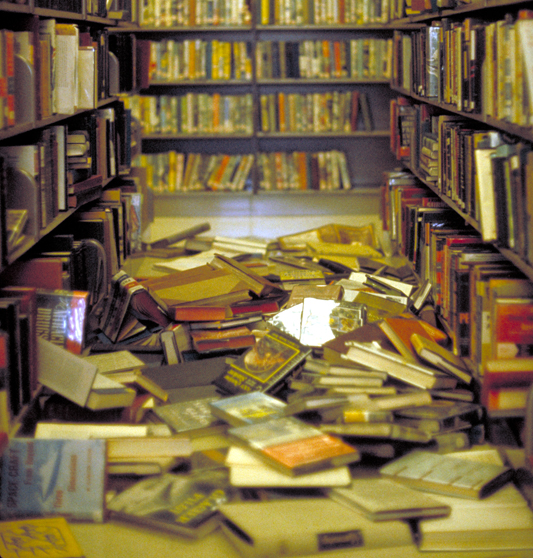


Anyway, 2012 has been a year filled with enjoyable books, some of which have been very special indeed. Keeping up the blog has been a struggle at times but messages of support have turned up often just when I need them and the enthusiasm of others has always been helpful when a shot in the arm has been required. I'll be absolutely honest and say that next year really will see my posts becoming more sporadic but as long as you really want to hear what I have to say then I will try and make the effort when a book really demands it. Twitter remains an exciting place to learn and share about books and when I pretty much lost the ability to update the blog recently it was there that I managed to keep talking and enthusing about what I was reading.

Below you'll find my picks of the year, a varied collection as always, books that I found in a variety of ways. I've summarised why they made the cut below but please click on the titles to read my in-depth reviews and hopefully you'll find something that you hadn't wanted to buy... until now.

Absolution by Patrick Flanery

I read this debut near the beginning of the year but it has stayed in my mind as one of the year's best new novels, heralding the arrival of a nicely matured voice in fiction. Perhaps the most conventionally 'literary' novel on my list it actually has a rather complex structure with four narrative strands and changing viewpoints. Flanery tackles South Africa's fraught politics but also the weight of personal history and the very nature of truth itself. Ambitious and well executed it's a great read now and a very positive indication hopefully of what's yet to come.
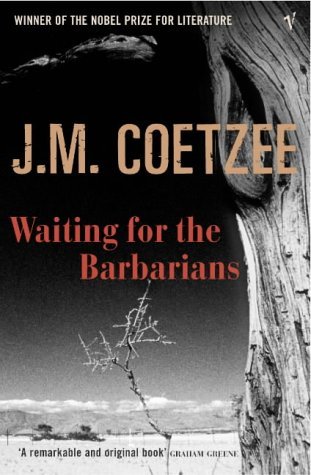
Waiting for the Barbarians by J M Coetzee

It's not all about new books and this novel from Coetzee helped to cement him in my mind as a true master. This allegorical novel of violence, oppression and control is written with the kind of universality that makes it feel like a classic; names of people or places are not important, neither is a sense of when or where exactly the novel is set. The unflinching manner of Coetzee's approach makes for an exhilarating and uncomfortable read. A novel that challenges the reader with its views and opinions but leaves you to draw your own conclusions; what more could you ask for?


A Death In The Family by Karl Ove Knausgaard

Not many books made such an impact on me as this controversial novel and that's why when I was asked to pick just a single book from this year's output by Kim over at Reading Matters, this is the one I plumped for. Knausgaard made a Faustian pact when he decided to write about himself and his own family and the notoriety that has accompanied the publication of his six-volume, fictionalised autobiography is as impressive as the sales figures in his native Norway. Part one looks at drunken adolescence, the death of his father and the alcoholism of his grandmother. The final third is about as a grim a piece of writing as I have ever come across. A book that had me scratching my head about half way through had me itching for more when I finished the final page and with part 2 due next year I can only hope that there are plans to translate and publish the following four books.
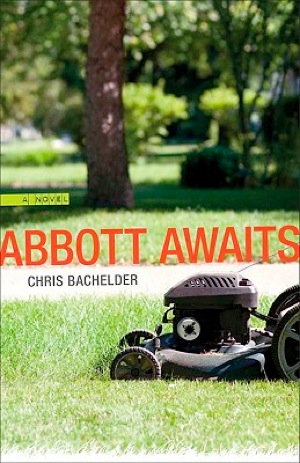
Abbot Awaits by Chris Bachelder

Humour. Let's be honest, it's all too often missing from the books of many 'serious' readers apart from the odd flash here and there so when a book comes along that makes you actually laugh and smile with recognition throughout then what a joy that is. Bachelder's take on modern fatherhood is hilarious, beautiful, touching and true. Little vignettes, often of just a page in length cover the final three months of Abbot's wife's second pregnancy. Just the titles of some chapters are enough to elicit a laugh and the real skill is in not allowing the book to suffer any slumps along the way. A perfect gift for any men you may know who are perhaps expecting another arrival anytime soon.

All Quiet on the Western Front 
by Erich Maria Remarque

A genuine classic that will have you mouthing the familiar refrain of those who finally tackle one of those books they always knew they should have read: 'why didn't I read it sooner?' There's not much for me to say here about Remarque's classic war novel other than that it gave me something completely fresh to think about after I'd been performing in War Horse for a couple of years, that it was a distinct pleasure to give copies of it away on World Book Night and that it's exactly the kind of book that was never in any danger when I had a book cull before moving house recently.


Open City by Teju Cole
If I'd got my act together a little sooner then this book would have appeared on last year's book list (along with lots of other people's). It is a frighteningly accomplished novel, bursting with intelligence and written in the kind of fluid prose that makes you want to devour it in a single sitting. A man wanders the streets of New York, meets friends, has a picnic and at one point gets mugged, that's about all you'll get as far as plot goes, but this book is filled with ideas and culture that keep you're brain nourished throughout and there's even a twist of sorts near the novel's end that makes you think all over again about the man with whom you've been wandering.

Leaving The Atocha Station by Ben Lerner


Not dissimilar to the book above, this is another novel with little plot, a diary-like narration and lots of digression but poet Lerner's debut novel has a wicked sense of humour and a fairly repellent hero whom you can't help but be charmed by. An American poet abroad on a fellowship in Madrid smokes spliff, takes pills, experiences culture and generally bullshits his way around his research project. Along the way he questions his validity as poet, man and lover and we enjoy one of the most stimulating debuts since ... well, the book above.


Hawthorn & Child by Keith Ridgway

Championed by bloggers all over the place but none more so than John Self in the pages of The Guardian this is a novel that more than justified the fervour behind it. I had been looking forward to it after my first experience of his writing but I wasn't expecting it to be quite as a good as it was. Ridgway's own irreverence as a writer is either extreme humility or an indication that he, along with most of the reading public, doesn't realise exactly how good he is. The novel is bold and formalistically daring, written with an ease and brilliance that must make other writers want to give up and has a variety and scope that means each reader is sure to identify a different section or sentence as their favourite bit of writing this year. Believe the hype.


Swimming Home by Deborah Levy

My favourite read from this year's Booker list was a triumph for small publisher And Other Stories and I very nearly included another of their titles, Lightning Rods by Helen De Witt, in this list but decided to mention it here and free up one of these limited berths for another fabulous book (very briefly, Lightning Rods is a whip smart satire that is funny, clever and shocking - read this review for more). Levy's novel is slim but packed full of resonant images, enigmatic characters and telling details. There's a wonderful darkness that clouds proceedings and seldom has there been such an enjoyable sense of being unsettled.

Train Dreams by Denis Johnson


Look, I don't know how many times I have to tell you to read Denis Johnson but will you please just READ DENIS JOHNSON. The fact that the Pulitzer board didn't award a fiction prize this year is bad enough but the fact that they did it when a novel(la) like this landed in their laps in downright scandalous. Johnson's collection of writings is so eclectic and varied that it's difficult to say exactly where this fits in the cannon but as a fan of his I can say that I was surprised by the richness and reward that came from such a slim book, previously published as a story in the Paris Review, thankfully given the proper treatment by Granta who had a storming year with three titles in this best of list.

Building Stories by Chris Ware
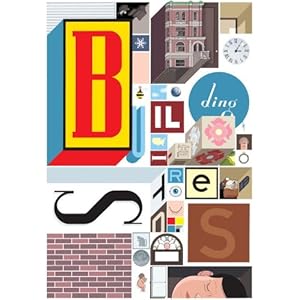
What to say about this extraordinary creation? This is the book I mentioned at the very top that went missing in transit and caused me moments of genuine anxiety as I worried that I might not be able to lay my hands on a replacement copy without bankrupting myself even further. Chris Ware opened my eyes to what the graphic novel could be when I read his first book Jimmy Corrigan. I am eternally grateful to him for that because since then I have derived so much pleasure from reading more and more graphic work. For him then to return with a ... I hesitate to call it a book because it is so much more than that ... with such a gift is quite astounding. A book which cements the place of the graphic novel amongst 'serious' literature and shows at the same time how limited its supposed superiors really are, this will no doubt be seen in years to come as a definitive work.


Also worthy of note: Mrs Bridge, Dr Haggard's Disease, Seven Years, Days of the Bagnold Summer and so many more.


Emperor's New Clothes: HHhH and The Yellow Birds.


Read more...

Tuesday, 10 January 2012

All Quiet On The Western Front - Erich Maria Remarque

'it must never happen again'


translated by Brian Murdoch

I should really have read this classic novel of war well before now; not just because it was recommended reading when I first joined the comapny of War Horse over two years ago but also because it was the title I chose to give away to 48 lucky members of the audience on the innaugural World Book Night last year. I've said before that you sometimes need a bit of planetary alignment to nudge you towards reading a particular book and when the technical rehearsals for the latest cast change at work (traditionally a good time to get some reading done) happened to fall the day after Remembrance Sunday and after a fortnight of collecting for the Royal British Legion then there really did seem to be no excuse any longer.

So, where to begin? Remarque's novel, based on his own experiences at the front, is a classic piece of war literature, importantly providing for all of us British readers a German perspective on the bloodshed and even more importantly than that a voice of dissent from the trenches. It is this that made the book so notorious in his native Germany, that encouraged the Nazis to add it to the list of books to be consigned to the flames, and that makes it such an important novel today as we approach a century since the war to end all wars began. The novel is narrated by Paul Bäumer, whom we follow with a few of his school friends as they are encouraged to enlist and are sent to the front to fight. Instilled with homespun rhetoric and the idealism of their teachers and elders it isn't long before the realities of conflict alter their view. Not only has schooling provided them with little of practical use in a war zone ('Nobody taught us at school how to light a cigarette in a rainstorm, or how it is possible to make a fire even with soaking wet wood - or that the best place to stick a bayonet is into the belly, because it can't get jammed in there, the way it can in the ribs.') but all of the certainties, their very reasons for fighting in the first place quickly fall away.

While they went on writing and making speeches, we saw field hospitals and men dying: while they preached the service of the state as the greatest thing, we already knew that the fear of death is even greater...all at once our eyes had been opened. And we saw that there was nothing left of their world. Suddenly we found ourselves horribly alone - and we had to come to terms with it alone as well.

What we gain from the narrative is not so much specifics about the military campaign (I was never entirely sure where I was along the western front, nor which specific battles where being described) but an insight into what it felt like to be one of the confused, young men in those trenches. The different sounds of the various munitions, the poor conditions, the new values that make tobacco or rare foodstuffs worth more than all the money in the world, the camaraderie, the humour, the landscape where a hundred yards of brown, churned-up earth can contain the whole world.

...the power to defend ourselves flows back into us out of the earth...The earth is more important to the soldier than to anybody else. When he presses himself to the earth, long and violently, when he urges himself deep into it with his face and with his limbs, under fire and with the fear of death upon him, then the earth is his only friend, his brother, his mother, he groans out his terror and screams into its silence and safety, the earth absorbs it all and gives him another ten seconds of life, ten seconds to run, then takes hold of him again - sometimes forever.
For these young men who 'had just begun to love the world and to love being in it' the effect of being forced 'to shoot at it' is an almost immediate alienation. Isolated from civilisation, brutalised by fighting, numbed by bombardment, the idea of progress disappears to be replaced by nothing other than the belief in war itself. When that happens even the terror of fighting recedes into the background; these once green recruits find themselves feeling like experienced soldiers, amazed in turn by the inexperience and inadequate training of the next batch coming through. There is also time for other highlights to shine through; the men's visit to a house over the river to see three French women, their revenge on the brutal corporal Himmelstoss, and Kat's frequent ability to scavenge food whenever required including a goose at one point which he and Paul roast. This last event provides a moment for Paul to reflect on the unlikely intimacy of war.
What does he know about me? What do I know about him? Before the war we wouldn't have had a single thought in common - and now here we are, sitting with a goose roasting in front of us, aware of our existence and so close to each other that we can't even talk about it.

Perhaps the defining moment of the novel is Bäumer's trip home on leave, which is almost unbearably moving. There are tears as soon as he walks through the door but the awkwardness of his renewed contact with his family is brilliantly described by Remarque. His mother is dying from cancer and the two of them have so much they might say to each other but can't, his father doesn't know how to speak to his son of his experiences and Bäumer finds that the place where he grew up is no longer a one where he feels he belongs. For fellow bibliophiles there is a telling moment when Bäumer goes through the book collection that once gave him so much joy and finds that he can't read any of them - 'Words, words, words - they can't reach me.'

The true impact of this trip home is felt when he returns to the fray. First comes the return of fear, particularly in one scene that finds him stuck in a shell hole during a bombardment, paralysed by that fear of death, rescued finally by hearing voices in the trench behind him ('Those voices mean more than my life, more than mothering and fear, they are the strongest and most protective thing that there is: they are the voices of my pals'). Then comes his first real engagement with the reality of fighting when he kills a French soldier in hand to hand combat and watches him die slowly. Realising how little separates them he makes a vow.

'Your turn today, mine tomorrow. But if I get out of all this, pal, I'll fight against the things that wrecked it for both of us: you life and my -? Yes, my life too. I promise you, pal. It must never happen again.'

This might have led to Bäumer becoming some kind of crusader for reform or political settlement post-war but as his friends are slowly picked off by Death a hopelessness sets in and we see how Paul has been utterly destroyed by his experience. All the more reason to make sure that we heed the vow he made, for this great war novel is of course a great anti-war novel. One that retains a devastating impact and fully deserves its classic status.

Read more...

  © Blogger templates The Professional Template by Ourblogtemplates.com 2008

Back to TOP