Random

Showing posts with label RIDGWAY Keith. Show all posts

Monday, 17 December 2012

Books of the Year - 2012

Last year I made a stack of my end of year picks and took a photo to head the post. This year, having moved house and with books scattered all over the place, I'd struggle to know where exactly to locate most of the books I want to bring to your attention and indeed it was a source of considerable anxiety to me that one of them, packed specially due to its unique qualities, went missing for nigh on a month before it was finally relocated and hurriedly placed on a special shelf for safekeeping.
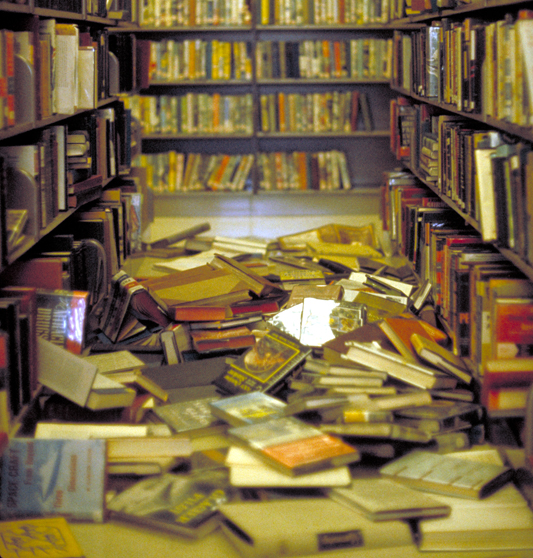


Anyway, 2012 has been a year filled with enjoyable books, some of which have been very special indeed. Keeping up the blog has been a struggle at times but messages of support have turned up often just when I need them and the enthusiasm of others has always been helpful when a shot in the arm has been required. I'll be absolutely honest and say that next year really will see my posts becoming more sporadic but as long as you really want to hear what I have to say then I will try and make the effort when a book really demands it. Twitter remains an exciting place to learn and share about books and when I pretty much lost the ability to update the blog recently it was there that I managed to keep talking and enthusing about what I was reading.

Below you'll find my picks of the year, a varied collection as always, books that I found in a variety of ways. I've summarised why they made the cut below but please click on the titles to read my in-depth reviews and hopefully you'll find something that you hadn't wanted to buy... until now.

Absolution by Patrick Flanery

I read this debut near the beginning of the year but it has stayed in my mind as one of the year's best new novels, heralding the arrival of a nicely matured voice in fiction. Perhaps the most conventionally 'literary' novel on my list it actually has a rather complex structure with four narrative strands and changing viewpoints. Flanery tackles South Africa's fraught politics but also the weight of personal history and the very nature of truth itself. Ambitious and well executed it's a great read now and a very positive indication hopefully of what's yet to come.
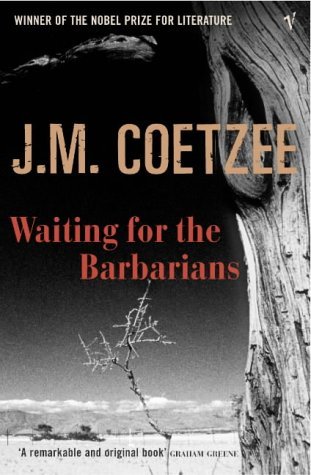
Waiting for the Barbarians by J M Coetzee

It's not all about new books and this novel from Coetzee helped to cement him in my mind as a true master. This allegorical novel of violence, oppression and control is written with the kind of universality that makes it feel like a classic; names of people or places are not important, neither is a sense of when or where exactly the novel is set. The unflinching manner of Coetzee's approach makes for an exhilarating and uncomfortable read. A novel that challenges the reader with its views and opinions but leaves you to draw your own conclusions; what more could you ask for?


A Death In The Family by Karl Ove Knausgaard

Not many books made such an impact on me as this controversial novel and that's why when I was asked to pick just a single book from this year's output by Kim over at Reading Matters, this is the one I plumped for. Knausgaard made a Faustian pact when he decided to write about himself and his own family and the notoriety that has accompanied the publication of his six-volume, fictionalised autobiography is as impressive as the sales figures in his native Norway. Part one looks at drunken adolescence, the death of his father and the alcoholism of his grandmother. The final third is about as a grim a piece of writing as I have ever come across. A book that had me scratching my head about half way through had me itching for more when I finished the final page and with part 2 due next year I can only hope that there are plans to translate and publish the following four books.
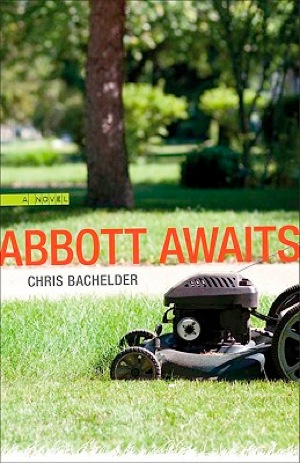
Abbot Awaits by Chris Bachelder

Humour. Let's be honest, it's all too often missing from the books of many 'serious' readers apart from the odd flash here and there so when a book comes along that makes you actually laugh and smile with recognition throughout then what a joy that is. Bachelder's take on modern fatherhood is hilarious, beautiful, touching and true. Little vignettes, often of just a page in length cover the final three months of Abbot's wife's second pregnancy. Just the titles of some chapters are enough to elicit a laugh and the real skill is in not allowing the book to suffer any slumps along the way. A perfect gift for any men you may know who are perhaps expecting another arrival anytime soon.

All Quiet on the Western Front 
by Erich Maria Remarque

A genuine classic that will have you mouthing the familiar refrain of those who finally tackle one of those books they always knew they should have read: 'why didn't I read it sooner?' There's not much for me to say here about Remarque's classic war novel other than that it gave me something completely fresh to think about after I'd been performing in War Horse for a couple of years, that it was a distinct pleasure to give copies of it away on World Book Night and that it's exactly the kind of book that was never in any danger when I had a book cull before moving house recently.


Open City by Teju Cole
If I'd got my act together a little sooner then this book would have appeared on last year's book list (along with lots of other people's). It is a frighteningly accomplished novel, bursting with intelligence and written in the kind of fluid prose that makes you want to devour it in a single sitting. A man wanders the streets of New York, meets friends, has a picnic and at one point gets mugged, that's about all you'll get as far as plot goes, but this book is filled with ideas and culture that keep you're brain nourished throughout and there's even a twist of sorts near the novel's end that makes you think all over again about the man with whom you've been wandering.

Leaving The Atocha Station by Ben Lerner


Not dissimilar to the book above, this is another novel with little plot, a diary-like narration and lots of digression but poet Lerner's debut novel has a wicked sense of humour and a fairly repellent hero whom you can't help but be charmed by. An American poet abroad on a fellowship in Madrid smokes spliff, takes pills, experiences culture and generally bullshits his way around his research project. Along the way he questions his validity as poet, man and lover and we enjoy one of the most stimulating debuts since ... well, the book above.


Hawthorn & Child by Keith Ridgway

Championed by bloggers all over the place but none more so than John Self in the pages of The Guardian this is a novel that more than justified the fervour behind it. I had been looking forward to it after my first experience of his writing but I wasn't expecting it to be quite as a good as it was. Ridgway's own irreverence as a writer is either extreme humility or an indication that he, along with most of the reading public, doesn't realise exactly how good he is. The novel is bold and formalistically daring, written with an ease and brilliance that must make other writers want to give up and has a variety and scope that means each reader is sure to identify a different section or sentence as their favourite bit of writing this year. Believe the hype.


Swimming Home by Deborah Levy

My favourite read from this year's Booker list was a triumph for small publisher And Other Stories and I very nearly included another of their titles, Lightning Rods by Helen De Witt, in this list but decided to mention it here and free up one of these limited berths for another fabulous book (very briefly, Lightning Rods is a whip smart satire that is funny, clever and shocking - read this review for more). Levy's novel is slim but packed full of resonant images, enigmatic characters and telling details. There's a wonderful darkness that clouds proceedings and seldom has there been such an enjoyable sense of being unsettled.

Train Dreams by Denis Johnson


Look, I don't know how many times I have to tell you to read Denis Johnson but will you please just READ DENIS JOHNSON. The fact that the Pulitzer board didn't award a fiction prize this year is bad enough but the fact that they did it when a novel(la) like this landed in their laps in downright scandalous. Johnson's collection of writings is so eclectic and varied that it's difficult to say exactly where this fits in the cannon but as a fan of his I can say that I was surprised by the richness and reward that came from such a slim book, previously published as a story in the Paris Review, thankfully given the proper treatment by Granta who had a storming year with three titles in this best of list.

Building Stories by Chris Ware
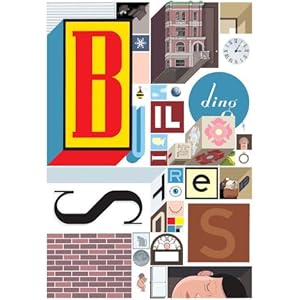
What to say about this extraordinary creation? This is the book I mentioned at the very top that went missing in transit and caused me moments of genuine anxiety as I worried that I might not be able to lay my hands on a replacement copy without bankrupting myself even further. Chris Ware opened my eyes to what the graphic novel could be when I read his first book Jimmy Corrigan. I am eternally grateful to him for that because since then I have derived so much pleasure from reading more and more graphic work. For him then to return with a ... I hesitate to call it a book because it is so much more than that ... with such a gift is quite astounding. A book which cements the place of the graphic novel amongst 'serious' literature and shows at the same time how limited its supposed superiors really are, this will no doubt be seen in years to come as a definitive work.


Also worthy of note: Mrs Bridge, Dr Haggard's Disease, Seven Years, Days of the Bagnold Summer and so many more.


Emperor's New Clothes: HHhH and The Yellow Birds.


Read more...

Tuesday, 31 July 2012

Hawthorn & Child - Keith Ridgway

'Random is never really random'


Amongst a select group of readers there is a lot of enthusiasm for Keith Ridgway. They may not agree on what his best work is but there is certainly consensus that he is one of the most interesting writers working today. His latest novel is the first to be published by Granta who have been making all the big waves in 2012 with fabulous titles like Peter Stamm's Seven Years, Ben Lerner's Leaving The Atocha Station, Justin Torres' We The Animals and Denis Johnson's Train Dreams still to come. One book I had been eagerly anticipating, after enjoying his story collection Standard Time, was this new novel from Ridgway and those of you who read John Self's Asylum site or follow him on Twitter will have already been bashed around the head several times with how good it is. It really is very good. All the more dispiriting then to learn that on its publication day Waterstones, which has over 300 stores nationwide, had ordered a grand total of 18 copies.

I can't do anything about how Waterstones buys books, all I can do is bang on about this cracker sufficiently hard enough to send you to your preferred book outlet of choice and order a copy. I fail to see how you could be disappointed. How can I be so sure? Well, it seems to me there are two kinds of thing that can excite you about a book. The publishing industry as it stands can create plenty of buzz behind debut or event novels, books that like to stand up very tall on their own and demand that you all read them and discuss them. The quality of writing in those books is not the point. Amidst all the hubbub that is the insane phenomenon of 50 Shades of Grey (which took just eleven weeks to sell over a million copies, smashing the previous record held by Dan Brown's Da Vinci Code which took a leisurely 36 weeks to do the same) I only ever hear people saying how badly written it is, but who cares? Other books like Room or The Slap used quirk or debate to fuel enthusiasm, the kind of water-cooler chatter that helps build word-of-mouth success. I've read plenty of interesting debuts only to be disappointed by the follow up before watching that author fade away (presumably having made enough from the much publicised six-figure advance to not have to worry about writing much more).

What I get excited about is finding an author who I want to read time and again. Philip Roth, Denis Johnson, J M Coetzee, Graham Greene, Stefan Zweig, W G Sebald, John Burnside - these are writers who haven't just written one good book, but several, and provided innovation and exploration for those readers devoted to them. Locking on to a modern writer like that seems to be getting harder with publishers less wiling or able to nurture writers as in days of old. Fail to shift enough copies or win an award and you may find yourself being forced to write a werewolf trilogy to keep the...erm, wolf from the door. Why is Ridgway amongst the writers that you should be interested in reading? Lets start with just how enjoyable this book is. There is nothing quite like reading a novel and getting a kick out of each successive page in terms of pure enjoyment. Ridgway writes with that deceptive ease that makes you feel as though the book is an easy read even whilst it dares to reach the parts other novels cannot reach.

Hawthorn and Child are two detectives whom we meet in the opening chapter within a dream of Hawthorn's. How's that for a playful beginning? They go to investigate a seemingly random shooting in which the victim claims to have been shot by a vintage car, we might expect this to go on to be a police procedural, albeit of a rather unusual kind, but don't expect to get any answers to this case or indeed any other. In fact don't expect this book to give you any of the usual assurances of a narrative novel. Whilst Hawthorn and Child may lend it their names you would struggle to even call them the main protagonists. 'We are not at the centre of things, said Child' and he is right, as the book's various chapters introduce us to new characters and storylines, the two detectives returning periodically a little like Rosencrantz and Guildenstern. Hawthorn is the most fascinating of the two, a somewhat depressive figure, 'crooked somehow', prone to drifting off; making cryptic, literary notes that have little bearing on the case in hand. He is also gay and in one bravura section entitled How To Have Fun With A Fat Man Ridgway manages to write about Hawthorn policing a riot and attending an orgy in a sauna at the same time. Sometimes it is clear which location we are in but all too often Ridgway's brilliant use of language keeps it ambiguous and points up the similarities between these two seemingly opposed scenarios.


At a signal they move away form the wall. They move towards he others. It is always a confrontation. It is always a stand off. Hawthorn is shoulder to shoulder with men like himself. He is eye to eye across the air. He is picking out certain faces. He is making calculations. There are certain things he wants to do. There are things he doesn't want to do. These things are always people. He accepts or declines each face. Each set of shoulders. He is agreeing to and refusing each body in turn. His mind is ahead of him. He is saying yes to that one, no to that one. He is choosing. Choice is an illusion.

Each chapter has its own title, inviting us to treat this like a collection of linked stories. Some of these are so successfully independent that they give the pleasure of reading a perfectly honed short story. When this happens more than once in the novel you get the slightly giddy feeling of too much of a good thing. No complaints here however. Goo Book for example, in which we meet the driver of the elusive criminal Mishazzo and enter his relationship with his girlfriend, neither of whom can actually say tender things to one another but choose to write them instead in a notebook for the other to find, thus freeing themselves up to indulge a far more exotic sexual life (involving some of what is presumably making 50 Shades so popular), is a brilliant, self-contained gem (so much so that it was printed in the New Yorker here). It could stand alone as a short story and satisfy you completely but placed where it is in the novel it adds not only a frisson of something unexpected but also something close to sentimentality; a moment of genuine romance no matter how tainted.

They lay next to each other in the bed and touched each other and laid their faces one against the other and when they were tired of talking they fucked and when they were tired of fucking they talked, and many different afternoons became one afternoon that persisted in his mind for the rest of his life and he never knew what to make of it, then or after.

Marching Songs is another section that thrives out of context (again there's the opportunity to read it as such thanks to the publisher themselves here). It is a quite brilliant monologue, not just because of its distinctive voice, scattered subjects and obsessive detail but because whilst it is like a direct address monologue it is very much a piece of writing that makes virtue of itself as a piece of writing. I'm sure it could be read brilliantly out loud by an actor or the author himself but it reads so well on the page that the perverse pleasure is there for everyone who picks up the book (or clicks on the link above). A piece that captures brilliantly the morbid curiosity of the modern world, where videos of every kind of accident and atrocity can viewed whenever we like and as often as we like ("You can watch it all. Over and over.") actually had me personally unable to stop myself viewing some of the videos detailed. There is something compelling about the heroism of Formula One driver David Purley as he seeks to save the life of his friend and fellow driver Roger Williamson in the Dutch Grand Prix of 1973 but Ridgway manages to make even more of it with his simple description and commentary on the event.

I have read novels before that use the linked story format to make up their whole. Some of them work better than others. Ridgway almost goes one step further by eschewing the idea that these linked stories should come together to provide a narrative. As I said earlier, there will be no solution to the shooting incident that opens the book (sorry, spoiler!), but that is never really the point. The combined narratives of each chapter satisfy on their own in the same way that an unresolved short story can. The fact that there is not one but several of them and that they all inhabit the same world and share some of the same characters is what actually made the book such a success to me. Along the way you will meet criminals and the men who pursue them, family members, a premiership referee who sees ghosts, a secret brethren of wolves in conflict with other animals (yes, really) and yet none of it ever seems absurd. It is quirky in all the right ways and all goes to show what I said at the very beginning. There are some writers you read and come back to again and again because they consistently produce work of quality, variety and ingenuity. Ridgway has joined that list for me (in fact I enjoyed this one so much I read it twice - and I never do that), I can only hope that he will do the same for other readers too.

Read more...

Tuesday, 4 January 2011

'There's making it up and there's making it up.'


Standard Time 
by Keith Ridgway

John Self has been drawing attention to Irish writer Keith Ridgway both on his blog and on the Fiction Uncovered website. Armed with this name on a trip to the LRB bookshop to find me a birthday present my dad found only two titles on the shelf (shame on you LRB): his novel The Parts (which appeared to be a bit of a disparate doorstop) and a slightly neglected looking copy of this story collection. A prize winning book (Standard Time won the Rooney Prize in 2001) needs a good home and hopefully found one on the day I turned... let's just say a year older.

To finish his review of Ridgway's novel, The Long Falling, John used a quotation from a scene in which one character is asked by a policeman during an interview to start from the beginning. His reply: "Where's that?" The opening story of this collection, The First Five Pages, picks up on that idea:

Put one story behind you and start another. That is the theory. But I find that what should be new is polluted and old. That there are no endings, that all stories overlap, and that all you can do is decide where to begin. When to begin.

A story collection seems like a good place to begin with a new author, a taster menu if you like to help you get a feel for their capabilities and there is real variety here even though all but one of Ridgway's stories are set in Dublin (we even have a couple of stories that take us back into the city's history). What struck me immediately was how different these stories seemed to what I might have expected. Many writers use the shorter form to exhibit stylistic flourishes or experiment. There can, let's face it, be some grandstanding. But Ridgway manages to write stories that have the calm confidence of the novel even whilst containing the punch of the shorter form and even moments of literal extreme violence. In fact it could be said that violence is a recurring theme. One of the characters in the gruesome historical piece Ross and Kinnder articulates the public desire to shock and be shocked.

...whatever horror takes place in the world, it is never enough. It will be puffed up until it shocks, and so the audience writes the plot, demanding teeth marks.

The violence in Ridgway's stories ranges from the blood-spattering of a hired killer in the story above to the casual elbow to the face delivered by one man to his lover after a drunken scene in a restaurant. But it is never gratuitous. We are shocked by the beating received at the end of Never Love A Gambler (a story in which the threat of violence hangs over one character with gambling debts) not only because of its viciousness but also its cruelty, given the surprise of how it comes about and who is on the receiving end. Violence isn't restricted to its most obvious forms. Jane's Addiction sang that 'Sex is Violence' and particularly in his depiction of gay relationships Ridgway captures the power of the significant remark, the physicality of coupling and the subtler ways in which intimacy can be a weapon with which to jab at those closest to us and where each blow is loaded with import and meaning. The narrator of The Problem With German is quite clear what that problem is.

Robert does not like the sound of German. You cannot, he told himself, whisper in German. You can only argue and be adamant and precise. He does not believe that a German speaker ever has to search for the right word.

But Ridgway uses the language barrier that is heightened by Robert's visit to Berlin with his German lover to stand for the general breakdown in communication between the couple. There is a wonderful sense of the trust implicit in any relationship as Robert needs his interpreter to understand even the most basic exchange around him and it isn't until one flashpoint is translated for him that he realises how hard it can be to interpret the behaviour of others without a common language to communicate with. In Off Vico the elderly narrator, a writer, is approached by an apparent stranger who claims to have met him before. His quick dismissal of such a thought seems at first to be the result of confused identity or simply the impact of ageing but as they converse he struggles to keep his head above the deluge of memories that flood over him.

Abstractions by the handful, I grappled with my history for a moment, as one will, must, will, when confronted with a past which one had imagined as a future, and one sees, again, always recurring, that the bulk of things lie behind us, done and dusted, used just once, through in an instant. Abstract regret, abstract sorrow, abstract life. That we discuss anything at all is a wonder to me.

His battle with memory is due to the defences he himself has erected around deep buried feelings and an encounter charged with eroticism. The manner in which these defences tumble is brilliantly written by Ridgway who does allow himself some stylistic flourishes here in a standout story.

Those two themes of how little we really know of those closest to us and the concentration of feeling that comes from the briefest of relationships are combined in the longest story of the book, Angelo. Its length is due to the narrator's need to tell us everything he can remember about the man who has come into and then out of his life, trying desperately to work out exactly what happened.

...I don't have the time to be brief. You understand me? I don't have the time to sift through it all and distill the moments of importance, and communicate them in a way that would make you care. I am distracted by the debris, by the incidental, by the little bits of minutes and hours and days that stay with me, that have lodged somewhere in my mind as tastes or sounds or inclinations of his head or movements of his hands or words he said. Because I need to show him to you, and I'm not doing it right, I'm not covering it all, I'm all side-on and oblique and I'm too self-conscious and it's not going to work if I try to frame it just so, try to get it perfect. I have to just throw this at you. And you just have to catch it.
It is quite unusual to have such a blatant holding up of hands as happens in this story, to have a narrator wish that they were telling us 'only the interesting things' and call so blatantly for our complicity. I'm not sure if it entirely worked for me but it certainly conveyed the confusion of someone who was no nearer to understanding the person they had allowed to get so seemingly close and yet knew so little about.

A quick mention too for a story that gives us an unreliable narrator par excellence and is easily one of the more disturbing stories I have read recently. This is due to complicity once again but a very different kind. Headwound has us on guard from the outset because of that ominous title and we read each sentence waiting for the event to happen. But the voice of the father who narrates it carries a level of humour that has us smiling even as we get closer and closer to the story's inevitable climax. Unsettling doesn't even begin to describe the feeling you have whilst reading.

Having made it sound as though Ridgway shuns style it is worth mentioning that there are subtle differences in each story; style is used to suit each tale and he even allows himself moments of descriptive prose that give you that satisfying feeling of having read a unique way of describing something relatively mundane. I'll leave you with such a passage from The Dreams of Mary Cleary and add my voice to those who would like to see more people reading Ridgway.

The sea heaved in the bracket of the bay, splashing the land with its foam, thrumming the air, putting a knife in the cold wind. And the wind. A howl of soaked air funnelled down through the low hills, a mouth filling punch, all unseen and screaming, as if a great ghost, the ghost of a different city, moved through its taken place, raging at the living places, pushing what was pushable, groaning what was not.

Read more...

  © Blogger templates The Professional Template by Ourblogtemplates.com 2008

Back to TOP