


Showing posts with label DAWSON Jill. Show all posts
Showing posts with label DAWSON Jill. Show all posts
Tuesday, 25 November 2014


Thursday, 24 April 2014
Thursday, 11 August 2011
Jill Dawson Interview
As I mentioned in my review of her new novel, Lucky Bunny, Jill Dawson is something of a specialist when it comes to creating narrative voice. I wanted to ask her a little more about that and her work in general and I'm very grateful to her for taking the time to answer my questions.
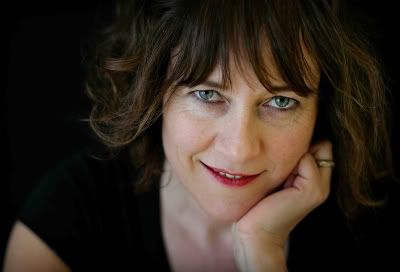
Lucky Bunny is the story of Queenie Dove, an East End girl whose life is overshadowed by crime. Where did she come from and why did you decide to write about her?
Years back, in the early nineties I think, when I was living in Hackney and hadn’t yet published my first novel I tore something out of the Guardian about a funeral that went through South London, of a woman thief. She’d had condolences sent from the Kray Twins, and Buster Edwards the Great Train Robber attended in person; the funeral cortege had fifteen black Daimlers. It fascinated me and stuck with me….
 As part of my background reading I read The Profession of Violence – the cult biography of the Kray Twins by John Pearson - and lots of other books with titles like ‘London’s underworld: three centuries of vice and crime’ but they rarely mentioned the women, except to say things like (describing a terribly bloody murder in Stoke Newington) ‘a blonde cleaned up the place’. So I started to think about women that associated with criminals, who belonged to this criminal underworld and what their role was. And in which ways it would be profoundly different, being female. I wanted to write in the spirit of Moll Flanders, that is her own account of her doings, un-ashamed and unrepentant, really.
 In Moll Flanders there’s an exaggeration, a sort of comedy that stems from the fact that no one person could have experienced all that Moll does and I wanted to faintly echo that in giving Queenie a part in all the major criminal events of her era. Defoe draws on the established conventions of the rogue biography - a genre that presented the lives and escapades of real criminals in semi-fictionalized and entertaining ways. I read loads of memoirs by criminals or criminal associates and also wanted to playfully mimic in the style of Lucky Bunny their exaggeration and glamorisation of their own crimes.
I have read three of your novels now, all of them first-person narrations, what is it about that perspective that you like so much?
I suppose I like to show how much of how the world we shape according to our own feelings, bend to our own vocabulary. In Lucky Bunny I know from the outset that I was keen to write a novel where the central female character flavoured everything: you know those portagonists like Becky Sharp, Emma Bovary, Tess of the d’Urbervilles…. who aren’t someone’s girlfriend, or the love interest, but a driving force of the novel. I was hoping to create a character the reader felt they hadn’t heard from before. I don’t write about North London dinner parties – there are others doing that.
 Each of those three novels is very different, but they all share some basis in fact. How do you light upon the periods, subjects and characters of your writing?
My novels often start with a place. And there’s usually a novel or poem that I’m interested in re-reading and thinking again about – Lolita in Watch Me Disappear; Brooke’s poem in The Great Lover, The Wasteland in Fred and Edie. Moll Flanders, as I’ve said above. Lucky Bunny is set in Hackney and the addresses that Queenie lives at are places I lived – Well Street, Lockhurst Street, the Frampton Park Estate.
 There will usually be something too that I’m working out for myself. I don’t necessarily always know what it is until the novel is finished. In Lucky Bunny I realise now that Queenie’s attraction to danger and risk-taking was always at the back of my mind. I was re-visiting themes of a violent relationship, which is the subject of my first novel Trick of the Light.
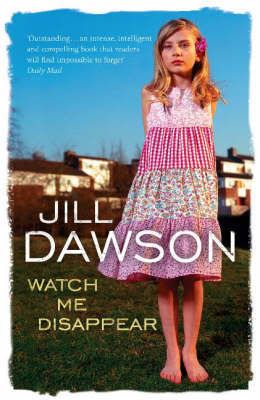 I think I do have some other recurring themes. How far people deceive themselves, and how far they collude in their own downfall; how far they are victims, what aspects of their destiny they can control, what it means to face the truth and an individual’s longing to live authentically (in the way that Sartre meant it – that is be themselves, live a fully realised life and not conform to society’s dictates). That’s a theme of The Great Lover, Magpie and Fred and Edie. And sexuality and how far that is constructed or ‘natural’ and how far that shapes our lives is a recurrant theme – Fred and Edie, Watch Me Disappear, The Great Lover
I was very worried about getting things 'right' when I voiced the Rupert Brook sections of The Great Lover for the audio book. Given the factual basis of some of your characters how much do you worry about getting it 'right'?
 Yes, I worry horribly about getting it right too. Especially because someone will always point out the ways in which we don’t. For The Great Lover I spent a lot of time in Grantchester and reading Rupert Brooke’s letters; for Lucky Bunny I went back to my old haunts in Hackney and tried to imagine what they were like fifty years earlier. I talked to a survivor of the Bethnal Green tube disaster and to my husband’s aunt who was a land girl and my father in law who was evacuated from London during the war. I think of fiction as an investigative tool. I can apply ‘fiction’ – the tricks and skills a novelist has up her sleeve - to the ‘facts’ of a story and see what happens. Of course something true, something that feels true to the reader, is what I want to create. I’m interested in how we construct stories for ourselves and how highly subjective lived experience is. I don’t deliberately change inconsequential, factual things to improve the plot. Quite the contrary. I believe they are the plot....
Authors are often criticised for failing to write convincingly from the perspective of the opposite sex. Having written from both the male and female viewpoint did you find it any harder to get inside the head of a man and how did you go about it?
I live in a household of men – I’m married and have two sons, and their friends are always around – so I feel I’ve spent my life surrounded by boys and men (my eldest is twenty two now, the youngest is eleven). So it’s easy to imagine inhabiting a male body. In fact, I’d say another theme of my work is masculinity and how it’s constructed by society, what it is to be a ‘good man’……Wild Boy especially looks at that, and a third of that novel is written from a male point of view, a third from the point of view of an autistic child and a third by a woman.
You are, if you don't mind my saying, a master of creating narrative voice. Have you ever been tempted to write something that is genuinely made up of only dialogue like a play, film or TV drama?
Thank you! I have had a go at film scripts. I’ve adapted a couple of my own novels and written one original script. What I found frustrating there is how much money, time and effort is needed to get them off the ground. A novel is something I can do on my own. I’m highly independent, not really good at working for or with others I’m afraid, been self-employed since I graduated at twenty-one ….
Would you like to recommend a neglected book to the readers of this blog?
I recently re-read Beryl Bainbridge’s Winter Garden. I know she can hardly be described as neglected, having just been awarded her own Booker…..but I do love that novel. In places it’s hilarious (especially a funny little sex scene, a knee-trembler in the kitchen), it’s full of mystery and endlessly entertaining, with that Bainbridge voice that is utterly original.
I always ask my interviewees if they will 'do a Hemingway' and create a story in just six words. Would you have a go?
Surely no writer has said yes? Read more...
Tuesday, 9 August 2011
'a pinch of salt'

Lucky Bunny
by Jill Dawson
Jill Dawson does narrative voice like no one else. This is the third novel of hers I have read that employs a first-person narration and there is something immediately engaging about having a new and often distinctive voice speak to you. A retrospective life obviously takes you back to another time period as well and after the pre-World War I setting of The Great Lover and the 1970's childhood of Watch Me Disappear, Lucky Bunny is the story of Queenie Dove, an East End girl who grows up during the Blitz and makes a life for herself amongst the criminals of Krays-era London. It's worth noting the expression on the face that graces the cover because it contains just the right mixture of wry amusement, strength and a hint of something darker to convey the experience of reading Queenie's tale. On the surface this is an entertaining read of wartime privation, petty crime and good time girls but the darker undercurrents are what make it a far deeper and more interesting read and should lead us to question how much we can take what we read at face value. Queenie herself urges us to do just this at the very outset.
I don't think I'm a confessional person. Bit of a storyteller, that's all. Take what I say with a pinch of salt, if you like. Luck always beggars belief...I hope I've left that other-named girl behind: I've worked bloody hard at it.
That 'other-named girl' is born to Irish mother Moll and jailbird father 'Lucky Boy' Tommy Dove in the Poplar of 1933. Tommy is a charming rogue who knows how to talk himself into a woman's affection but whose most regular relationship comes from his frequent brushes with the law and those periodic stays at Her Majesty's pleasure. The totemic animal of the title is a gift that he brings to his daughter, perhaps as early as the first time he sees her and that she carries with her through life, a white bunny rabbit with a pink bow around it's neck, its bright felted wool 'turning grey eventually, like all of us'
Why do I think he must have given it then and there, the first time we met? Because the shape of my life had begun and I feel certain it was Dad who began it. Things. That was what he gave me from the start in the place of anything else, and it was what I ended up craving. Gifts and glamour and novelty, and if it came with a whiff of naughtiness so much the better.So we can see the beginnings of the personality that will embrace the notion of crime. A bit of thieving here and there is what allows a family to survive in wartime, to maintain a bit of glamour and who does it really hurt? Do we blame the regularly absent father or the increasingly alcoholic mother, or is Queenie perhaps born to and perfectly suited for a life of crime? Even at only six years of age Queenie shows her willingness when she steals a bottle of milk for her and brother Bobby ('a few currants short of a teacake'). The closeness of her bond with Bobby will become important as family tragedy and wartime evacuation shatter the already fragile bonds of their family unit. I don't want to give away too much of the plot, of which there is plenty, but point out those moments that give us an insight into the formation of that enigmatic smile on the cover.
It is when she and Bobby are evacuated to a landscape familiar to Dawson readers, the flat fenland near Ely, that Queenie assumes the name she will carry from that point on. We also get the first glimpses of her tendency towards fantasy and development of the persona that accompanies the new name, all part of her natural ability to adapt and survive. So sometimes she is Queenie, who has a white horse called Betsy in her father's stables, or it might be Queenie, whose father owns the best pie and mash shop in London. Unsuited to country life it isn't long before she returns to London and on her departure there is another moment of significance. The daughter of the family they have been staying with, who has spent much of her time tormenting them both, runs to see them off at the station and Queenie recognises something in her eyes.
Although it's new to me, I suddenly know exactly what it is, and a feeling like a spanner turning over in my stomach locks it away. I think it's going to be useful to me. I'm going to store it up...My way of reading people. Ah, I think. I want to smile. Elsie feels guilty. That's what guilty looks like.
Bobby will return to the country but Queenie remains in London, under the care once again of Tommy, for whom the bureaucracy of war offers plenty of opportunities to avoid the draft and fiddle money from the state, and occasionally her Nan who has been like a surrogate mother to her at times. Then comes the turning point in Queenie's life, the event that removes the last restraint that might have kept her on the straight and narrow, an event that actually happened in 1943 in Bethnal Green Tube station. It was naturally being used as an air raid shelter but when a crowd surged into it on the night of March 3rd, 173 people were killed and over 90 injured in the worst civilian disaster of the second World War. One of those people was Queenie's Nan. Without Nan's influence Queenie falls in with her mother's former crowd, The Green Bottles, a group of glamorous good time girls well practised in the arts of 'hoisting,' or shoplifting to you and I, and it isn't long before Queenie has learnt the ropes herself and employs those skills of perception and acting to quickly excel amongst the group.
What follows is entertaining as I said, who doesn't like a heist? But, as ever, it is Queenie's personal relationships that prove most interesting and in particular that with the man closest to her, Tony. Acting first as driver and protector when Queenie and friends are involved in the practise of 'rolling' (taking money from potential punters on the street before doing a runner) it is when they become intimates that Queenie's independence and strength are questioned. It is when protection becomes control and anger becomes violence that we get into the novel's darker terrain. When Queenie becomes a victim of domestic abuse herself she is forced to reconsider her anger at her own mother for 'allowing it' to happen to her. The whole notion of guilt has been there from the very beginning, Queenie saying 'It's my fault, I think. I'm the cleverest' so that even her achievements in helping the family survive are tainted.
And then we have the question of veracity. How much should we believe? Even before we get to the more sensational elements of the plot we have learnt that all criminals are in the habit of exaggerating their own significance in events and Queenie herself has warned that 'perhaps I'm making it up, you know, putting myself at the centre, everywhere that mattered.' Most telling perhaps in this story of survival is Queenie's discussion with her friend Stella about luck and Queenie's belief that even in a hopeless situation you can make things better or worse.
'Carry on struggling. Or close your eyes, give up. Or . . .think about it. Use words, try to make sense of it, even while it's happening - tell yourself a story about it . . '
Come back here on Thursday and you'll be able to read my interview with Jill, where she answers questions about the creation of narrative voice and other aspects of her work.
Read more...
Sunday, 2 May 2010
Audio Books
Here, in one place, is a collection of extracts from the audio books I have narrated. There's a fair old range there and you can find out more about each book underneath the player. I hope you enjoy.


 It was only a couple of weeks ago that I reviewed this book and you can read what I thought here.A story of a group of friends that meet at Oxford University and what it takes to bring them together and break them apart. For James, the narrator, the greatest lessons learnt in life come after he's left the study room.
The Great Lover is a marvellous book which I reviewed here around this time last year. Narrating it as an audio book was daunting not only because I wanted to do justice to a book I admired but also because I was voicing a real person, the poet Rupert Brooke. After all the anxiety the book was actually a huge amount of fun to read, and I hope also to listen to.
 Mr Toppit was published along with a flurry of well managed publicity last year, a little ironic given the swipes that former publisher/literary agent/producer Charles Elton aimed at the publishing industry, but inevitable after the fierce bidding war that saw Penguin come out on top after handing over a reported six-figure sum. A look at the impact and legacy left behind by the posthumous publishing success of a series of children's books, particularly on the real boy, now man, immortalised within them, Elton clearly relishes the opportunity to have some fun with his former employment. My original review of Mr Toppit can be found here.
 The very first book I recorded: a teen adventure about a boy who is broken out of a young offender's institution, where he is languishing after getting a bit too clever with his computer, and welcomed into a gang of similarly talented youngsters from around the world, under the leadership of the enigmatic Coldhart. What follows is high-octane adventure utilising every one of the gang's skills that jets them around the world and pits them against some very dodgy types indeed. It was a bit of a baptism of fire for me with accents from all over the place, including a teenage Haitian girl.
 This is another teen adventure series in which author Andy Briggs has hit upon a rather neat idea. In his tales about teenagers who download superpowers from the internet Briggs has written two strands of books: Hero.com and Villain.net. The reader can decide which side they want to be on, goodies or baddies, and follow the intersecting drama from that perspective (or if you're very enthusiastic you could read both). I provide the voice for the Hero books and Paul Thornley is the voice of the Villain franchise.
The Great Lover is available from Isis Publishing.
All other titles are available from Whole Story Audio and W F Howse.
Oh, and I'm available through Lynda Ronan Personal Management. Read more...
Monday, 8 June 2009
'the empty page between the sky and the earth'

Watch Me Disappear
by Jill Dawson
I was so impressed by Jill Dawson's The Great Lover that I wanted to read more of hers and lighted upon this novel not only because it had received favourable reviews but because it afforded me the opportunity to read the classic Lolita as a form of preparatory work. The parallels between the two books are clear, perhaps even blatant when you consider the surname of its main character (Humber), and Dawson has mentioned that she actually placed some direct phrases from Nabokov amongst her text. But these connections aren't so much plot related, what we have here is not a female response to Lolita, but it does go some way to filling in the gaps I mentioned in that book, to sensitively look at the burgeoning sexuality of a young girl whilst simultaneously examining the effect of a society that places that pressure on youngsters sooner and sooner.
Tina Humber is a marine biologist specialising in dwarf seahorses who like her subjects has 'bobbed through my life, floating rather than swimming'. The parallels between her and those creatures don't stop there, Tina also suffers from a kind of waking blackout, later diagnosed as a form of epilepsy, affecting the part of the brain named for its resemblance to the seahorse: hippocampus. Now I'm being a bit heavy handed in my explanation of it, Dawson is far more clever at finding linking themes and ideas in her fiction and developing them. Here, it allows her to create a character for whom memory, reality and fantasy are far harder to differentiate between than the rest of us.
I've always had a poor memory in some ways; my memory for pictures, scenes from my childhood, that kind of thing, were just. . . patchy. Sometimes vivid; mostly nothing at all. Now that's shifting. The odd word has hightailed it and instead, pictures are hurtling back.
Whilst she now works in the Caribbean she grew up on the flat Fens, an area she hasn't returned to, even for her father's funeral. The wedding of her brother brings her back to that exposed landscape and brings back into focus the disappearance of her friend Mandy Baker at the age of ten. It is said of many men that they had an eye for the girls but in the case of her father it may have been far more specific, especially given that he left the family for a much younger woman. Is it possible that he was involved in some way with Mandy's disappearance, that that was why he felt the need to take his own life? But this isn't a whodunit, the plot takes a back seat to the journey undertaken by Tina into her memory and like the best journeys the destination isn't the important thing, it's about what we learn along the way. Much of this is in Tina's sexual awakening into adolescence, scenes that combine the tender and brutal aspects of growing up, but there are also the confusions of a closer examination of one's own family, that part of life that seems so set and protected from enquiry.
As well as the unreliability of memory, the waters are further muddied by Tina's guilt. After a petulant fallout she failed to ask Mandy to join the trip from which they returned to find her missing. The diary she bought as a birthday present for her is unwrapped and there is a moment of shocking reality as Tina, convinced that Mandy will not be found, writes her own name in the front page. But there is also the guilt that comes from not having been honest with yourself. Has Tina always known more than she cared to admit about that disappearance? Her struggle is against her own ability to remember and the resistance she encounters when she gets home.
Occasionally Dawson falls into the trap of signposting the era with easily recognised markers. Whether it's Love Thy Neighbour, Dairylea triangles, or the 'I Love Donny' sticker on Mandy's bike, the sheer volume of them means that at times it's like watching one of those 'I Love The 1970's' programmes rather than picking up on well observed detail. There are however a couple of occasions when these assume more significance. A Sindy hairbrush assumes almost totemic value and Tina's Girl's World toy (a life size mannequin head containing female grooming products, lipstick etc) manages to serve as a symbol of that pressure on young girls to grow up too soon, and also as a great example of sibling bickering when her brother insists on calling it Girl's Head and festoons its hair with grenades from his Action Man (see, I'm doing it now).
Other writers have made much of the Fens as a locale and Dawson is no exception. The rich dark earth, the constant threat from the water; exposure and a sense of oppression are somehow combined. The always visible horizon provides a scale which accentuates how much the human inhabitants are at the mercy of the forces that act on them. What Dawson does so well is to combine those with the powerful forces that come from within us, particularly that which unites her with Nabokov: desire.
Read more...
Monday, 2 March 2009
'somewhere, I shall wake, And give what's left of love again'

The Great Lover
by Jill Dawson
A convincing narrative voice is a challenge for any writer and doubly so when that voice belongs to a real person. Whilst poems, letters and other material might appear initially to give a writer a head start on rendering them, it can be those same pieces which gradually restrict your ability to write confidently yourself (I say this as someone who has tried and failed in the past to write from historical sources). With this in mind and also the impending responsibility of literally giving voice to Rupert Brooke in an audio-book recording of this novel I was truly intrigued by how Jill Dawson would cope with that challenge. As the pages flew by in this engrossing, atmospheric and beautifully crafted novel I could feel my shoulders relaxing. When the writing is good enough, everything you need to know is there in the text, and all you need to do is serve it.
Dawson begins things with a letter from Arlice Rapoto, a Tahitian woman who claims to be Brooke's daughter. This letter is received by Nellie Golightly ('Which sounds like something out of a music hall') who served as a maid at The Old Vicarage, Grantchester at the time when Brooke stayed in a room there. Arlice asks the same question that I began with:
I have read two poems by him but I would like to hear his voice. I would like to read his letters but mostly hear his living voice, to know what he smelled like and sounded like.This allows Nellie to plunder her memories of that time and her thoughts alternate with the letters and journal entries of Brooke himself. I'm not a huge fan of that kind of structure to a novel but when it's done well as in Julian Barnes' Arthur and George
 you almost don't notice the convention and Dawson skilfully builds a rhythm to these exchanges which adds to the overall impact of the narrative.
Nellie is able to answer Arlice's question almost immediately with one of her early encounters with the poet. Late one evening in the garden she is startled to be met by a completely naked Brooke.
'Glorious evening, Nell- '
I opened my eyes then, thinking he had passed, and his hand flew down to his private parts and, widening his legs comically, he said: '"Down, little bounder, down!" as Edmund Gosse said to his heart,' and then he laughed, rudely and very loudly. He passed so close that I could smell the scent of the muddy river that wrapped his skin.
Nellie reels away from this encounter, finding it stirs up memories of her recent past, reminding her first of her brothers swimming in the summer back home and then of the 'poor stiff body' of her father that she had to lay out and bathe when he died. This bereavement, which has led Nellie away from home in order to support the rest of the family, has a lingering impact on her and her time at The Old Vicarage is one of personal, social, political and sexual awakening. One of the joys of this book is that none of these things are dealt with in a heavy handed manner. During this period, the height of the Suffragette movement, Nell is naturally exposed to the politics, both domestic and national, that dominate the country at this time. As a woman in service she is well aware of her place and indeed happy with it and Dawson illustrates this brilliantly by making Nell the daughter of a bee-keeper. As such she knows about the order of the hive- 'Bees have morals! They're loyal. They're devoted to their queen and they work so hard! There's no shame in service...Bees live only to serve!' It is through her own tending of the hives in Grantchester that Dawson creates one of the books most memorable scenes. The power structure is turned on its head when Nell takes Rupert to the hives, the bees themselves sensitive to the energy between them and Nell alive to the danger that this places Rupert in as his flirtations grow. When he lifts his veil to kiss her the bees sense their opportunity.
Now he is mine to rescue..One bee is on his chin, edging up towards his mouth.The terror in his eyes is quite real. I see by the wildness in his look that he wants to flap and scream and run about but puts his trust in me, like a small boy, like one of my brothers. It is this, finally, that is my undoing. I could have held off, I reckon, if it weren't for this. His teasing, his naughtiness, his insults, his demands, his flirting. Even the sight of him naked as the day he was born. I could resist them all, but not that one small thing. A glimpse of the boy.
Until this point Nell has perceptively identified Rupert as someone who 'has spent too much time in the classroom with other boys, giving the same boys too great an importance, with their secret games and private names', which cuts right to the heart of his emotional immaturity. A man still behaving like a schoolboy, having moved from one institution to another and indulged by those around him, the big surprise about Brooke is that at this point in his life 'the handsomest young man in England' is in fact a virgin. More than that, he is wrestling with his sexuality and Dawson again uses great subtlety and skill in depicting the clumsiness and shame of his various forays into sexual maturity.
There is something so choking, so suffocating, about being adored. The oxygen of indifference is what I need: it surely makes my heart pump healthily. I am a Poet, so I must be the one doing the loving. The Great Lover, that's me, not the beloved. the beloved is despicable. That's the role of a girl.
The relationship between Nell and Rupert, like the rhythm of their alternating voices, is filled with echoes. As Nell awakens to the world around her, so too does Rupert through his Fabian Society tour of the country and visit to the continent. There are moments when they can drop the class barrier that separates them - 'Whenever I let slip the mask for a moment, Nellie never fails to respond. It is not in what she says - Tradition and Centuries are difficult to undo - but in her glances. That is where the truth between us resides', - and when Brooke loses his father it is Nell he thinks of first, finding comfort from what she had said to him of her own loss.
When he leaves for the South Seas there is a danger that the energy built up between them will dissipate but Dawson cleverly counters it by altering the synchronicity of their respective voices; whilst Rupert is away, Nell remembers an event before his leaving and we learn of that as we see how Brooke ends his days, bringing everything full circle with a very satisfying close.
I only hope I can do it justice when the time comes to record it. Watch this space for more information about that nearer the time.
Read more...
Subscribe to:
Posts (Atom)

 Posts
Posts

