


Showing posts with label FLANERY Patrick. Show all posts
Showing posts with label FLANERY Patrick. Show all posts
Monday, 20 May 2013


Monday, 17 December 2012
Books of the Year - 2012
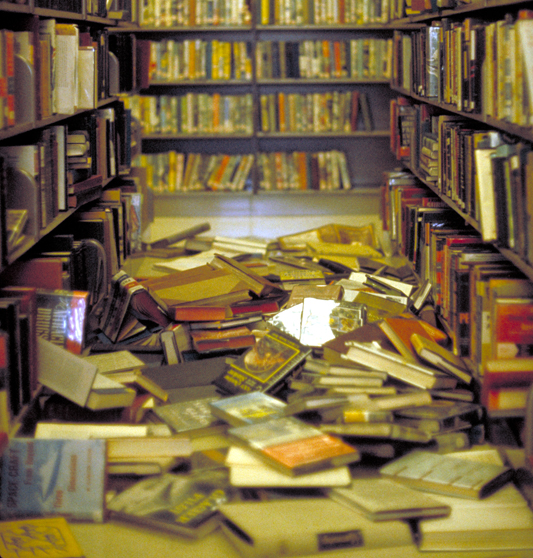
Last year I made a stack of my end of year picks and took a photo to head the post. This year, having moved house and with books scattered all over the place, I'd struggle to know where exactly to locate most of the books I want to bring to your attention and indeed it was a source of considerable anxiety to me that one of them, packed specially due to its unique qualities, went missing for nigh on a month before it was finally relocated and hurriedly placed on a special shelf for safekeeping.
Anyway, 2012 has been a year filled with enjoyable books, some of which have been very special indeed. Keeping up the blog has been a struggle at times but messages of support have turned up often just when I need them and the enthusiasm of others has always been helpful when a shot in the arm has been required. I'll be absolutely honest and say that next year really will see my posts becoming more sporadic but as long as you really want to hear what I have to say then I will try and make the effort when a book really demands it. Twitter remains an exciting place to learn and share about books and when I pretty much lost the ability to update the blog recently it was there that I managed to keep talking and enthusing about what I was reading.
Below you'll find my picks of the year, a varied collection as always, books that I found in a variety of ways. I've summarised why they made the cut below but please click on the titles to read my in-depth reviews and hopefully you'll find something that you hadn't wanted to buy... until now.
Absolution by Patrick Flanery
 I read this debut near the beginning of the year but it has stayed in my mind as one of the year's best new novels, heralding the arrival of a nicely matured voice in fiction. Perhaps the most conventionally 'literary' novel on my list it actually has a rather complex structure with four narrative strands and changing viewpoints. Flanery tackles South Africa's fraught politics but also the weight of personal history and the very nature of truth itself. Ambitious and well executed it's a great read now and a very positive indication hopefully of what's yet to come.
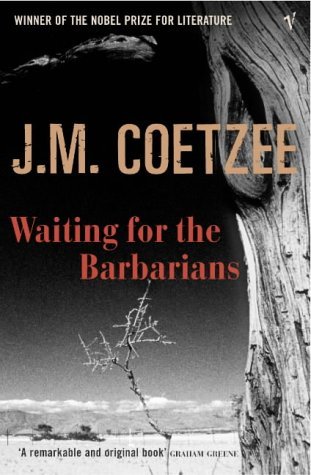 It's not all about new books and this novel from Coetzee helped to cement him in my mind as a true master. This allegorical novel of violence, oppression and control is written with the kind of universality that makes it feel like a classic; names of people or places are not important, neither is a sense of when or where exactly the novel is set. The unflinching manner of Coetzee's approach makes for an exhilarating and uncomfortable read. A novel that challenges the reader with its views and opinions but leaves you to draw your own conclusions; what more could you ask for?
A Death In The Family by Karl Ove Knausgaard
 Not many books made such an impact on me as this controversial novel and that's why when I was asked to pick just a single book from this year's output by Kim over at Reading Matters, this is the one I plumped for. Knausgaard made a Faustian pact when he decided to write about himself and his own family and the notoriety that has accompanied the publication of his six-volume, fictionalised autobiography is as impressive as the sales figures in his native Norway. Part one looks at drunken adolescence, the death of his father and the alcoholism of his grandmother. The final third is about as a grim a piece of writing as I have ever come across. A book that had me scratching my head about half way through had me itching for more when I finished the final page and with part 2 due next year I can only hope that there are plans to translate and publish the following four books.
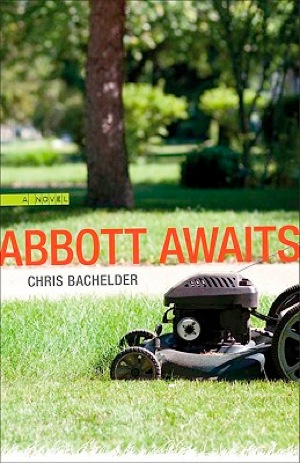 Humour. Let's be honest, it's all too often missing from the books of many 'serious' readers apart from the odd flash here and there so when a book comes along that makes you actually laugh and smile with recognition throughout then what a joy that is. Bachelder's take on modern fatherhood is hilarious, beautiful, touching and true. Little vignettes, often of just a page in length cover the final three months of Abbot's wife's second pregnancy. Just the titles of some chapters are enough to elicit a laugh and the real skill is in not allowing the book to suffer any slumps along the way. A perfect gift for any men you may know who are perhaps expecting another arrival anytime soon.
All Quiet on the Western Front
by Erich Maria Remarque
 A genuine classic that will have you mouthing the familiar refrain of those who finally tackle one of those books they always knew they should have read: 'why didn't I read it sooner?' There's not much for me to say here about Remarque's classic war novel other than that it gave me something completely fresh to think about after I'd been performing in War Horse for a couple of years, that it was a distinct pleasure to give copies of it away on World Book Night and that it's exactly the kind of book that was never in any danger when I had a book cull before moving house recently.
Open City by Teju Cole

If I'd got my act together a little sooner then this book would have appeared on last year's book list (along with lots of other people's). It is a frighteningly accomplished novel, bursting with intelligence and written in the kind of fluid prose that makes you want to devour it in a single sitting. A man wanders the streets of New York, meets friends, has a picnic and at one point gets mugged, that's about all you'll get as far as plot goes, but this book is filled with ideas and culture that keep you're brain nourished throughout and there's even a twist of sorts near the novel's end that makes you think all over again about the man with whom you've been wandering.
Leaving The Atocha Station by Ben Lerner

Hawthorn & Child by Keith Ridgway
Swimming Home by Deborah Levy
 My favourite read from this year's Booker list was a triumph for small publisher And Other Stories and I very nearly included another of their titles, Lightning Rods by Helen De Witt, in this list but decided to mention it here and free up one of these limited berths for another fabulous book (very briefly, Lightning Rods is a whip smart satire that is funny, clever and shocking - read this review for more). Levy's novel is slim but packed full of resonant images, enigmatic characters and telling details. There's a wonderful darkness that clouds proceedings and seldom has there been such an enjoyable sense of being unsettled.
Train Dreams by Denis Johnson
Look, I don't know how many times I have to tell you to read Denis Johnson but will you please just READ DENIS JOHNSON. The fact that the Pulitzer board didn't award a fiction prize this year is bad enough but the fact that they did it when a novel(la) like this landed in their laps in downright scandalous. Johnson's collection of writings is so eclectic and varied that it's difficult to say exactly where this fits in the cannon but as a fan of his I can say that I was surprised by the richness and reward that came from such a slim book, previously published as a story in the Paris Review, thankfully given the proper treatment by Granta who had a storming year with three titles in this best of list.
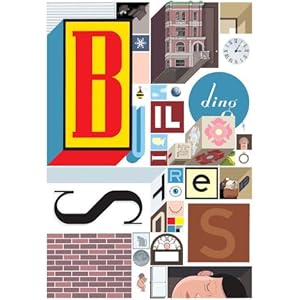
Building Stories by Chris Ware
Also worthy of note: Mrs Bridge, Dr Haggard's Disease, Seven Years, Days of the Bagnold Summer and so many more.
Emperor's New Clothes: HHhH and The Yellow Birds.
Read more...
Tuesday, 28 February 2012
Absolution - Patrick Flanery
'the long tail of the root'
After reading work by Damon Galgut and JM Coetzee that deals with the 'new' South Africa, work which ranks near the very top of the contemporary fiction I have read since starting this blog, it is to Patrick Flanery's credit that his debut novel should hold its own against those two, especially as he doesn't have the advantage of being South African himself (Born and raised in America he has recently gained UK citizenship - making him eligible for the Booker...). Not only does Flanery dare to grapple with South Africa's sensitive politics but he also adopts a tricky and complex structure for his novel which some readers may struggle with at first but which is perfectly suited to a novel with themes around truth, buried secrets and the slowly emerging significance of the past.
There are four strands to the story the first of which, under the chapters titled 'Sam', concerns an academic returning to his native South Africa to write the biography of Clare Wald, a successful writer with a complex personal and family history. Then we have the strand from which the novel takes its title, and which we later learn is a 'fictionalised memoir' written by Clare about a break-in at her house and its aftermath. Then comes a first-person narration about Clare's daughter, Laura, who has been missing for many years. And finally a flashback to 1989 told from Sam's point of view. Weaving these strands together Flanery does a good job at holding back information to keep even those readers who cannot help but puzzle-solve as they go through occupied until the final chapters.
With that in mind of course it's hard to know what exactly it is safe to reveal in this review without spoiling the fun. Clare Wald strikes a formidable figure, declaring herself 'a terror' on only the second page, and the relationship between biographer and subject might be interesting on its own but with the immediate suggestion that the two of them have some kind of shared past the cat and mouse games of their interviews together are given a real frisson of something dangerous. Sam has met her previously at an event in Amsterdam but Clare shows no signs of recognition. She does actually recognise him, half-recognised him back in Amsterdam in fact and slowly 'learned to trust [her] memory of him.'
Her work is of interest in large part because she operated as a writer during the era of apartheid, an era dominated by censorship for those hoping to survive under the regime. Some were unable to adapt and opted to flee the country when the 'life of their work' or perhaps even their life itself was placed in 'mortal jeopardy.' Clare learned to adapt in order to keep herself and her family alive (at least that was the rationalization she applied at the time) and speaks of the closeness of her relationship with the authorities in unflinching terms - 'I came to know my molester as intimately as I knew my husband - perhaps more so.' What she makes clear is that the terror of censorship is in some ways enough on its own to wield power over the artist. How can any writer or other artist truly create with any sense of freedom when they know that whatever the make will be submitted for somebody else's approval. Every word is written with them in mind (Clare even personified her 'censor'), self-censorship a natural result of the system.
This is just one of the ways in which we get a sense of Clare as a prisoner. She also feels like a prisoner in her own home (the one she now shares with her help, husband having left for another woman, daughter disappeared, son living elsewhere) with its high level of security, a feeling only intensified by the home-invasion chapters. But Clare has also exiled herself. It is as though nothing outside the walled perimeter matters to her anymore; it is only her memories, her ghosts and her need for forgiveness that preoccupy her now; it is as though these will be her only companions until death finally comes. There are two relationships at the centre of this, the first with her daughter Laura who, as I mentioned earlier, has gone missing.
You are entirely within me now, voice echoing always, a million different voices, all you, borrowed from moments when I heard you as you wanted to be heard, moments you did not realize anyone was listening, perhaps in particular me. These are no substitute, they are all that I have, those million necromanced fragments of you, summoned around the pit of fire yawning between my ribs.
As interesting as the politics of Clare's life as a writer are it isn't the official Truth and Reconciliation committee that really drives her sections but the portrait of a mother desperate for forgiveness and absolution from her daughter, her wish to 'prostrate herself in the name of reconciliation and love.'
Outside the house itself is her garden of course and this is worth mentioning because it picks up on something that Galgut used in his novel The Impostor. It could be seen as a possible metaphor for the new South Africa, or even the abilities of whites and blacks to co-exist at all but the cultivation and teasing of life from the soil and Clare's power struggle with her gardner Adam are just some of the ways in which horticultural references illuminate the politics of everyday conversation. It may only be a disagreement about whether to grow vegetables or not but it seems to be loaded with so much more.
It's not a bad thing. It is merely different. You will see. And if you are right, then I shall see. But you must let me grow what I want, Adam, otherwise we will only come to grief....give them a chance. See if they will flourish.
The metaphor is used again in describing the other significant relationship in Clare's past, that with her sister Nora who married into the the right wing of South African politics. This time it used to explain the twisted ethics of the ruling white class and the crucial difference between Clare and her sister.
Nora's soil, the water she drank, the air she inhaled, it was all polluted. And while she and I grew up with the same conditions, more or less, I had a higher tolerance, natural immunities against the environment that tried so hard to twist our growth to its own malign purpose. But not Nora. She was always susceptible. She was weak.
As we follow Sam, the once native boy returning to a country he barely recognises, we see through his eyes the dangers in every interaction and every waking moment. Even the shortest journeys must be undertaken only by car if at all possible, all houses and offices are encased in several layers of security, every visitor is treated with suspicion and kept at a distance no matter how innocent they may appear. There is also the burden of guilt that comes from being a white South African. His friend Greg tries to show him the ropes, how money must regularly leave his pocket and enter the hands of those less fortunate, and Sam's constant conversions from rands to dollars show how small the amount often is that he kvetches about. But as always with this novel it is the personal dimension that really engages and the most cathartic thing about his return is the way in which it forces him to confront the reasons why he left, the history of his own life that 'keeps coming back like a chronic illness', the secret he has kept hidden from even his own wife.
We often talk of unearthing memories or those things we have kept hidden. Both Clare and Sam in their professional interviews know that there is something personal the two of them need to lift from the ground, 'the long tail of the root, clinging to its earth of history,' and the skill with which Flanery constructs the novel around those details makes this a rewardingly adult read, much like the similarly complex Great House by Nicole Krauss. That book found a place on my books of the year roundup last year and whilst it's too soon to say whether Flanery's will appear on this year's I can certainly confirm it deserves any attention it receives as part of the Waterstones 11 and heralds the arrival of another new writer to keep an eye on. Read more...
Subscribe to:
Posts (Atom)

 Posts
Posts

