


Showing posts with label KNAUSGAARD Karl Ove. Show all posts
Showing posts with label KNAUSGAARD Karl Ove. Show all posts
Tuesday, 18 March 2014


Monday, 13 May 2013
Monday, 17 December 2012
Books of the Year - 2012
Last year I made a stack of my end of year picks and took a photo to head the post. This year, having moved house and with books scattered all over the place, I'd struggle to know where exactly to locate most of the books I want to bring to your attention and indeed it was a source of considerable anxiety to me that one of them, packed specially due to its unique qualities, went missing for nigh on a month before it was finally relocated and hurriedly placed on a special shelf for safekeeping.
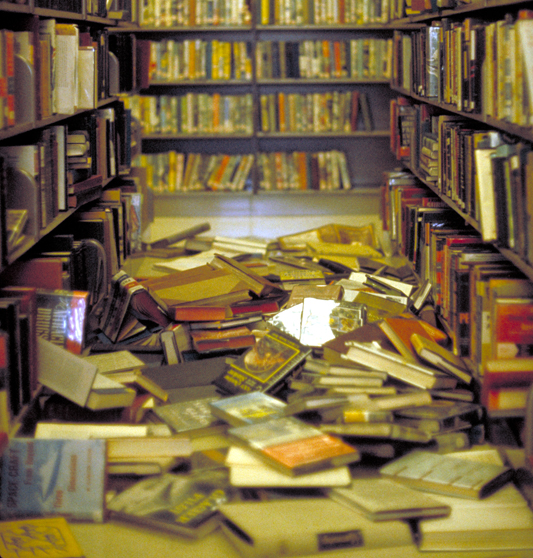
Anyway, 2012 has been a year filled with enjoyable books, some of which have been very special indeed. Keeping up the blog has been a struggle at times but messages of support have turned up often just when I need them and the enthusiasm of others has always been helpful when a shot in the arm has been required. I'll be absolutely honest and say that next year really will see my posts becoming more sporadic but as long as you really want to hear what I have to say then I will try and make the effort when a book really demands it. Twitter remains an exciting place to learn and share about books and when I pretty much lost the ability to update the blog recently it was there that I managed to keep talking and enthusing about what I was reading.
Below you'll find my picks of the year, a varied collection as always, books that I found in a variety of ways. I've summarised why they made the cut below but please click on the titles to read my in-depth reviews and hopefully you'll find something that you hadn't wanted to buy... until now.
Absolution by Patrick Flanery
 I read this debut near the beginning of the year but it has stayed in my mind as one of the year's best new novels, heralding the arrival of a nicely matured voice in fiction. Perhaps the most conventionally 'literary' novel on my list it actually has a rather complex structure with four narrative strands and changing viewpoints. Flanery tackles South Africa's fraught politics but also the weight of personal history and the very nature of truth itself. Ambitious and well executed it's a great read now and a very positive indication hopefully of what's yet to come.
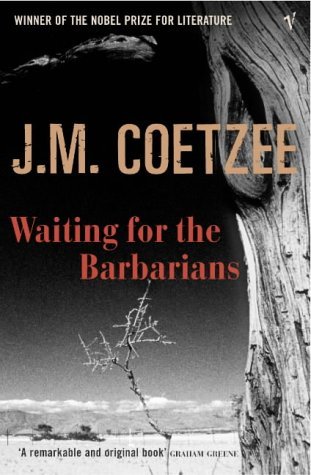 It's not all about new books and this novel from Coetzee helped to cement him in my mind as a true master. This allegorical novel of violence, oppression and control is written with the kind of universality that makes it feel like a classic; names of people or places are not important, neither is a sense of when or where exactly the novel is set. The unflinching manner of Coetzee's approach makes for an exhilarating and uncomfortable read. A novel that challenges the reader with its views and opinions but leaves you to draw your own conclusions; what more could you ask for?
A Death In The Family by Karl Ove Knausgaard
 Not many books made such an impact on me as this controversial novel and that's why when I was asked to pick just a single book from this year's output by Kim over at Reading Matters, this is the one I plumped for. Knausgaard made a Faustian pact when he decided to write about himself and his own family and the notoriety that has accompanied the publication of his six-volume, fictionalised autobiography is as impressive as the sales figures in his native Norway. Part one looks at drunken adolescence, the death of his father and the alcoholism of his grandmother. The final third is about as a grim a piece of writing as I have ever come across. A book that had me scratching my head about half way through had me itching for more when I finished the final page and with part 2 due next year I can only hope that there are plans to translate and publish the following four books.
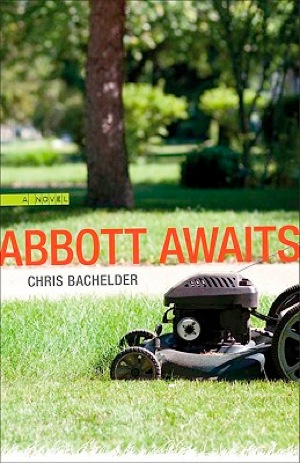 Humour. Let's be honest, it's all too often missing from the books of many 'serious' readers apart from the odd flash here and there so when a book comes along that makes you actually laugh and smile with recognition throughout then what a joy that is. Bachelder's take on modern fatherhood is hilarious, beautiful, touching and true. Little vignettes, often of just a page in length cover the final three months of Abbot's wife's second pregnancy. Just the titles of some chapters are enough to elicit a laugh and the real skill is in not allowing the book to suffer any slumps along the way. A perfect gift for any men you may know who are perhaps expecting another arrival anytime soon.
All Quiet on the Western Front
by Erich Maria Remarque
 A genuine classic that will have you mouthing the familiar refrain of those who finally tackle one of those books they always knew they should have read: 'why didn't I read it sooner?' There's not much for me to say here about Remarque's classic war novel other than that it gave me something completely fresh to think about after I'd been performing in War Horse for a couple of years, that it was a distinct pleasure to give copies of it away on World Book Night and that it's exactly the kind of book that was never in any danger when I had a book cull before moving house recently.
Open City by Teju Cole

If I'd got my act together a little sooner then this book would have appeared on last year's book list (along with lots of other people's). It is a frighteningly accomplished novel, bursting with intelligence and written in the kind of fluid prose that makes you want to devour it in a single sitting. A man wanders the streets of New York, meets friends, has a picnic and at one point gets mugged, that's about all you'll get as far as plot goes, but this book is filled with ideas and culture that keep you're brain nourished throughout and there's even a twist of sorts near the novel's end that makes you think all over again about the man with whom you've been wandering.
Leaving The Atocha Station by Ben Lerner

Hawthorn & Child by Keith Ridgway
Swimming Home by Deborah Levy
 My favourite read from this year's Booker list was a triumph for small publisher And Other Stories and I very nearly included another of their titles, Lightning Rods by Helen De Witt, in this list but decided to mention it here and free up one of these limited berths for another fabulous book (very briefly, Lightning Rods is a whip smart satire that is funny, clever and shocking - read this review for more). Levy's novel is slim but packed full of resonant images, enigmatic characters and telling details. There's a wonderful darkness that clouds proceedings and seldom has there been such an enjoyable sense of being unsettled.
Train Dreams by Denis Johnson
Look, I don't know how many times I have to tell you to read Denis Johnson but will you please just READ DENIS JOHNSON. The fact that the Pulitzer board didn't award a fiction prize this year is bad enough but the fact that they did it when a novel(la) like this landed in their laps in downright scandalous. Johnson's collection of writings is so eclectic and varied that it's difficult to say exactly where this fits in the cannon but as a fan of his I can say that I was surprised by the richness and reward that came from such a slim book, previously published as a story in the Paris Review, thankfully given the proper treatment by Granta who had a storming year with three titles in this best of list.
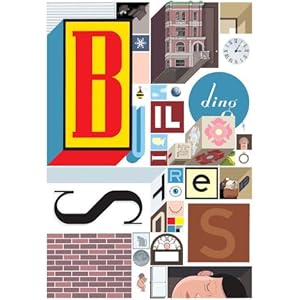
Building Stories by Chris Ware
Also worthy of note: Mrs Bridge, Dr Haggard's Disease, Seven Years, Days of the Bagnold Summer and so many more.
Emperor's New Clothes: HHhH and The Yellow Birds.
Read more...
Tuesday, 3 April 2012
A Death In The Family - Karl Ove Knausgaard
'life's a pitch'
translated by Don Bartlett
For the heart, life is simple: it beats for as long as it can. Then it stops.
It was this article in The Guardian that alerted me to Norwegian writer Knausgaard. Towards the end of last year apparently, a new Norwegian translation of the Bible sat at the top of the bestseller lists, selling nearly 80,000 copies in less than three months. However it wasn't that book I wanted to read after finishing the article but the only book to beat it to the number one spot in that period. Enter Knausgaard who has published two critically acclaimed novels but achieved real fame and notoriety with his six-volume series of autobiographical novels entitled My Struggle (or Min Kamp in Norwegian. Yes - just like Hitler's own memoir). Harvill Secker have published the first of these under this new title and part two will follow next year. I can only hope, pray and if necessary demand that they publish the following four books, all 3000 pages of it, after finishing part one. Knausgaard's writing is beautiful, ugly, honest and true and whatever you feel about the 'Faustian bargain' he has made by achieving such success by writing about his friends and family in such an exposing manner there is no doubt that he does so with incredible skill. In yet another book in which very little actually happens I found myself increasingly fascinated as I went along and impatient for the next instalment by the time I reached the final page.
I should mention straight away that after a couple of hundred pages I was far from convinced. In fact I was a bit bored by parts of the book and a little bewildered as to where it was going. But about half way through, when Knausgaard changed locale and focus, I found myself gripped and even able to better appreciate what had come before. You could argue that the speed-writing approach (all six volumes of this series appear to have been written in about three years in total) makes for a slightly unsatisfactory reading experience in places but I found that once my brain had clicked with the book I was happy to follow Knausgaard's flighty train of thought anywhere it wanted to take me and it wasn't just the quality of the writing that pleased me but the bravery and power of it which rendered the few books I read afterwards tame by comparison.
We are invited, naturally, to think of Proust's A la recherche du temps perdu and Knausgaard has a similar disregard for chronology, his interest lying more with microscopic details, digressions into the place and purpose of art and a desire to conquer the greatest fear/fascination of all: death. If you want plot then look elsewhere. All that really happens in this book is a teenage boy drinks and goes out with the wrong girl and, when a grown man, clears the house in which his father died (and his grandmother still lives). Having 'nigh on imbibed' Proust's masterpiece himself and spent much of his life thinking about the past Knausgaard finds himself on marriage number two with a young family and barely thinking about it at all - 'I believe the main reason for that is our children, since life with them in the here and now occupies all the space. They even squeeze out the most recent past: ask me what I did three days ago and I can't remember.' Perhaps that too is why time no longer seems like a linear journey and why this book follows a different structure. In searching for an image to illustrate this different view of time he alights on a a boat being raised in a lock - 'As time seeps in from all sides our life is essentially the same with only he details changing, and the wait is for the moment when the sluice gates open and real life moves on.'
Domestic family life has also robbed him of his most prized creative resource: solitude. He craves great swathes of it in order to write and is still driven by 'the ambition to write something exceptional one day', his recent attempts to grapple with his father's influence frustrated by form.
For several years I had tried to write about my father, but had got nowhere, probably because the subject was too close to my life, and thus not so easy to force into another form, which of course is a prerequisite for literature. That is its sole law: everything has to submit to form...Strong themes and styles have to be broken down before literature can come into being. It is this breaking down that is called 'writing'. Writing is more about destroying than creating.
And so we have this melding of memoir and fiction. How much of it is either of those two things is impossible to tell, although the vast majority of what we read would seem to be based very much in fact. Ignoring the sensation with which the books are accompanied (and given that most of that comes from his writing about his ex-wife who barely merits a mention in this first volume) what we seem to have at the beginning is a writer writing about the process of writing, whilst we read what he has written. But Knausgaard the writer drops away from the foreground and what we have really is Knausgaard the rememberer. Looking back on an adolescence of experiment with drink (alcohol looms large in the book as a whole and the contrast between the youthful excitement around it and the degradation it causes in later life is sharp), fumbles with girls, embarrassing attempts at making music, there is something a bit directionless about the first half of the book. One thing I did pick up on was the way the adult Knausgaard is now able to appreciate when looking back to his childhood how different his days were to his father's.
While my days were jam-packed with meaning, when each step opened a new opportunity, and when every opportunity filled me to the brim, in a way which now is actually incomprehensible, the meaning of his days was not concentrated in individual events but spread over such large areas that it was not possible to comprehend them in anything other than abstract terms. "Family...career..."
Their family is soon split, his parent's separation announced matter-of-factly whilst dealing with a shopping list. The time that Karl Ove spends alone with his father is painfully intimate at times, as when he catches his father in moments when he thinks he is alone. Returning home early for example to find him nursing a bottle of wine (and making plenty of noise as he enters in order to announce his presence so that his father can clear it away) or another occasion when even his attempt at a noisy entrance cannot rise above the loud music to which his father is listening; eyes closed, head moving to and fro with the music, cheeks wet with tears. Young Karl Ove walks out unnoticed and leaves the house immediately. His father eventually removes himself to his own mother's seaside home where he slowly drinks himself to an early grave. It is the cleanup after his death which dominates the second half of the book and it is a truly stunning piece of writing that takes squalor and destruction and turns it into art.
Writing is drawing the essence of what we know out of the shadows. That is what writing is about. Not what happens there, not what actions are played out there, but the there itself. There, that is writing's location and aim. But how to get there?
Joined in the cleanup by his brother Yngve, a graphic designer whose control only serves to heighten the manner in which Karl Ove has been sideswiped by his father's death, we watch Knausgaard stumble through the filth and detritus, weeping uncontrollably, trying to piece together exactly what had happened in the years of his father's self-imposed exile. One extraordinary realisation is that his father had actually spoken of suicide several times; his belief that statistics didn't show that many car accidents with single drivers were deliberate attempts to end a life, his thoughts on the various methods; but all of this had seemed nothing more than a topic of conversation, Knausgaard unable to see it as anything else, his father having imprinted his image of himself so clearly in Karl Ove's mind that he was 'always engaging with the person he had been' rather than the one he had become. On of the lowest points is related by his Uncle Gunnar who tells both boys about the time when their father had broken his leg but remained lying on the living room floor, attended by his mother, rather than calling a doctor.
"He's crapped his pants. Can you imagine? He'd been lying on the floor drinking. And she'd served him. "This is no good," I told him before the ambulance arrived. "This is beneath your dignity. Now pull yourself together. And do you know what your father said?" "Are you going to push me even deeper into the shit, Gunnar? Is that why you've come, to push me even deeper in the shit?...He destroyed everything. This house, her, himself. Everything. Everything."
Even more painful perhaps as they clear the house of its broken and ruined furniture, its soiled clothing, the smell of waste everywhere, working around their gaunt, wan, dementia-suffering and incontinent grandmother is the dawning realisation that she suffers from the same alcoholism that killed her son. Her innocent enquiries as to whether they'd like a drink in the evening (and her abstinence when they refuse) suddenly take on a different hue when the boys realise her plight. And when they finally relent and give her what she so clearly needs they watch the transformation as the glint returns to her eyes, colour to her cheeks, 'like a vampire that had finally got a taste of blood...life was returning to her, filling her limb by limb. It was terrible, terrible.'
Those that write purely as an act of catharsis often produce terrible work. I've read far too many plays by people who should really have been having that conversation with the person involved (or a therapist) rather than pretending that it was ever a good subject for drama. But this book, which so clearly serves a double purpose (to conquer the shame instilled by a father who belittled his son from a young age and to conquer an even grander foe: the fear of death), somehow manages to claim its position as a work of art whilst also being an act of confession, a personal memoir and also a piece of fiction, a book hard to categorise and even to enjoy at times but one which despite its meandering makes other books seem spineless afterwards. One that succeeded in helping Knausgaard to deal with his father's death, one can only wonder whether it worked the same magic on his legacy.
And death, which I have always regarded as the greatest dimension of life, dark, compelling, was no more than a pipe that springs a leak, a branch that cracks inn the wind, a jackets that slips off a clothes hanger and falls to the floor.Read more...
Subscribe to:
Posts (Atom)

 Posts
Posts

