


Books of the Year - 2012
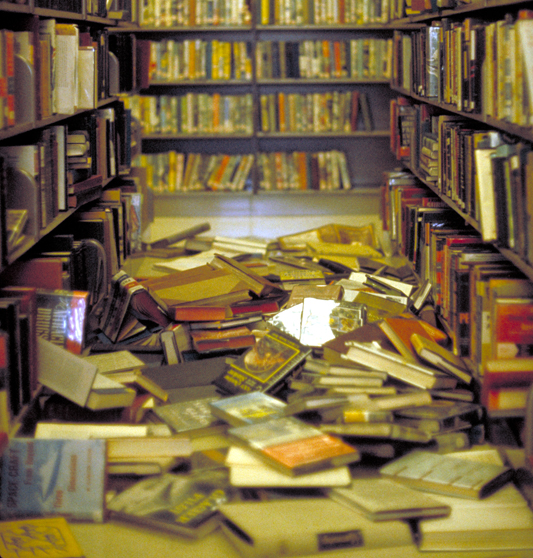
Last year I made a stack of my end of year picks and took a photo to head the post. This year, having moved house and with books scattered all over the place, I'd struggle to know where exactly to locate most of the books I want to bring to your attention and indeed it was a source of considerable anxiety to me that one of them, packed specially due to its unique qualities, went missing for nigh on a month before it was finally relocated and hurriedly placed on a special shelf for safekeeping.
Anyway, 2012 has been a year filled with enjoyable books, some of which have been very special indeed. Keeping up the blog has been a struggle at times but messages of support have turned up often just when I need them and the enthusiasm of others has always been helpful when a shot in the arm has been required. I'll be absolutely honest and say that next year really will see my posts becoming more sporadic but as long as you really want to hear what I have to say then I will try and make the effort when a book really demands it. Twitter remains an exciting place to learn and share about books and when I pretty much lost the ability to update the blog recently it was there that I managed to keep talking and enthusing about what I was reading.
Below you'll find my picks of the year, a varied collection as always, books that I found in a variety of ways. I've summarised why they made the cut below but please click on the titles to read my in-depth reviews and hopefully you'll find something that you hadn't wanted to buy... until now.
Absolution by Patrick Flanery
 I read this debut near the beginning of the year but it has stayed in my mind as one of the year's best new novels, heralding the arrival of a nicely matured voice in fiction. Perhaps the most conventionally 'literary' novel on my list it actually has a rather complex structure with four narrative strands and changing viewpoints. Flanery tackles South Africa's fraught politics but also the weight of personal history and the very nature of truth itself. Ambitious and well executed it's a great read now and a very positive indication hopefully of what's yet to come.
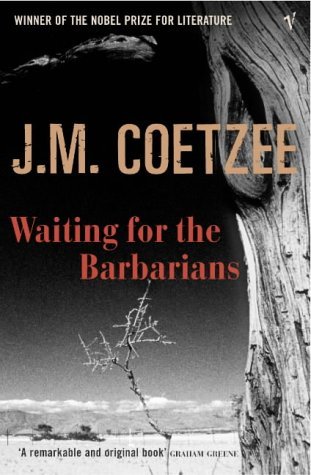 It's not all about new books and this novel from Coetzee helped to cement him in my mind as a true master. This allegorical novel of violence, oppression and control is written with the kind of universality that makes it feel like a classic; names of people or places are not important, neither is a sense of when or where exactly the novel is set. The unflinching manner of Coetzee's approach makes for an exhilarating and uncomfortable read. A novel that challenges the reader with its views and opinions but leaves you to draw your own conclusions; what more could you ask for?
A Death In The Family by Karl Ove Knausgaard
 Not many books made such an impact on me as this controversial novel and that's why when I was asked to pick just a single book from this year's output by Kim over at Reading Matters, this is the one I plumped for. Knausgaard made a Faustian pact when he decided to write about himself and his own family and the notoriety that has accompanied the publication of his six-volume, fictionalised autobiography is as impressive as the sales figures in his native Norway. Part one looks at drunken adolescence, the death of his father and the alcoholism of his grandmother. The final third is about as a grim a piece of writing as I have ever come across. A book that had me scratching my head about half way through had me itching for more when I finished the final page and with part 2 due next year I can only hope that there are plans to translate and publish the following four books.
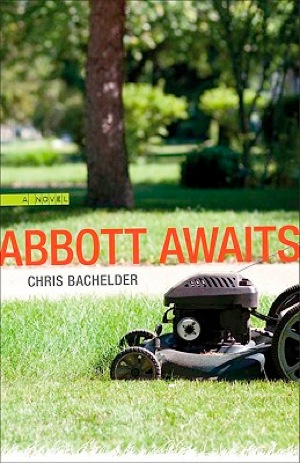 Humour. Let's be honest, it's all too often missing from the books of many 'serious' readers apart from the odd flash here and there so when a book comes along that makes you actually laugh and smile with recognition throughout then what a joy that is. Bachelder's take on modern fatherhood is hilarious, beautiful, touching and true. Little vignettes, often of just a page in length cover the final three months of Abbot's wife's second pregnancy. Just the titles of some chapters are enough to elicit a laugh and the real skill is in not allowing the book to suffer any slumps along the way. A perfect gift for any men you may know who are perhaps expecting another arrival anytime soon.
All Quiet on the Western Front
by Erich Maria Remarque
 A genuine classic that will have you mouthing the familiar refrain of those who finally tackle one of those books they always knew they should have read: 'why didn't I read it sooner?' There's not much for me to say here about Remarque's classic war novel other than that it gave me something completely fresh to think about after I'd been performing in War Horse for a couple of years, that it was a distinct pleasure to give copies of it away on World Book Night and that it's exactly the kind of book that was never in any danger when I had a book cull before moving house recently.
Open City by Teju Cole

If I'd got my act together a little sooner then this book would have appeared on last year's book list (along with lots of other people's). It is a frighteningly accomplished novel, bursting with intelligence and written in the kind of fluid prose that makes you want to devour it in a single sitting. A man wanders the streets of New York, meets friends, has a picnic and at one point gets mugged, that's about all you'll get as far as plot goes, but this book is filled with ideas and culture that keep you're brain nourished throughout and there's even a twist of sorts near the novel's end that makes you think all over again about the man with whom you've been wandering.
Leaving The Atocha Station by Ben Lerner

Hawthorn & Child by Keith Ridgway
Swimming Home by Deborah Levy
 My favourite read from this year's Booker list was a triumph for small publisher And Other Stories and I very nearly included another of their titles, Lightning Rods by Helen De Witt, in this list but decided to mention it here and free up one of these limited berths for another fabulous book (very briefly, Lightning Rods is a whip smart satire that is funny, clever and shocking - read this review for more). Levy's novel is slim but packed full of resonant images, enigmatic characters and telling details. There's a wonderful darkness that clouds proceedings and seldom has there been such an enjoyable sense of being unsettled.
Train Dreams by Denis Johnson
Look, I don't know how many times I have to tell you to read Denis Johnson but will you please just READ DENIS JOHNSON. The fact that the Pulitzer board didn't award a fiction prize this year is bad enough but the fact that they did it when a novel(la) like this landed in their laps in downright scandalous. Johnson's collection of writings is so eclectic and varied that it's difficult to say exactly where this fits in the cannon but as a fan of his I can say that I was surprised by the richness and reward that came from such a slim book, previously published as a story in the Paris Review, thankfully given the proper treatment by Granta who had a storming year with three titles in this best of list.
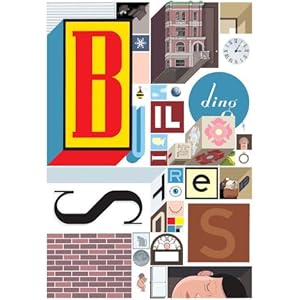
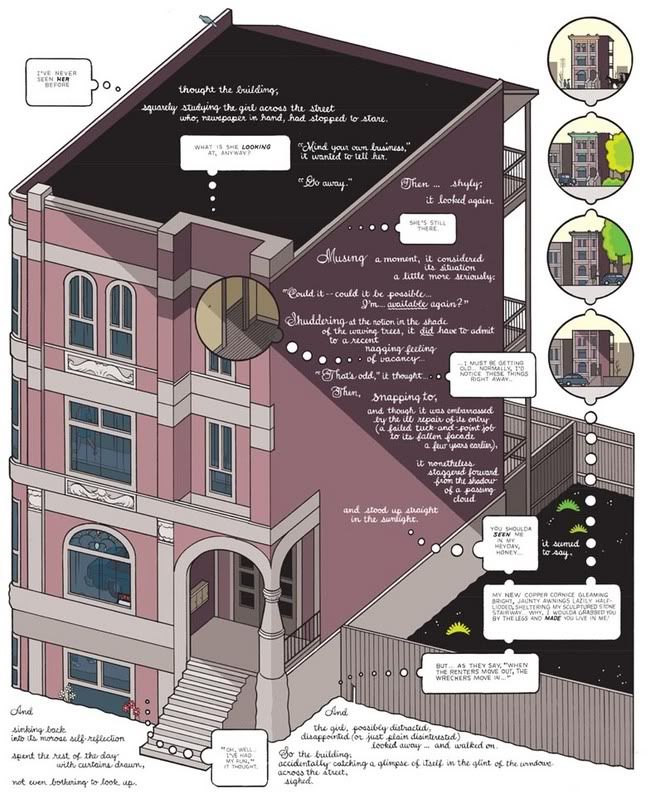
Building Stories by Chris Ware
Also worthy of note: Mrs Bridge, Dr Haggard's Disease, Seven Years, Days of the Bagnold Summer and so many more.
Emperor's New Clothes: HHhH and The Yellow Birds.
Read more...




 (2000) by Michael Chabon which is one of the reasons why I began this blog in the first place. A favourite book, I gave it to my wife to read and asked her one evening how it was going, where she'd got to. 'He's just walking across the Arctic with his dog.' My inability to recall something even as obvious as that told me that I may have been reading plenty of books at the time, and enjoying them, but I certainly wasn't retaining enough of what I read. By committing myself to writing a review afterwards, and therefore having to make the odd note along the way, I felt I could train myself to be a better reader. I hope it's working. I don't claim to be in any kind of position to pronounce what books were the 'best', but what follows might be more accurately described as a list of the ones that stood out for me then and still do now: The books that say something about my journey through fiction and my maturation as a reader.
 The only book I can think of that has actually terrified me whilst reading it, Danielewski's extraordinary début is notable for several reasons. First as an object: the beautiful patterned boards and excellent quality of the US edition make it a joy to hold and read and the various versions of the first edition as listed on the copyright page mean that colour makes its way into the text of a book which is as inventive typographically as it is stylistically. We begin by reading the account of Johnny Truant who moves into the apartment of the recently deceased Zampano and discovers a manuscript written by him about a film called The Navisdson Record. Will Navidson, a photojournalist, had discovered, whilst making a simple survey of his house, that the inside measurements seem to be just slightly larger than the outside. This leads to a journey as epic and terrifying as you can imagine happening within four walls and the book is made up of description of the film footage, interviews, interjections, footnotes, letters, the text changing font and construction so that the reader is left disorientated and hopefully scared shitless. I've read a couple of books since which have attempted to do something similar but neither of them came close to this, a true original.
 I recently re-read this graphic novel to see if it was still as good as I though it was in memory. It was, and then some. You can read that review
  I read this book in something close to a single sitting, becoming completely hypnotised by the rhythm of McGregor's writing and utterly mesmerized by its distinctive style style. Several hours later, as I tearily closed the final pages, I knew this was a book that I wanted other people to read so that we could enthuse about it together. I was a little disappointed when some that I had gifted a copy weren't quite as a sold on it as me, put off by the 'tricksiness' of the writing, but it hasn't dimmed my own enthusiasm. It is true that McGregor's debut has a distinctive style, characters are never referred to by name, only as 'the man with burned hands', or 'the boy with the pierced eyebrow' but after a while it seems no stranger than them being called Bob or Kevin and there often feels as though there is something totemic about their distinctions. The action of a single day assumes huge significance for these characters who all have a past, whose present moment is our focus for the duration of the book and whose future I still wonder about.
 So the bogey year I mentioned and I know that there were plenty of fine books published this year (Richard Power's The Time Of Our Singing and John Gray's Straw Dogs for example) but with books like Curious Incident... and Vernon God Little making the headlines were there any that really compared to some of the others on this list. One book that really made an impact on me and sent me trawling after her entire back catalogue was this collection of stories from A M Homes. Up until reading this collection I had never really got on with shorter fiction, I didn't really get it, but something about Homes' humour, darkness and inventiveness chimed nicely and it has since opened up a little door in my mind that begins to appreciate the possibilities of the short story. From the twisted logic of the woman who waits among the sand dunes to collect the discarded condoms from the local lifeguards' sexual conquests in order to impregnate herself to the touching portrait of Nancy Reagan coping with her husband's deteriorating mental state this is a collection as odd as the composite creature on its front cover. That examination of her previous books showed more dark delights the most controversial of which was The End Of Alice, in which a young woman who plans to seduce a 12 year old boy conducts a correspondence with a jailed paedophile and murderer. If you want a challenging read then this might be the book for you.
 This is easily the best of Woodward's trilogy of books featuring the Jones family in the part of north London I lived in for over a decade. There is something very personal and direct about reading a book which features locations that you know like the back of your own hand and to meet characters so skilfully created by their author that they seem as real as the people you see yourself in the street makes the achievement of this book even more astonishing. This book stands on its own but is obviously enhanced by the two that stand either side of it, the time spent with the Joneses through their tumultuous family history was both funny, sad, painful and heart-warming in a way that only a brilliantly observed and detailed novel could be. Never have I wanted to spend so much time with such a dysfunctional family.
 As I have mentioned here before I wept like a child when I reached the final pages of this stunning novel. My review of it is
  A friend of mine bought this recently as their third pick in a 3 for 2 on the advice of someone else. Knowing that I was a reader they asked me whether it was any good. Without thinking about what I was saying I assured him that it was quite simply one of the best books ever written, and once I had given voice to that sentence I realised that that was exactly what I thought (my original review is


 . A book so concerned with the notion of authenticity is tailor made for a professional faker like me but it is a book which should appeal to a broad readership for all sorts of reasons. Clever without being a smart-arsey, arty without being wanky, it is the kind of book that makes your head feel like someone's got in there and done some spring-cleaning. The prose manages to be clinical and sensual at the same time, each of the five senses becomes hugely important as the hero attempts to piece together what he can remember of his life before 'the accident'. It has the pace of a thriller, the intelligence of something altogether more philosophical and an artistic sentiment that made me feel as if the book in my hand was the coolest thing in the world. When was the last time a book felt cool? Despite it not being on the list above, if I had to pick a book which not only made an impact on me but in some way defined the past decade, this would be the one. Let one McCarthy take that honour and the other something a little grander.
 or
or


 Posts
Posts

