Random

Showing posts with label COETZEE J M. Show all posts

Thursday, 28 March 2013

The Mussel Feast - The Childhood of Jesus

The Mussel Feast by Birgit Vanderbeke

The latest series from plucky publisher and champion of translated fiction Peirene Press is their Turning points series. Continuing their focus on books that  can (and preferably should) be read in a single sitting this series looks at 'revolutionary moments' and opens with this novella from Germany where it is a bestseller that has remained in print since 1990. That date coincides with the fall of the Berlin Wall of course and Vanderbeke has said that she wrote the book as an attempt to 'understand how revolutions start' but placing the conflict within a family unit.

The family in question are awaiting the return of their father from an important business trip which they expect to have sealed his final promotion. As a result the plan that evening is to enjoy the meal of the title and the book opens as a mother and her two teenage children go about the ritual of preparing and cooking four kilos of mussels in anticipation of his return. As the clock ticks past the time he would usually come home, and then past the time they planned to eat, and then even further into the evening, the foundations of this cosy family set up begin to crumble away and we realise that the three people at home are living in the shadow of a tyrannical father.

The book itself is only just over a hundred pages but I must confess that I made several abortive attempts to read it before I finally managed to finish it. Part of this is to do with what I mentioned above; this, and probably all of Peirene's titles benefit from being read in one go (in fact what book isn't more of a joy when you can devote some serious time to devouring it?) and my snatched attempts on the train or at work simply didn't do enough to catch me in. That said, having now finished it after finding a miraculous morning to myself, I'm still a little lukewarm about it compared to some of the enthusiastic readers elsewhere.

This is effectively a 100 page monologue, with no paragraphs, and delivered in a voice which never really excited me. Yes, there are moments of dark humour, and there's a perverse joy to be found in the slow reveal of just how oppressed this family really is, but I never quite clicked with the tone nor was I sufficiently enthused by the allegorical nature. Vanderbeke does write wonderfully though when using subtle symbols to add atmosphere and feeling to the scene. That huge pot of mussels for instance is ominous at the start with its strange noises as the mussels cook and shift about, then their increasing distastefulness as they sit there and lose heat, colour and appeal, whilst the family wait for the patriarch who may or may not ever walk through the door.

Published now by Peirene Press.


The Childhood of Jesus - J M Coetzee

A new novel from Coetzee is always going to be exciting, especially if you've recently started reading and enjoying his books and doubly so if you suspect that it might be in the vein of those allegorical novels that you have loved rather than the slightly intimidating recent works that feature various incarnations of the man himself. A bit of a disappointment then to be confronted by a book which is both so blatantly allegorical that it comes across as almost juvenile (No, I haven't lost it and just called Coetzee juvenile, just the effect of some of the rather heavy-handed Christian imagery or thought) whilst also managing to be completely baffling in its use of allegory so that I, and many other readers, were left scratching their heads at the end wondering what on earth all that was about.

After a journey across the sea, a man and a boy arrive in a new country where they are assigned new names and ages and begin to learn Spanish, the language of this, their new home. Simón is not the father or grandfather of David, the boy under his charge, but has assumed responsibility for him during their crossing and has set his heart on reuniting him with his mother whom he is convinced he will recognise when he sees her. The two of them are welcomed into a Kafkaesque bureaucracy in the city of Novilla that is by turns helpful and frustrating and even when the two of them begin to find their feet with some kind of shelter, employment and food they find themselves living in a country where food is basic, desires simple and no thought is wasted on the past which many seem to have simply forgotten or left behind.

Simón finds work as a stevedore in the port, unloading back-breaking sacks of grain from huge ships and indulging in philosophical chats with his co-workers. He strikes up an odd relationship with a woman, Elena, who challenges his notions of companionship and attraction. Then he meets a woman who he becomes convinced is David's mother. The novel is filled with conversation after conversation, debate after debate; some, as I've said, dotted with such obvious lines and symbols of Christianity that it's almost funny, some frankly bizarre like a discussion about the poo-ness of poo, the point at which it ceases to be our poo and joins all of the other general poo in the sewer (I sh*t you not).

All the while we are stumbling along with the plot or searching for meaning in and behind the conversations what actually remains for the reader to hold onto and take away? For me personally there was a lot about parenthood, care and how we shape the lives of those in our charge. It is clear that Simón cares deeply for David (feeling his absence like the loss of 'a limb or perhaps even his heart') which makes it all the more bizarre that he can hand him over to, ostensibly, a complete stranger as a mother. I found the book to be increasingly distressing to read as a result and think it may be some time before I have fully come to terms with it and begun to unravel what meaning lies behind it.

Published now by Harvill Secker.

Read more...

Monday, 17 December 2012

Books of the Year - 2012

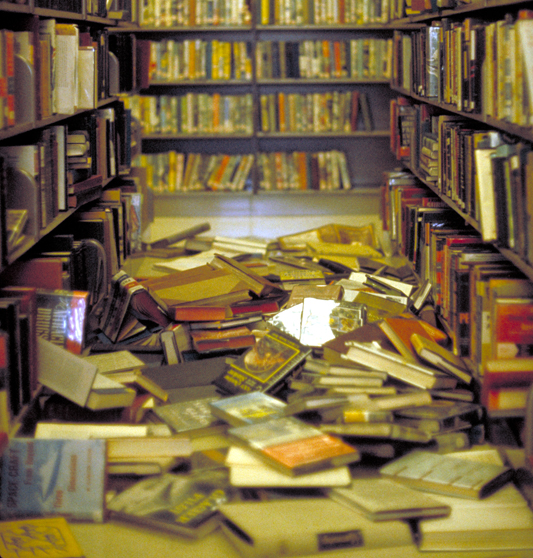
Last year I made a stack of my end of year picks and took a photo to head the post. This year, having moved house and with books scattered all over the place, I'd struggle to know where exactly to locate most of the books I want to bring to your attention and indeed it was a source of considerable anxiety to me that one of them, packed specially due to its unique qualities, went missing for nigh on a month before it was finally relocated and hurriedly placed on a special shelf for safekeeping.


Anyway, 2012 has been a year filled with enjoyable books, some of which have been very special indeed. Keeping up the blog has been a struggle at times but messages of support have turned up often just when I need them and the enthusiasm of others has always been helpful when a shot in the arm has been required. I'll be absolutely honest and say that next year really will see my posts becoming more sporadic but as long as you really want to hear what I have to say then I will try and make the effort when a book really demands it. Twitter remains an exciting place to learn and share about books and when I pretty much lost the ability to update the blog recently it was there that I managed to keep talking and enthusing about what I was reading.

Below you'll find my picks of the year, a varied collection as always, books that I found in a variety of ways. I've summarised why they made the cut below but please click on the titles to read my in-depth reviews and hopefully you'll find something that you hadn't wanted to buy... until now.

Absolution by Patrick Flanery

I read this debut near the beginning of the year but it has stayed in my mind as one of the year's best new novels, heralding the arrival of a nicely matured voice in fiction. Perhaps the most conventionally 'literary' novel on my list it actually has a rather complex structure with four narrative strands and changing viewpoints. Flanery tackles South Africa's fraught politics but also the weight of personal history and the very nature of truth itself. Ambitious and well executed it's a great read now and a very positive indication hopefully of what's yet to come.

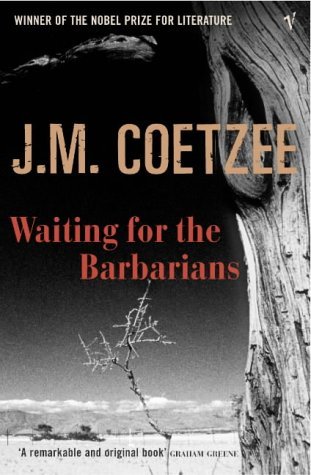
Waiting for the Barbarians by J M Coetzee

It's not all about new books and this novel from Coetzee helped to cement him in my mind as a true master. This allegorical novel of violence, oppression and control is written with the kind of universality that makes it feel like a classic; names of people or places are not important, neither is a sense of when or where exactly the novel is set. The unflinching manner of Coetzee's approach makes for an exhilarating and uncomfortable read. A novel that challenges the reader with its views and opinions but leaves you to draw your own conclusions; what more could you ask for?


A Death In The Family by Karl Ove Knausgaard

Not many books made such an impact on me as this controversial novel and that's why when I was asked to pick just a single book from this year's output by Kim over at Reading Matters, this is the one I plumped for. Knausgaard made a Faustian pact when he decided to write about himself and his own family and the notoriety that has accompanied the publication of his six-volume, fictionalised autobiography is as impressive as the sales figures in his native Norway. Part one looks at drunken adolescence, the death of his father and the alcoholism of his grandmother. The final third is about as a grim a piece of writing as I have ever come across. A book that had me scratching my head about half way through had me itching for more when I finished the final page and with part 2 due next year I can only hope that there are plans to translate and publish the following four books.

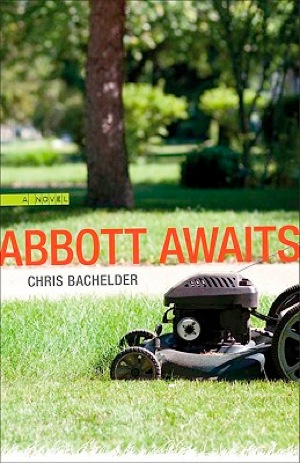
Abbot Awaits by Chris Bachelder

Humour. Let's be honest, it's all too often missing from the books of many 'serious' readers apart from the odd flash here and there so when a book comes along that makes you actually laugh and smile with recognition throughout then what a joy that is. Bachelder's take on modern fatherhood is hilarious, beautiful, touching and true. Little vignettes, often of just a page in length cover the final three months of Abbot's wife's second pregnancy. Just the titles of some chapters are enough to elicit a laugh and the real skill is in not allowing the book to suffer any slumps along the way. A perfect gift for any men you may know who are perhaps expecting another arrival anytime soon.

All Quiet on the Western Front 
by Erich Maria Remarque

A genuine classic that will have you mouthing the familiar refrain of those who finally tackle one of those books they always knew they should have read: 'why didn't I read it sooner?' There's not much for me to say here about Remarque's classic war novel other than that it gave me something completely fresh to think about after I'd been performing in War Horse for a couple of years, that it was a distinct pleasure to give copies of it away on World Book Night and that it's exactly the kind of book that was never in any danger when I had a book cull before moving house recently.


Open City by Teju Cole
If I'd got my act together a little sooner then this book would have appeared on last year's book list (along with lots of other people's). It is a frighteningly accomplished novel, bursting with intelligence and written in the kind of fluid prose that makes you want to devour it in a single sitting. A man wanders the streets of New York, meets friends, has a picnic and at one point gets mugged, that's about all you'll get as far as plot goes, but this book is filled with ideas and culture that keep you're brain nourished throughout and there's even a twist of sorts near the novel's end that makes you think all over again about the man with whom you've been wandering.

Leaving The Atocha Station by Ben Lerner


Not dissimilar to the book above, this is another novel with little plot, a diary-like narration and lots of digression but poet Lerner's debut novel has a wicked sense of humour and a fairly repellent hero whom you can't help but be charmed by. An American poet abroad on a fellowship in Madrid smokes spliff, takes pills, experiences culture and generally bullshits his way around his research project. Along the way he questions his validity as poet, man and lover and we enjoy one of the most stimulating debuts since ... well, the book above.


Hawthorn & Child by Keith Ridgway

Championed by bloggers all over the place but none more so than John Self in the pages of The Guardian this is a novel that more than justified the fervour behind it. I had been looking forward to it after my first experience of his writing but I wasn't expecting it to be quite as a good as it was. Ridgway's own irreverence as a writer is either extreme humility or an indication that he, along with most of the reading public, doesn't realise exactly how good he is. The novel is bold and formalistically daring, written with an ease and brilliance that must make other writers want to give up and has a variety and scope that means each reader is sure to identify a different section or sentence as their favourite bit of writing this year. Believe the hype.


Swimming Home by Deborah Levy

My favourite read from this year's Booker list was a triumph for small publisher And Other Stories and I very nearly included another of their titles, Lightning Rods by Helen De Witt, in this list but decided to mention it here and free up one of these limited berths for another fabulous book (very briefly, Lightning Rods is a whip smart satire that is funny, clever and shocking - read this review for more). Levy's novel is slim but packed full of resonant images, enigmatic characters and telling details. There's a wonderful darkness that clouds proceedings and seldom has there been such an enjoyable sense of being unsettled.

Train Dreams by Denis Johnson


Look, I don't know how many times I have to tell you to read Denis Johnson but will you please just READ DENIS JOHNSON. The fact that the Pulitzer board didn't award a fiction prize this year is bad enough but the fact that they did it when a novel(la) like this landed in their laps in downright scandalous. Johnson's collection of writings is so eclectic and varied that it's difficult to say exactly where this fits in the cannon but as a fan of his I can say that I was surprised by the richness and reward that came from such a slim book, previously published as a story in the Paris Review, thankfully given the proper treatment by Granta who had a storming year with three titles in this best of list.

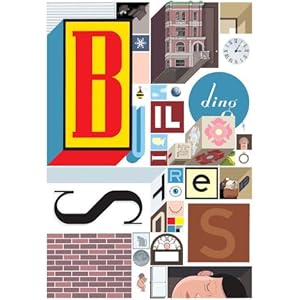
Building Stories by Chris Ware

What to say about this extraordinary creation? This is the book I mentioned at the very top that went missing in transit and caused me moments of genuine anxiety as I worried that I might not be able to lay my hands on a replacement copy without bankrupting myself even further. Chris Ware opened my eyes to what the graphic novel could be when I read his first book Jimmy Corrigan. I am eternally grateful to him for that because since then I have derived so much pleasure from reading more and more graphic work. For him then to return with a ... I hesitate to call it a book because it is so much more than that ... with such a gift is quite astounding. A book which cements the place of the graphic novel amongst 'serious' literature and shows at the same time how limited its supposed superiors really are, this will no doubt be seen in years to come as a definitive work.


Also worthy of note: Mrs Bridge, Dr Haggard's Disease, Seven Years, Days of the Bagnold Summer and so many more.


Emperor's New Clothes: HHhH and The Yellow Birds.


Read more...

Tuesday, 8 May 2012

Waiting For The Barbarians - J M Coetzee

'the black flower of civilization'


I was determined not to leave it too long before tackling another Coetzee and it was only a question of which one. As I've said before, I'm a little scared of his more recent output and felt on much safer ground looking at his back-back catalogue. A few were recommended by other novelists (social networking has its genuine uses you know) and I decided to plump for this allegorical tale of oppression, control and personal morality. I always sensed that Coetzee was a writer who needed to be read, I can only reiterate my pleasure in discovering that he is a writer who demands to be read and to whom one willingly submits, each completed book increasing the chance of picking up another.

Waiting for the Barbarians was originally published in 1980 and not only picked up the James Tait Black  and Geoffrey Faber Memorial Prizes, and was picked by Penguin as one of twenty Great Books of the 20th Century but was even turned into an opera by Philip Glass. The allegorical nature of the novel makes it perfect for that kind of adaptation and a worthy recipient of all its praise because it reads like an immediate classic, a novel that whilst clearly inspired by the brutal Apartheid regime in Coetzee's South Africa can also be applied universally to the ideas of Empire, control, torture and resistance. Names aren't important in this tale, our first person narrator is known only as the Magistrate, 'a responsible official in the service of the Empire, serving out my days on this lazy frontier, waiting to retire... When I pass away I hope to merit three lines of small print in the Imperial gazette. I have not asked for more than a quiet life in quiet times.' Those quiet times come to an abrupt end with the arrival of Colonel Joll and his soldiers of the Third Bureau. This far-flung outpost of the Empire is at risk from attack from the barbarian hordes that allegedly lie out there in the wilderness and are joining tribal forces in order to strike back at the Empire. A brief sortie by Joll and his men brings barbarian prisoners back to this frontier town and the Magistrate witnesses in part the brutal methods of the Third Bureau in their quest for the truth.

'First I get lies, you see - this is what happens - first lies, then pressure, then more lies, then more pressure, then the break, then more pressure, then the truth. That is how you get the truth.'

Once these interrogations are over and the men departed the Magistrate takes personal care of a barbarian girl whom he nurses back to health, the two enacting an odd, intimate and yet not sexual relationship. He wants to know what happened during the interrogation that left her partially blinded but she is reticent, leaving him with the certain knowledge that 'Nothing is worse than what we can imagine.' The Magistrate is an interesting character for all sorts of reasons but his morality is primary amongst those. A man who has clearly used his powerful position to enjoy the company of women in the past he is left stymied by the curious nature of his relationship with this barbarian girl. He even manages to find a parallel between his odd desire for her and the work of the recently departed torturers.

I cannot even say for sure that I desire her. All this erotic behaviour of mine is indirect: I prowl about her, touching her face, caressing her body, without entering her or finding the urge to do so. I have just come from the bed of a woman for whom, in the year I have known her, I have not for a moment had to interrogate my desire: to desire her has meant to enfold her and enter her, to pierce her surface and stir the quiet of her interior into an ecstatic storm; then to retreat, to subside, to wait for desire to reconstitute itself. But with this woman it is as if there is no interior, only a surface across which I hunt back and forth seeking entry. Is this how her torturers felt hunting their secret, whatever they thought it was? For the first time I feel a dry pity for them: how natural a mistake to believe that you can burn or tear or hack your way into the secret body of the other! The girl lies in my bed, but there is no good reason why it should be a bed. I behave like a lover - I undress her, I bathe her, I stroke her, I sleep beside her - but I might equally well tie her to a chair and beat her, it would be no less intimate.

He begins to question everything about his position, struggling with 'the story' of empire and the barbarian hordes that lie out there somewhere ready to attack the civilized way of life. But he also struggles to see how such an attitude might be wiped away for how do you eradicate contempt, 'especially when that contempt is founded on nothing more substantial than differences in table manners, variations in the structure of the eyelid?' From being a staunch defender of empire he begins to wish that the barbarians would indeed rise up and teach the ruling power to respect them and their history, they after all viewing the empire builders as nothing more than transients in the grand scheme of things.

If his relationship with the girl weren't enough to get him into trouble then his foolhardy journey beyond the frontier to return her to her people surely is and when he returns (without her, despite having asked her to return with him of her own free will - and after finally consummating their relationship) to the town he is summarily arrested and imprisoned. And what does he feel when he finds himself on the other side of the law? Elation, at having broken the bonds of his alliance with the Empire.

I am a free man. Who would not smile? But what a dangerous joy. It should not be so easy to attain salvation.

For what is it that he actually believes in, where does this sense of opposition come from? He is subjected to the same cruel treatment that previous prisoners have suffered but he uses his knowledge of the settlement to effect an escape from his confinement only to realise that there is nowhere for him to run away too. A prisoner of civilization itself he is able to look clearly at his oppressor whilst we the reader enjoy the same opportunity to examine our own civilization and what it is built on.

Empire has created the time of history. Empire has located its existence not in the smooth recurrent spinning time of the cycle of the seasons but in the jagged time of rise and fall, of beginning and end, of catastrophe. Empire dooms itself to live in history and plot against history. One thought alone preoccupies the submerged mind of Empire: how not to end, how not to die, how to prolong its era.

We all know the language of fear and how governments of the free world use it to justify attacks on today's 'barbarians'. As well as exploring the machinery of control through that fear, especially when combined with brutal suppression of any opposition, Coetzee dares to look at the thoughts of those who might actually wish to see those held up as the enemy triumph in order to assuage their own guilt. As the novel enters its final section, the Imperial forces seeming to have suffered terrible losses in their encounters with the barbarians, and the threat of being overrun more real than ever a strange limbo is achieved. The Magistrate, once an extension of the Empire's grip finds himself a voice of optimism, not in spite of impending doom but because of it.

Is there any better way to pass these last days than in dreaming of a saviour with a sword who will scatter the enemy hosts and forgive us the errors that have been committed by others in our name and grant us a second chance to build our earthly paradise?

Read more...

Thursday, 15 December 2011

2011 - Books of the Year


Yes, you may have already noticed that 2011's end of year post is just about books rather than also including my favourite music, films and other cultural highlights. The reason for this is quite simple: I've barely listened/watched/been to any as any regular readers will have noticed over the year. It has in fact been all I could manage to maintain a steady stream of book reviews this year and I have my fingers crossed about being able to do the same next year. It hasn't been easy. But every time I think I'm about to throw in the towel something comes along to make me persevere and I'm always glad that I do. The books below are all brilliant for different reasons and a couple of them are so good that they're worth writing the blog for alone. And then of course there's you and your comments.....

Many thanks to every single one of you who has read my blog this year and a seasonal hug and kiss to everyone who's left a comment. I can't tell you how much I appreciate it.


A Taste of Chlorine by Bastien Vives

It may be at the bottom of the pile in the photo above but this graphic novel is right at the top of my books of the year. If you want to read a graphic novel that truly uses pictures to tell a story that words wouldn't have been able to then this book is perfect. The story of a boy using swimming to help treat curvature of the spine is all about body-language, gesture and movement. There's hardly any text and yet volumes are spoken in Vives' exquisitely drawn panels, with the underwater environment particularly well presented, you can almost smell the chlorine. Like reading a perfect short story it is enigmatic, moving and left me with a warm glow in my heart.


A genuine masterpiece about tyranny and control from a writer who may only have produced two novels in his long lifetime but who made sure they were both in their own ways completely brilliant. This novel examines the symbiotic relationship between a man who is clearly Jewish (though never named as such) in 1930's Germany (though this is never made explicit) and the leader, or adversary, (clearly Hitler though again he is not named) who tyrannises him. Brave in its hypotheses, brutal in its psychological insights and honesty, this novel is a classic because it manages to be about all situations in which one group makes a pariah of another. Indispensable.

Great House by Nicole Krauss

This novel is by no means perfect but its failings come from ambition rather than lack of talent which Krauss seems to have in spades. There is a feeling that comes from reading the work of a mature writer, an ease that you are in the hands of someone who has something to say. This usually comes from writers far more experienced than Krauss but her maturity is just one of the attractive features in this novel about a desk and the various hands it passes through, characters created with such detail that they cease to feel like characters at all, and the novel as a whole written with a complexity that forces the reader to slow down and appreciate the thought, intelligence and humanity that has gone into creating it.


A collection of stories so unique, so specific, so perfect as to need little more than that from me to send you straight out to buy a copy. Pancake died without ever really knowing just how good a writer he was and too young for us to know just how good and influential he might have become. As it stands several writers cite him as an influence and the warmth and reverence with which they do this is worth noting. His stories embody the area of West Virginia in which Pancake grew up, with authentic details and voices but these aren't simply stories rooted in a particular geography so that we can indulge in a kind of literary tourism, he also shows with a couple of stories just how formally inventive he might have been. Just buy the damn book, ok?

The Summer Of Drowning by John Burnside

I have no shame in admitting that I am a fan of Burnside and take a small amount of pride in being one of the voices that has helped convince John Self over at Asylum to read more of him and realise just how good he is (although in his own end of the year round-up he mentions that he did so in order to shut people like me up). This latest novel shows a writer at the height of his powers returning to a story he failed to complete a decade ago and delivering a novel filled with atmosphere, unease, myth, storytelling, artistry and writing so good it sometimes make you want to take a moment and nod your head in appreciation. Set in the Arctic Circle and drawing on the folk myths of the area this is a book infused with the spectral light of the midnight sun; deeply unsettling, wonderfully complex, another weapon in my arsenal to make sure that you all make the effort to pick up one of his books. Soon.


An unalloyed pleasure from first page to last, Towles debut is a perfectly mixed dry Martini. Set in 1920's New York it tells the story of a life-changing year for Katherine Kontent, the only fictional character I have ever fallen in love with. Taking inspiration from Walker Evans' candid subway photographs Towles effortlessly recreates an era and peoples it with characters in which I believed totally and couldn't hope to forget. It's the kind of novel where you genuinely care about what happens to them and can't help but wonder what happens to them after the final page. Witty, funny, smart and beautiful: that's just Katey Kontent, but also a good description of the novel as a whole.

Lazarus Is Dead by Richard Beard

One of the most exciting reads of the year for the way in which its form was hard to pin down, Beard's 'novel' is a re-examination of the story behind one of Jesus' miracles. By taking an almost forensic approach Beard manages to tell the story more fully than ever before, bravely hypothesising about the childhoods of both men, drawing inspiration and evidence from other artistic sources, research into the period and of course the invention of the author. Structured around the number seven the chapters count down to Lazarus' death and then back up again after his resurrection, where Beard is brave enough not just to imagine what happens to the story of Lazarus after its usefulness in the Bible ends but to posit an even greater significance for the man who came back from the dead. If you want to know why fiction can still be exciting then pick this book up.


If I had a pound for every novel that takes a male protagonist, wipes his memory and then starts from there then I'd have a load more money to spend on books, but this novel from linguist Marani is ingenious and far smarter than most. A man is found badly beaten on the quay in Trieste in 1943. When he comes to he has no memory of who he is or even which language he speaks. The Finnish doctor on a German hospital ship that treats him presumes that he is also Finnish after spotting a name inside his coat and an initialled handkerchief and so begins to re-teach him his language in the hope it will unlock memories and lead him to recover his identity. This relatively slim novel covers huge themes around memory, identity and truth and manages to intrigue even further with the perspective from which it is written. Exactly the kind of novel I would hope to unearth on this blog (although Nicholas Lezard gets the credit on this one).

I Am A Chechen by German Sadulaev

A book that melds memoir with fiction, folk tale with fantasy, Sadulaev's account of the conflict in Chechnya doesn't fit into any easy categories and is all the more exciting for it. It may not be consistent but the early sections in particular are stunning in the way they weave Chechen myth with personal testimony to create something that manages to be grand and specific at the same time. Infused with the guilt of a man who wasn't there when things were at their worst, Sadulaev uses his creativity instead to speak on behalf of a people and give voice to a conflict the like of  which all too easily passes us by on the ticker tape of rolling news.


This is hardly news to anyone as the book was already well regarded by the time I came to read it at the very beginning of this year but it has remained very strong in my mind, a perfect example of why we should all read more literature in translation. Bakker's novel is written with the kind of quiet confidence that let's the reader relax in the knowledge that they are in safe hands. Reserved to the point of repression, the prose mimics the flat landscape of rural Holland but gives little hints along the way of the power that lurks beneath the surface. A farmer and his father inhabit a lonely farmhouse and the son's appalling treatment of his father leads us to wonder what might have happened in the past. Bakker expertly releases fragments from the past in his examination of love, loss and the special bond between twin brothers.

The Horseman's Word by Roger Garfitt

I don't tend to read an awful lot of non-fiction but I'm lucky that when I do it tends to be first rate. This memoir was literally forced into my hand by an excited publicist and her enthusiasm wasn't misplaced. The prose is beautiful as you might expect from a poet and its evocations of childhood innocence are heart-warming and comforting. When it follows Garfitt's misadventures at university and beyond it becomes a fascinating portrait of a mind unravelling and the writing shows the tissue-thin barriers between lunatic, lover and poet. A book that took many years to write and hone, and the passion of one publisher in particular to finally bring to print, this is a labour of love and madness that rewards the effort.


Over a decade after it was originally published and won the Booker Prize I finally get over my Coetzee hoodoo and discover just why this book, and writer, are so well regarded. A Cape Town university professor is forced to leave in disgrace after an affair with a student and goes to stay with his daughter on her smallholding. When the two of them are subjected to a brutal assault by three black men South Africa's fragile new politics are laid bare for examination. A brave and uncomfortable read that retains its ability to shock, this is a novel filled with anger and love, containing so many ideas and themes that you could happily discuss it for hours and hours. It has also of course made me want to read more Coetzee. Ah well, there's always next year....


And a few books that came close and deserve honourable mentions: At Last by Edward St Aubyn, A Visit From The Goon Squad by Jennifer Egan, From The Mouth Of The Whale by Sjón and Today by David Miller.

Read more...

Tuesday, 6 December 2011

'Not a bad man but not good either'

Disgrace
by J. M. Coetzee

I mentioned my trepidation when approaching Sebald in my review of Austerlitz last week but that was nothing compared to the downright anxiety I felt about making a start on Coetzee. I knew I had to read him but with each successive publication my sense of where to start with him got more and more confused. Step in the Folio Society with another lovely edition that gives the Booker Prize winning Disgrace a well deserved re-appraisal more than 10 years after its original publication. I still feel a certain anxiety about Coetzee but it is now that I will find his later work as intimidating as ever whilst secretly wanting to read more of his earlier work, so brilliant was this intelligent, brave, angry and confused novel. As someone who began to find their reading maturity on a diet of Philip Roth's more passionate novels I felt as though I had found a replacement source of that fervour now that Roth has begun to focus so much on mortality and death. Disgrace is every bit as risky and controversial as I expected but also richly symbolic, brutal and exhilarating. What an introduction.

The man at the centre of the novel is David Lurie, a professor in a Cape Town university where modernisation has seen him move from teaching Literature to 'Communications' a title that doesn't sit well with this lover of the Romantic poets. His life has achieved a kind of stasis; he has been married and divorced, remaining on good terms with his ex-wife; sex has become a transaction as easily managed as any utility bill with his weekly visits to a woman named 'Soraya'; and a personal project to write an opera about Byron is always simmering away on the back burner.

Is he happy? By most measurements, yes, he believes he is. However, he has not forgotten the last chorus of Oedipus: Call no man happy until he is dead.

This routine is ruptured when Lurie spots Soraya in the street with two children who can only be hers and the two of them catch each other's eye. This intrusion of her personal life into their private arrangement is never mentioned by either of them at their next appointment but they both know something has changed and their arrangement comes to an end. Lurie's solution to this problem is to fall back on the tried and tested formula of sleeping with one of his students. The girl he selects, Melanie Isaacs, is 20 years old 'small and thin, with close cropped hair, wide, almost Chinese cheekbones, large, dark eyes', and whilst he finds himself falling rather harder for her than he intended she never seems to be fully committed. One sexual episode in particular highlights what we might call acquiescence rather than real participation.

Not rape, not quite that, but undesired nevertheless, undesired to the core. As though she had decided to go slack, die within herself for the duration, like a rabbit when the jaws of the fox close on its neck. So that everything done to her might be done, as it were, far away.

A complaint is made, probably by or at least at the encouragement of Melanie's boyfriend; a tribunal is held at which Lurie refuses to kowtow to the demands of some of the board to show penitence or do more than simply admit guilt and he is dismissed from his position, eventually leaving in disgrace to stay with his daughter on the smallholding she owns on the Eastern Cape.

This retreat doesn't offer the solace that he might have hoped for. Not only is there the slightly fractious relationship between father and daughter but in a moment of shocking violence the two of them are subjected to an ordeal that further polarises their positions as well as forcing the reader to confront an uncomfortable image of the new South Africa. As a reviewer I might chose to skirt around the details of the incident in order to avoid spoilers but Coetzee keeps things unclear by placing Lurie in a different room to his daughter as she endures what he presumes to be rape by one or all of the three (black) men who attack them in their home. Lucy's refusal to discuss what actually happened or seek any recourse to the law leaves Lurie baffled and frustrated but she is quite clear about her stance.

'...what happened to me is a purely private matter. In another time, in another place it might be held to be a public matter. But in this place, at this time, it is not. It is my business, mine alone.'
'This place being what?'
'This place being South Africa.'

Coetzee's genius is that an event that would be shocking and painful enough on its own is given a far deeper resonance by the circumstances that surround it. What kind of guilt or pressure is it that forces Lucy to endure her shame rather than challenge it? Is David right to question whether Petrus, the (black) neighbour who has gone from worker to co-owner of the smallholding, has any connection to the attack? How can David hope to talk to his daughter fully about her ordeal when we consider the charges that brought him to her home in the first place? It's no surprise that this book caused controversy in South Africa. In its bluntest interpretation we might see a brutal justice being administered to the white population after the end of apartheid, a vicious illustration that 'The past is never dead. It's not even past.' This metaphor becomes even more concentrated if we think that Melanie, whose ethnicity is never specified beyond the enigmatic description I gave above, might herself be black. If, within this tight narrative framework, we have seen father bear down on a black student and then his daughter assaulted by three black men we have a pressure of almost unbearable degree, a potent symbol of racial division as well as one of ownership, control and power. It is that kind of pent-up energy that had me thinking of (and rejoicing) Roth's angriest novels when reading this one. Lucy's personal disgrace is to endure the attack and then to hear the story version of it of it spread across the district unchallenged.

That is what their visitors have achieved; that is what they have done to this confident, modern young woman. Like a stain the story is spreading across the district. Not her story to spread but theirs: they are its owners. How they put her in her place, how they showed her what a woman is for.

And the question she is left asking herself comes when considering the personal animosity she witnessed - 'Why did they hate me so?' Surely only as a symbol of something wider.

And what are we to make of the novel's protagonist? Christopher Hope in his introduction gives us a little guidance in trying to seek out his motivations and wondering what kind of sympathy we might have for him as a character (it is also worth noting that Hope, who hasn't always given Coetzee the easiest of rides, is in no doubt about the virtues of this novel). We might consider the way Lurie speaks to his students about one of his life's passions, Byron, and the way in which Byron describes Lucifer in particular.

'He doesn't act on principle but on impulse, and the source of his impulses is dark to him. Read a few lines further: "His madness was not of the head, but heart." A mad heart. What is a mad heart?'

That is the question both we and Lurie must ask of him and nearer the end of the novel, when he begins to reckon himself it doesn't seem as if even that has been enough.

Not a bad man but not good either. Not cold but not hot, even at its hottest. Not by the measure of Theresa, not even by the measure of Byron. Lacking in fire. Will that be the verdict on him, the verdict of the universe and its all-seeing eye?

A novel then filled with potent images, difficult questions, complicated motivations and a good dose of anger (just my cup of tea); as challenging to read now as it was when published and a pleasure as ever to do so in this quality edition from Folio. Right, what Coetzee next...?

Read more...

  © Blogger templates The Professional Template by Ourblogtemplates.com 2008

Back to TOP